
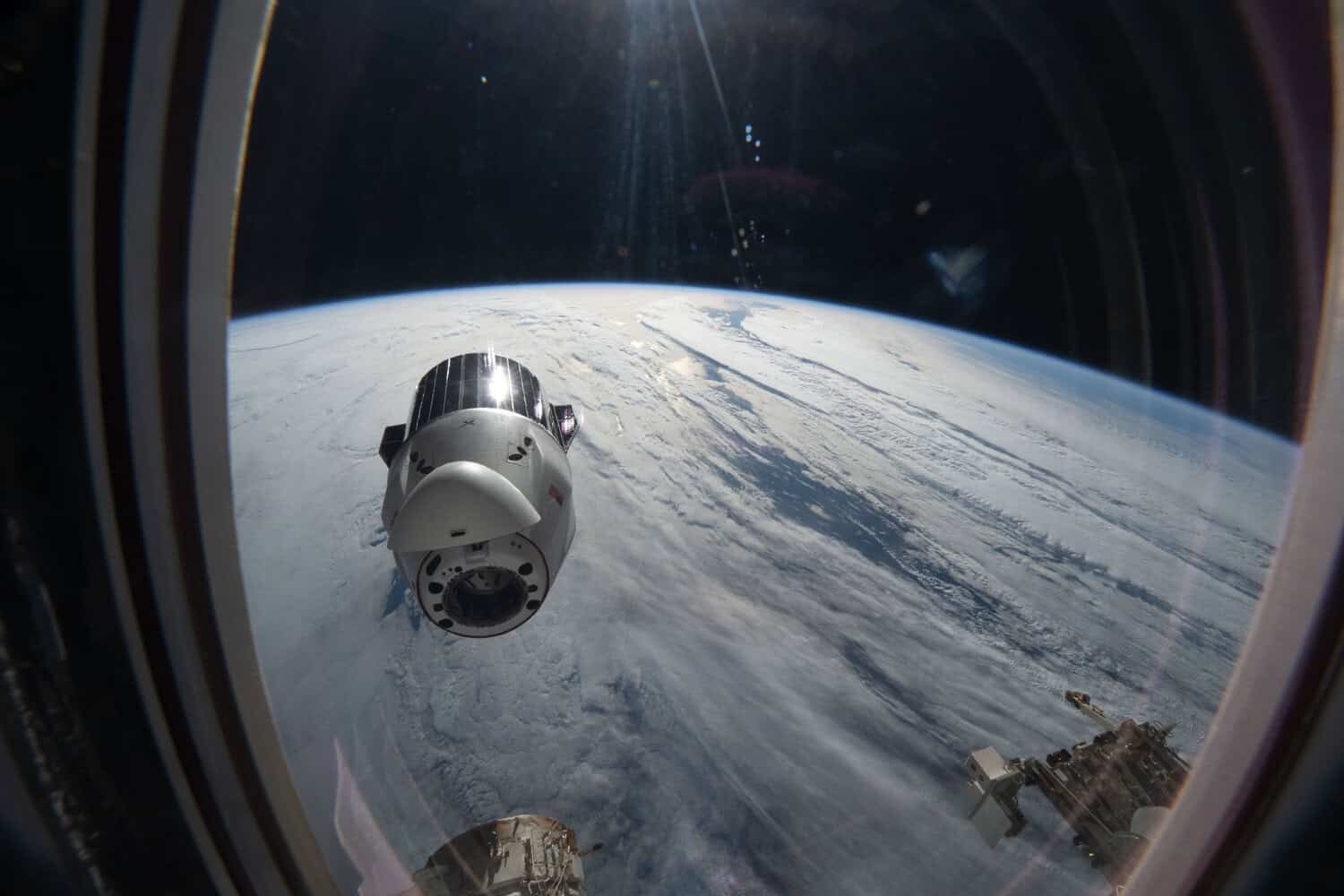
NASA moved the earliest departure of SpaceX’s CRS-35 cargo Dragon from the International Space Station to Friday, Nov. 20. The agency’s updated media advisory puts undocking at 12:05 p.m. Eastern and splashdown off California no earlier than 5:04 p.m. Eastern on Saturday, Nov. 21. Both times remain subject to weather.
The revised dates follow a Wednesday stand-down. In an early Nov. 18 update, NASA said unfavorable conditions at the planned splashdown sites had ruled out Wednesday’s undocking attempt. That update identified Thursday as the next opportunity at the time. The later advisory supersedes that outlook with the Friday departure target.
The return starts at Harmony
Dragon is attached to the space-facing port of the Harmony module. NASA says controllers at SpaceX’s facility in Hawthorne, California, will send the undocking command. The agency plans to begin live coverage at 11:45 a.m. Eastern on Friday, about 20 minutes before the planned departure. NASA plans to post splashdown updates on its station blog.
Dragon launched Oct. 13 on a Falcon 9 from Cape Canaveral Space Force Station and reached the station Oct. 15. The outbound load exceeded 6,300 pounds and included crew supplies, research and equipment. The return leg carries thousands of pounds of hardware and research material back from the laboratory. Those figures describe different cargo loads.
Why the return leg matters
A cargo return lets researchers examine material that has already spent time in orbit. NASA lists a 3D-bioprinted blood vessel model among the returning items, along with frozen tumor organoids and microbial samples. The experiments address separate questions about vascular aging, responses to treatment and how bacteria adapt to the space environment. The return supplies material for further analysis on Earth.
The spacecraft is also due to bring back a lighting system that spent more than three years aboard the station. Researchers used it to investigate lighting’s potential role in supporting astronaut sleep and well-being on long missions. Its time aboard the station makes it a different kind of return item from preserved laboratory samples.
For readers following the mission, the first milestone is separation from Harmony. Splashdown is a separate event with a separate weather decision. The revised advisory gives the earliest times NASA is planning around, and either can change as conditions develop.
Sources
NASA’s updated CRS-35 departure advisory and archival featured photograph




No comment