
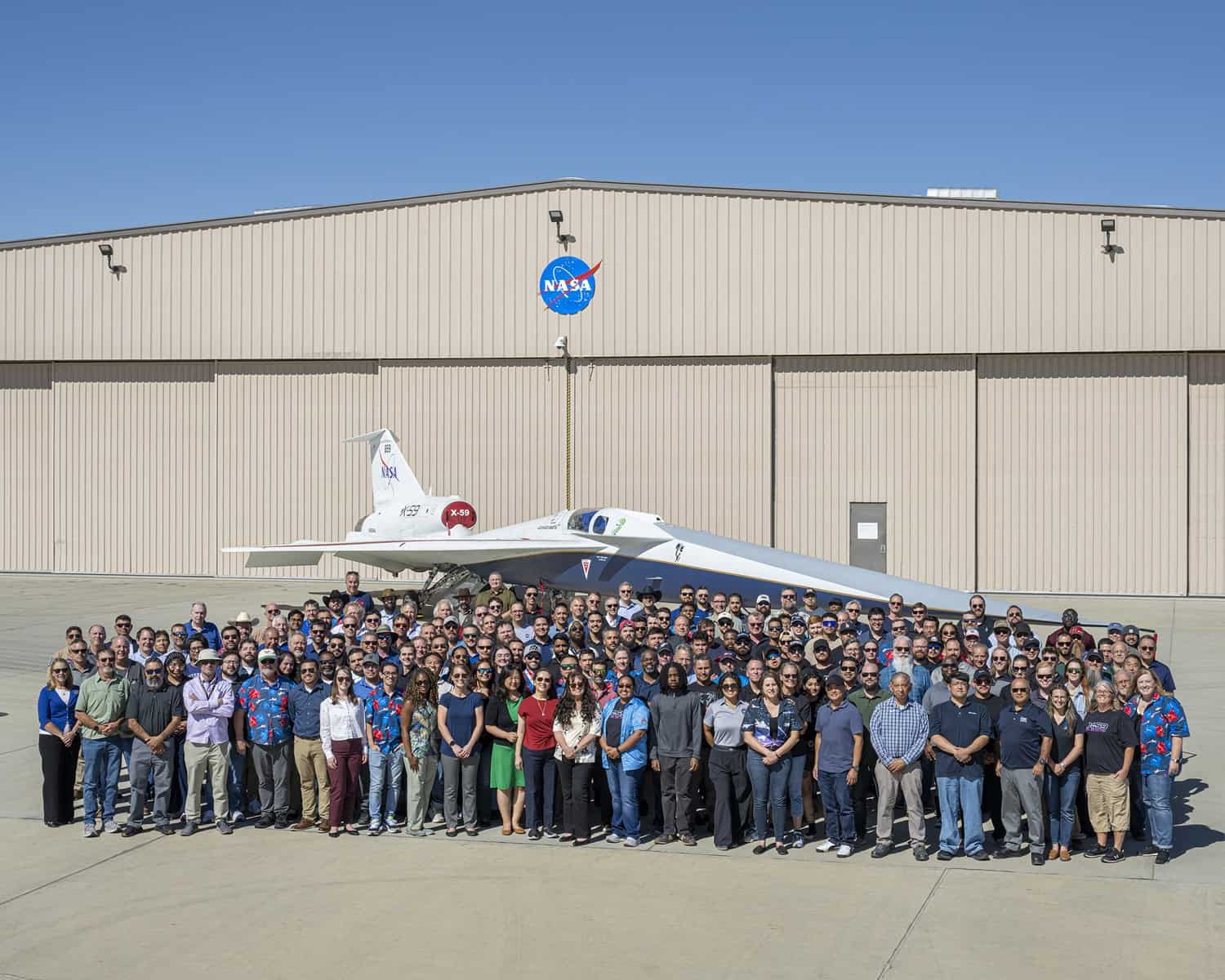
NASA took ownership of its X-59 quiet supersonic research aircraft from Lockheed Martin Skunk Works on November 18, the agency announced November 23. The handover gives NASA ownership of the one-of-a-kind aircraft at the center of Quesst, a research mission designed to measure how people respond to a quieter sound from supersonic flight.
What changed at the handover
The ownership transfer is a milestone for the aircraft itself. Lockheed Martin developed the X-59 for NASA, and teams from both organizations have worked on the program at Armstrong Flight Research Center in Edwards, California. The announcement records the transition from the contractor to the agency that will use the aircraft for research. The date of the transfer and the date of the public announcement are five days apart.
The milestone is one part of a longer flight program. NASA has already reported that the aircraft made its inaugural flight in November 2025 and first flew supersonically on June 5, 2026. Those milestones established that the aircraft could fly and reach supersonic speed. The research program also needs to characterize the sound it produces and understand how people on the ground experience it. NASA’s X-59 flight milestones.
Why Quesst needs a dedicated aircraft
When an aircraft travels faster than sound, the pressure disturbances it generates can reach listeners on the ground as a sonic boom. The X-59 is designed to shape those disturbances so that the sound on the ground is a quieter thump. The research question extends beyond whether the aircraft can reach a particular Mach number. NASA wants data about the sound that reaches people and how they respond to hearing it.
Quesst plans to fly the aircraft over communities and survey residents. Those responses will give regulators evidence about public reaction to the sound of aircraft designed for quieter supersonic flight. NASA says it intends to share the results with national and international regulators to inform work on acceptable noise thresholds for possible future commercial operations over land. NASA Quesst.
What to watch next
Ownership, flight testing and community research answer different questions. The handover identifies who owns the test article. Flight testing characterizes its performance. Community flights will supply evidence about what listeners hear and how they react. That final set of observations matters because an aircraft’s speed and its sound measurements alone cannot establish how acceptable repeated overflights would be to residents.
The photograph accompanying NASA’s announcement was taken on September 29 at Armstrong Flight Research Center. It shows the NASA and Lockheed Martin teams gathered alongside the X-59 before the November handover. Photo credit: NASA/Ryan Kline. Editorial reuse is permitted under the NASA Images and Media Usage Guidelines.







No comment