
Published November 24, 2026
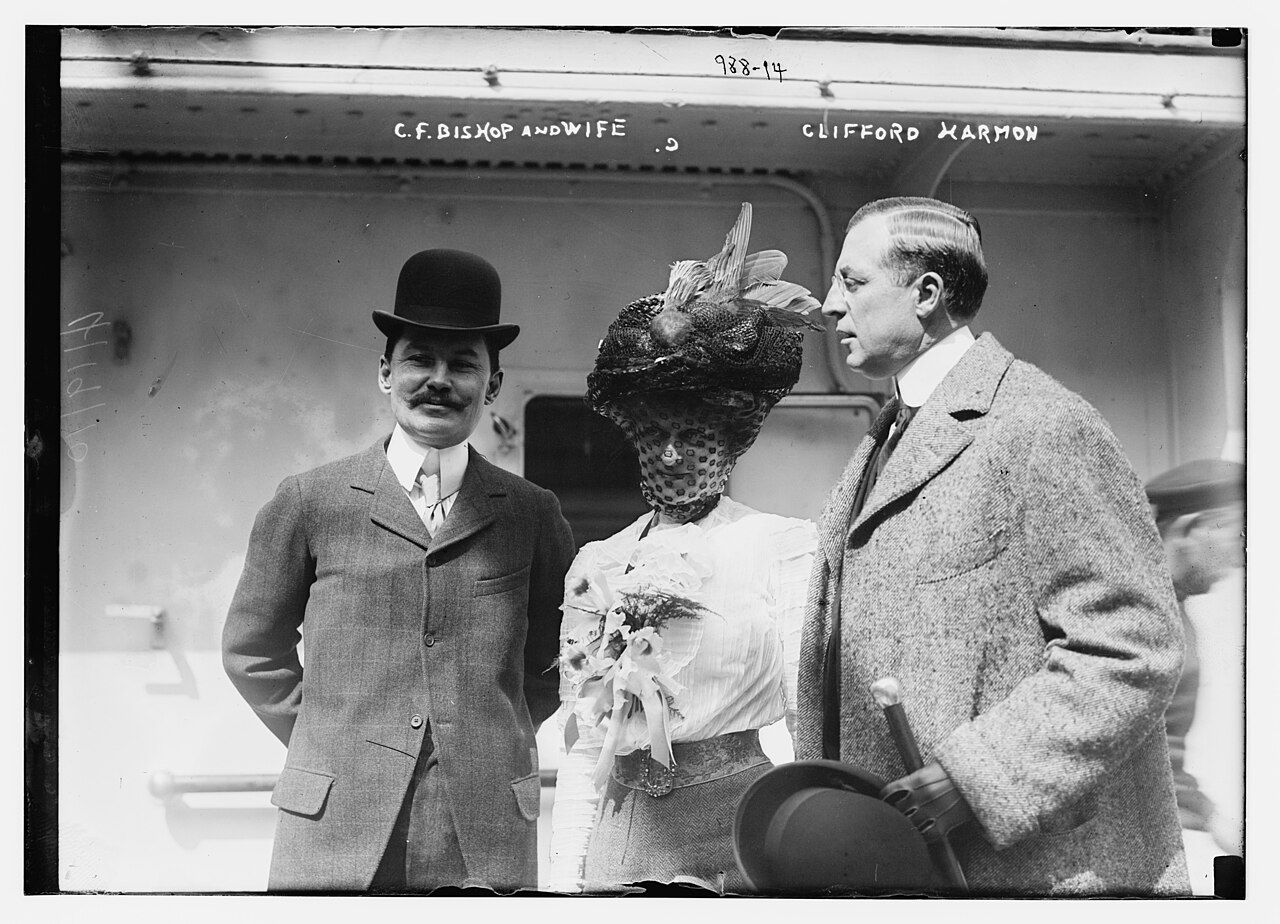
Cortlandt Field Bishop was born in New York City on November 24, 1870, decades before powered flight. By the time airplanes began attracting crowds, he had become one of the civic organizers who helped turn flying from an experiment into a public enterprise. His influence came less from piloting than from the associations, prizes and events that gave early aviation a place to grow.
From law to the Aero Club
A 1900 biographical directory records Bishop as a New York lawyer, a Columbia graduate and a member of several cultural and civic organizations. Those networks later intersected with the new aviation movement. Bishop became president of the Aero Club of America, an organization that connected pilots, inventors, sponsors and supporters while flight was still developing its rules and institutions.
His presidency placed him in a practical role at a consequential time. The club promoted flying, helped bring public attention to aeronautical contests and worked to recognize pilots’ achievements. In a period when aircraft were fragile and flying opportunities were scarce, organizers could matter as much as designers: they gathered participants, found patrons and gave the public a reason to watch.
Prizes and public attention
In 1909 Bishop established a fund for aviation prizes. A contemporary report preserved by the Smithsonian describes his offer of four awards for pilots who could complete a continuous flight of at least one kilometer without touching the ground. Each prize was modest by later standards, but the conditions made the purpose clear: encourage pilots to demonstrate reliable, sustained flight and give the young field measurable goals.
The Smithsonian’s transcription of early aeronautical coverage also places Bishop at public aviation gatherings as the Aero Club’s president. NASA’s Wright-brothers chronology records him in that leadership role as the brothers’ work moved toward commercial manufacture. These records show a figure working at the intersection of aviation’s technical progress and its emerging public institutions.
A first ride at the 1910 air meet
Bishop did not remain only a sponsor on the ground. At America’s First International Air Meet in Los Angeles in 1910, he took his first ride in a heavier-than-air machine. The event drew large crowds to Aviation Park and placed airplanes before spectators who could see them fly rather than encounter them only in newspaper accounts. For Bishop, the flight connected his organizing work with the experience that had drawn the public to aviation in the first place.
That first ride did not make him a pioneering pilot in the technical sense. It did, however, make him part of a generation of influential supporters who tested the new machines, lent their names to aviation institutions and helped build the audience around them. Early flight needed engineers and pilots, but it also depended on clubs, contests, meetings and financial support that could sustain public interest.
The air meet also illustrates how aviation events served as public demonstrations. Organizers had to coordinate pilots, aircraft, schedules and spectators, while newspapers and photographs carried the spectacle beyond the people who attended. The prize system added another layer: it translated a broad promise of flight into specific achievements that could be witnessed and reported. Bishop’s work in clubs and contests therefore belongs to the story of how aviation acquired civic support, public visibility and a shared culture before airlines made flying familiar.
Bishop’s birthday is a useful reminder that aviation history was shaped by more than famous flights. The institutions that brought pilots together and the events that invited spectators to look upward formed part of the infrastructure of flight. Born on November 24, 1870, Bishop lived into the era when airplanes began changing transportation and warfare; his documented work belongs to the earlier stage when American aviation was still assembling its community.
Sources
- Biographical Directory of the State of New York (1900), Cortlandt Field Bishop entry
- Smithsonian Transcription Center, early aeronautical coverage and Aero Club prize report
- NASA, Wilbur & Orville Wright: A Chronology of Their Work, 1899–1948
- California State Military Museum, America’s First International Air Meet
- Library of Congress, George Grantham Bain Collection photograph, LCCN 2014684579

No comment