
Published November 24, 2026
When a Coast Guard helicopter crew was called to California’s Yolo County on December 29, 2023, two people were stranded on a cliff northwest of Sacramento. One had fallen about 100 feet and was seriously injured. By the time the crew reached the cliff, two rescuers had also become trapped. The four eventually came off the wall by helicopter. Jacob Conrad, the aircraft commander, received the Distinguished Flying Cross for his part in the rescue. U.S. Coast Guard award announcement.
The first launch ended short of the rescue
Conrad and the crew of MH-65 Dolphin 6562 took off around midnight. The account in his award citation describes a winter storm, icing and hazardous terrain. A failure in the windshield anti-ice system forced an emergency landing near Santa Rosa. Conrad had only a small clear portion of the windshield through which to see outside in the fog. Landing meant interrupting a time-sensitive mission, but it got the crew safely on the ground and left them able to make another attempt. Distinguished Flying Cross citation.
While the helicopter was on the ground, the situation on the cliff changed. Rescuers had climbed the valley wall and then found themselves trapped by rockslides and heavy rain. The crew now faced a rescue involving four people. One of them still needed urgent help, and the people who had reached the scene by land also needed a way out.
Returning at first light
The crew took off again at first light. The citation describes a communications failure inside the helicopter before the crew navigated a narrow valley in fog. The survivors were on the canyon wall. To get a swimmer down to them, the pilots needed to hold the helicopter above the ledge while the flight mechanic handled the hoist and the swimmer worked below. The rocks and trees around the hover left little margin for movement. Award citation’s account of the second flight.
The aircraft held position while the swimmer went down and the badly injured person was lifted in a basket. That still left three people on the wall. As winds increased, the crew returned to the confined hover and repeated the work. According to the citation, the helicopter was operating within one percent of its maximum power during part of the rescue. The crew recovered the remaining stranded person and both rescuers.
A crew effort
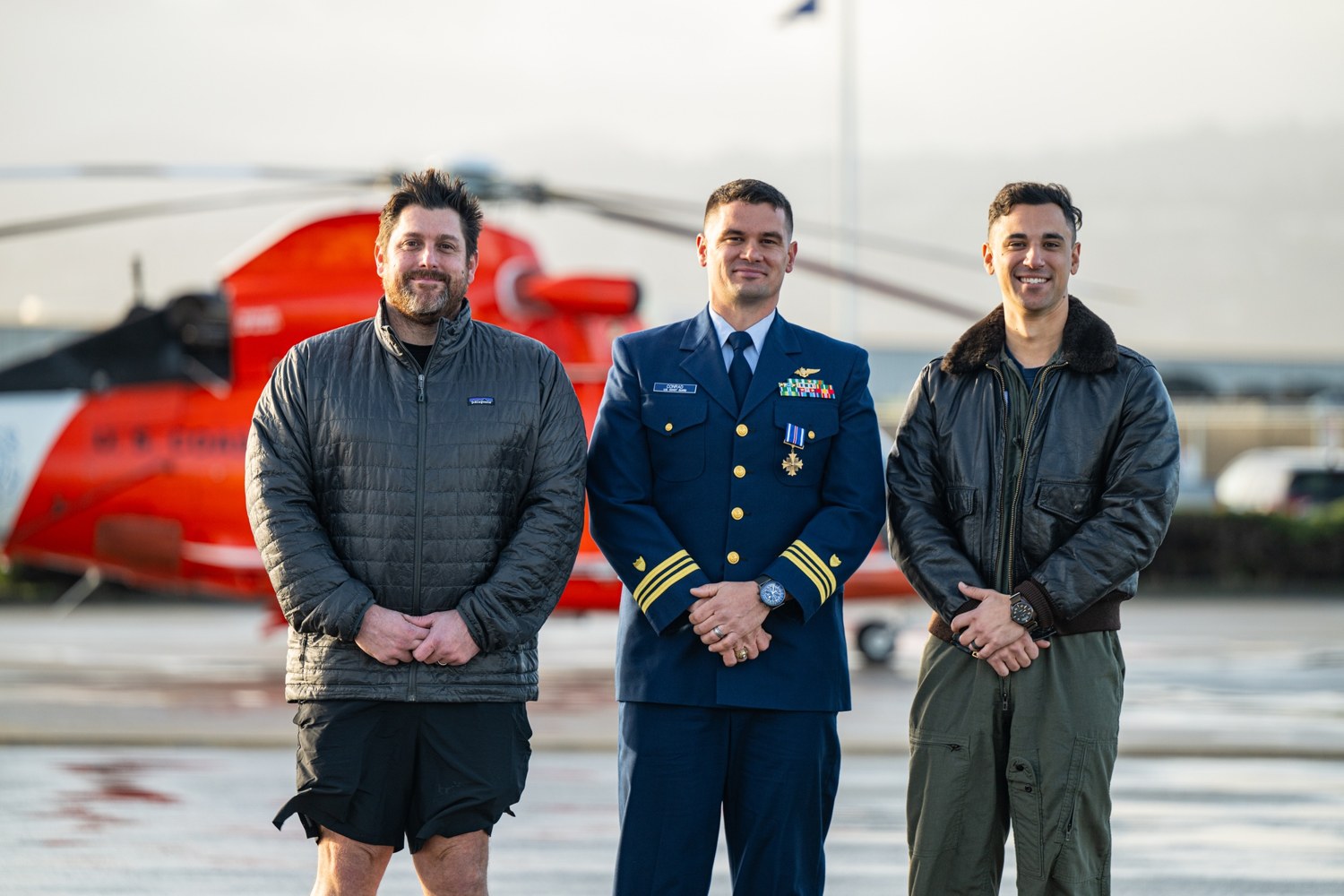
The Coast Guard presented Conrad with the Distinguished Flying Cross at Air Station San Francisco on December 12, 2024. Co-pilot Thomas Smith, flight mechanic Jordan Sanchez and rescue swimmer Romano had previously received Air Medals for their roles in the operation. The ceremony photograph shows three of the crew members together, with Conrad at center. Coast Guard announcement and crew recognition. DVIDS photograph and credit.
The case illustrates the range of work involved in a helicopter rescue. The pilots had to get the aircraft to the scene and keep it in position. The mechanic had to manage the line between helicopter and cliff. The swimmer had to reach people whose footing and access were already precarious. The first landing, the return at daylight and the repeated hoists were decisions and actions at different stages of the same flight operation. Together they brought four people out.
Featured photograph: U.S. Coast Guard photo by Petty Officer 3rd Class Hunter Schnabel, public domain, DVIDS 8797074.




No comment