
Alan B. Shepard Jr. was born on November 18, 1923, in East Derry, New Hampshire. His path from a New England hometown through Navy flight testing, the first American human spaceflight and an eventual lunar landing makes his career a useful lens on how the early U.S. space program was built: from experienced military aviators, demanding test programs and a willingness to accept uncertainty.
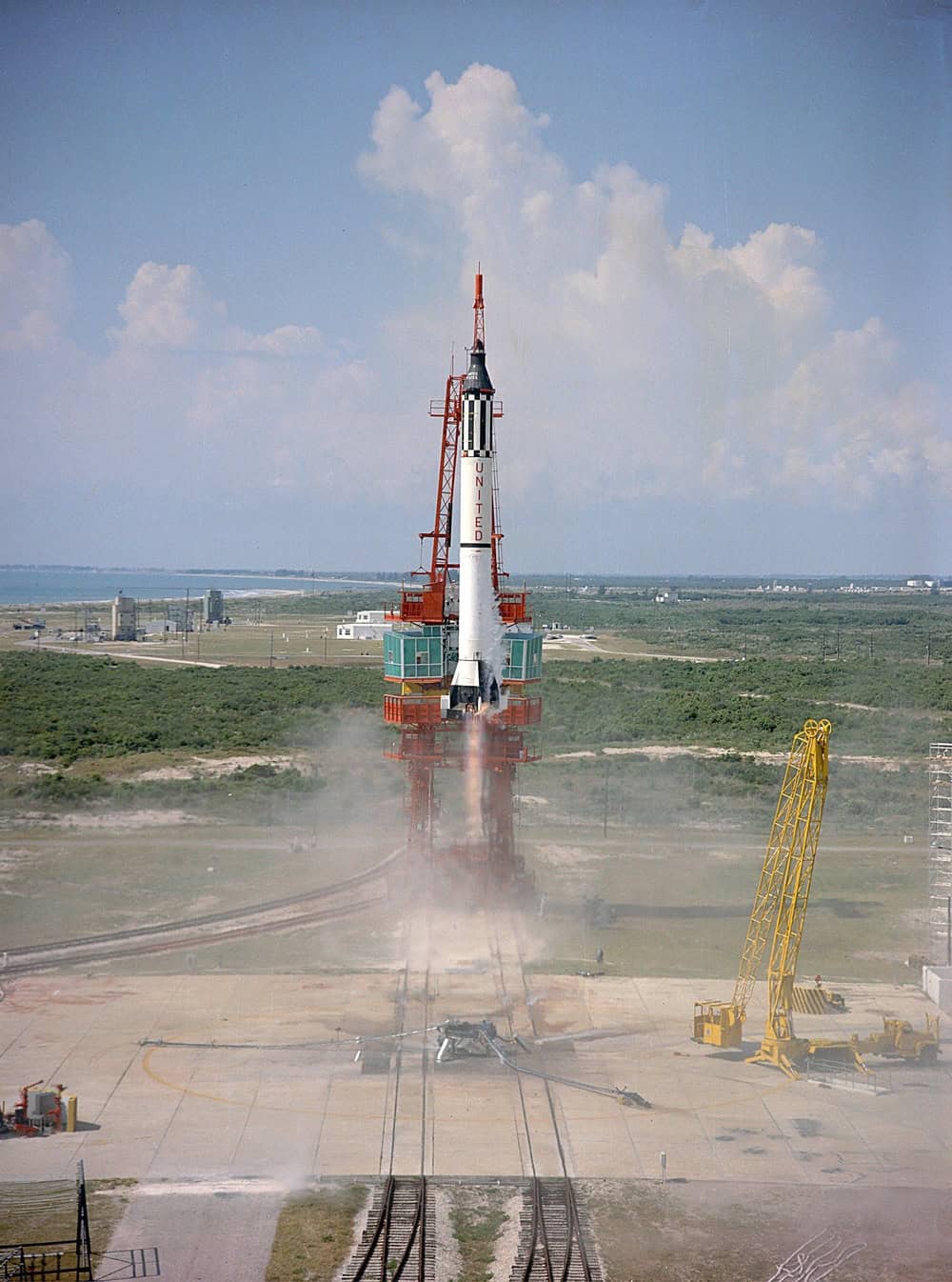
Shepard did not become the first human in space; Soviet cosmonaut Yuri Gagarin had flown in orbit weeks earlier. Shepard’s achievement on May 5, 1961, was to become the first American in space, flying a brief suborbital mission named Freedom 7. NASA’s account of his 100th birthday notes that the flight lasted about 15 minutes, reached roughly 115 miles in altitude and carried him 302 miles downrange from Cape Canaveral. Those numbers describe a short arc, not an orbit, but the flight established that an American astronaut could be launched, controlled and recovered safely.
From East Derry to the Navy
Shepard grew up in East Derry and graduated from the U.S. Naval Academy in 1944. He served in the Pacific near the end of World War II aboard the destroyer USS Cogswell. After the war, he entered naval flight training and earned his wings. The sequence mattered: the astronauts NASA selected in 1959 were not simply passengers. They were pilots accustomed to learning unfamiliar machines, evaluating their behavior and making decisions under pressure.
Shepard became a Navy test pilot after completing flight-test training. He flew a range of aircraft and took part in work on high-speed flight and carrier operations. NASA’s Mercury biographies describe a career shaped by that test-pilot environment, where a pilot’s observations could help engineers understand how an aircraft behaved at the edges of its operating limits. By the time NASA began recruiting its first astronauts, Shepard had both operational flying experience and the technical discipline the new program sought.
Choosing the Mercury Seven
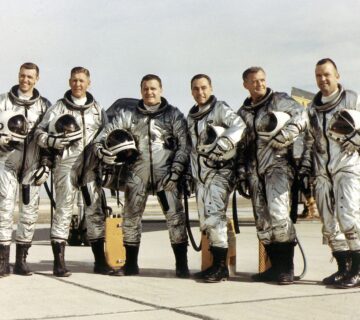
NASA selected Shepard as one of the Mercury Seven in April 1959. The agency’s first astronaut group was small by design. It needed people who could train for a mission whose vehicle, procedures and risks were still being developed, while also helping engineers refine those systems. Shepard was among the seven finalists chosen after medical examinations, interviews and tests intended to evaluate physical condition, judgment and ability to withstand demanding conditions.
Project Mercury’s first goal was to put a person into space and return that person safely. The spacecraft was compact, the flight-control options were limited, and much of the mission had to be automated. The astronaut still had to monitor the vehicle, interpret instruments and be ready to take control if the plan required it. Shepard’s background as a test pilot made him a natural fit for a program that depended on both engineering systems and human judgment.
Freedom 7 and the first American in space
On May 5, 1961, a Redstone rocket launched Shepard from Cape Canaveral in the Mercury capsule he named Freedom 7. The flight was suborbital: the capsule climbed above the atmosphere and then returned on a ballistic path rather than circling Earth. NASA records the flight at about 15 minutes, with an altitude of approximately 115 miles and a landing point hundreds of miles downrange. Shepard experienced weightlessness, observed the view from space and demonstrated that a human could perform useful tasks during a short flight.
The mission followed Gagarin’s April orbital flight, so it did not make Shepard the first person in space. It did, however, give the United States its first crewed spaceflight and provided practical evidence for the next steps in Mercury. The flight tested the Redstone launch vehicle, the capsule, communications, tracking, recovery procedures and the astronaut’s ability to respond during launch and reentry. A successful recovery was as essential as reaching space: the program’s promise depended on bringing its crews home.
Shepard’s Freedom 7 flight was also a deliberate step toward longer and more complex missions. NASA’s early flights were designed to build experience in sequence. A short suborbital mission could answer questions about acceleration, weightlessness, capsule control and recovery before the agency committed astronauts to orbital flights. John Glenn’s orbital Mercury mission followed in 1962; later Gemini missions developed rendezvous and spacewalking capabilities that Apollo would require.
A medical setback and a return to flight
After Mercury, an inner-ear condition known as Ménière’s disease grounded Shepard from flying. The condition can cause vertigo and balance problems, a serious concern for a pilot or astronaut expected to operate in a demanding environment. NASA assigned him to lead the Astronaut Office at Johnson Space Center. In that role he helped oversee astronaut training and crew assignments while remaining part of the program he had helped launch.
Corrective surgery later allowed Shepard to return to flight status. NASA’s biography records that he was selected to command Apollo 14, a mission that gave him the chance to move from the first American suborbital flight to the lunar surface. The interval between those milestones reflects both the pace of the space program and the way medical decisions could shape an astronaut’s career. Shepard spent years contributing from the ground before NASA cleared him to fly again.
Apollo 14 and a second defining mission
Shepard commanded Apollo 14, which launched on January 31, 1971, with command-module pilot Stuart Roosa and lunar-module pilot Edgar Mitchell. The mission landed in the Fra Mauro region, an area selected for its geological interest. Shepard and Mitchell conducted two lunar surface excursions and collected samples for study on Earth. NASA identifies Apollo 14 as the third crewed lunar landing mission.
The command required a different kind of leadership from Shepard’s Mercury flight. Apollo involved a three-person crew, a complex spacecraft made of separate command, service and lunar modules, and a mission plan that depended on the spacecraft and its crew working through multiple phases. Shepard’s experience as a test pilot and astronaut-office chief informed a career that had moved from evaluating aircraft to helping prove a new class of human spaceflight systems.
Shepard became known for a lighthearted moment on the lunar surface: he hit two golf balls with a makeshift club. The gesture is memorable, but it came within a mission built around exploration and scientific work. Apollo 14’s crews deployed experiments and returned lunar material, adding to the evidence scientists used to understand the Moon’s geology and history.
What Shepard’s career represents
Shepard’s life is often summarized through two “firsts”: the first American in space and, later, one of the few people to walk on the Moon. Between them was a broader record of service. He was a naval officer, combat-era sailor, flight and test pilot, member of NASA’s first astronaut class, head of the Astronaut Office and commander of a lunar mission. His career links the experimental culture of postwar aviation with the methodical buildup of American human spaceflight.
His story also illustrates why the early astronaut corps drew heavily from test pilots. A capsule launch was not an airline trip into space. It was a high-risk test of hardware and procedures, and the astronaut had to understand the vehicle well enough to monitor it and act when needed. Shepard’s training gave NASA a pilot who could work with engineers, learn a new machine and represent the human element in a program still defining its operating rules.
Born 103 years ago today, Shepard remains central to the history of U.S. spaceflight because his missions marked distinct transitions. Freedom 7 established a crewed American foothold in space; Apollo 14 demonstrated how far the program had advanced in a decade. The distance between those flights was measured not only in miles or years, but in the capabilities NASA had to develop to move from a short suborbital arc to sustained lunar exploration.


No comment