
Published November 24, 2026
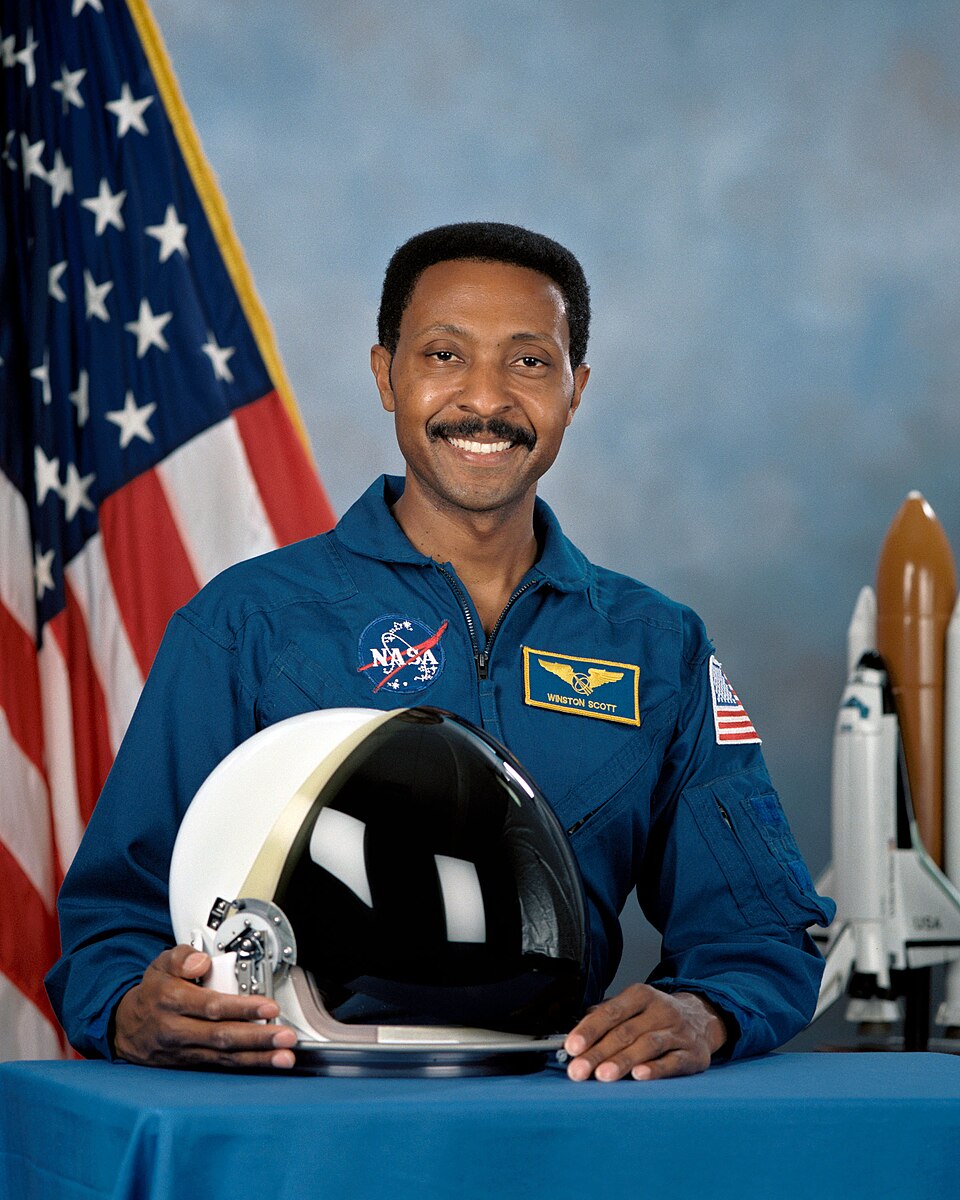
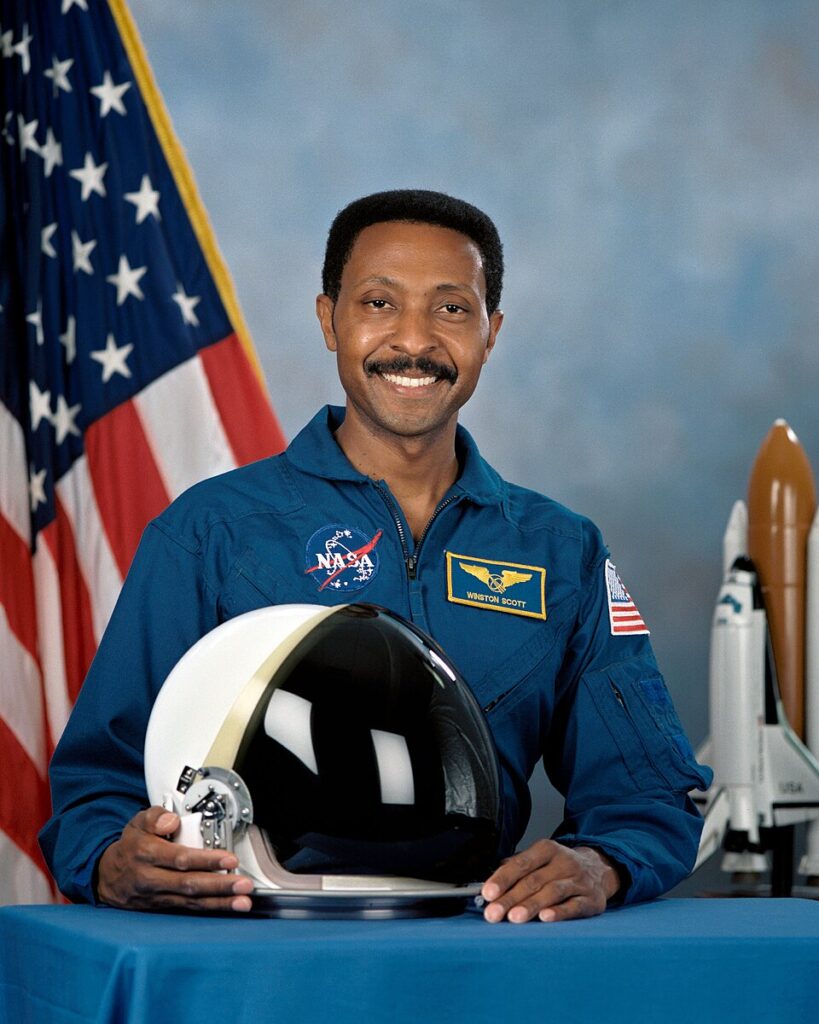
Astronaut Winston E. Scott’s spaceflight career included three demanding spacewalks, from practicing satellite retrieval and testing tools to helping recover a free-flying spacecraft. Scott was born in Miami, Florida, on August 6, 1950. NASA selected him as an astronaut in 1992. He later flew on two shuttle missions: STS-72 aboard Endeavour in 1996 and STS-87 aboard Columbia in 1997. NASA records 24 days in space and three spacewalks totaling 19 hours and 26 minutes.
A career that joined aviation and spaceflight
Before joining NASA, Scott served as a U.S. Navy pilot. His education combined music study at Florida State University with graduate work in aeronautical engineering at the Naval Postgraduate School. That mix of flight experience and engineering training suited a shuttle program in which astronauts operated spacecraft while also conducting experiments and working outside the vehicle.
On his first flight, STS-72, Scott and the Endeavour crew worked with the Japanese Space Flyer Unit and a NASA science payload. The mission included two spacewalks, giving Scott an early opportunity to use tools and procedures in orbit. Working in a pressurized suit required the crew to manage equipment, movement and safety while attached to the shuttle. A task that looks simple in a photograph can require careful preparation: tools must stay accessible, crew members need clear coordination, and each action has to fit the constraints of the vehicle and the spacesuit.
Columbia’s first spacewalk
Scott returned to space in 1997 as a mission specialist on STS-87. The flight made the first spacewalk from Columbia. Scott and fellow astronaut Takao Doi tested equipment and techniques intended to support construction of the International Space Station. They worked with a crane-like device called the Assembly of Station by EVA Methods, or ASEM, and evaluated how astronauts could maneuver large structures while wearing suits.
During the mission, the Spartan satellite did not operate as planned after deployment. NASA’s mission account records that Scott and Doi began a long spacewalk on November 24 to retrieve it by hand. They captured the free-flyer and brought it back to the shuttle. The recovery demonstrated the value of having astronauts trained and equipped for work beyond the nominal flight plan. It also demanded careful body positioning and teamwork: an astronaut outside a spacecraft must control their motion while securing an object that is itself moving freely.
Three excursions beyond the shuttle
Across STS-72 and STS-87, Scott accumulated three spacewalks. NASA’s biographical record gives a combined time of 19 hours and 26 minutes. Each excursion took place in a different mission context, but all depended on disciplined planning, suit checks and communication between the astronauts outside and the crew inside. The work was not simply a test of endurance. It supported satellite retrieval, evaluation of assembly techniques and the practical experience needed for future construction in orbit.
Scott’s flights also show how the shuttle joined transportation and hands-on work. Endeavour and Columbia carried crews and equipment into orbit, then provided a base from which astronauts could conduct operations in space. A shuttle mission might deploy a payload, retrieve an object or test hardware for a future station. The spacecraft and its crew formed one working system, with launch, flight operations, spacewalks and landing all linked in the mission plan.
Born in Florida and trained as both a pilot and engineer, Scott brought aviation experience into a career spent working beyond Earth. His November 24 spacewalk to recover Spartan remains one of the defining episodes of STS-87. NASA’s records place that work alongside his other two excursions and 24 days in orbit, a career measured not only in flight time but in the tasks he and his crewmates carried out outside their spacecraft.




No comment