
NASA released The Europa Concept on November 23, following the scientists and engineers who built Europa Clipper and brought it to the launch pad. The documentary is available through NASA+, the NASA app and the agency’s website. Europa Clipper is already on its way to Jupiter, where it will study whether the icy moon Europa has conditions that could support life. NASA Jet Propulsion Laboratory announcement.
A mission that began long before liftoff
The film follows a project that took decades to develop. Earlier NASA missions supplied observations that prompted new questions about Europa. Voyager 1 provided the first detailed look in 1979. Subsequent spacecraft added observations, and Europa Clipper was designed to examine the moon in much greater detail. Its scientific goal concerns the potential habitability of the environment beneath the ice.
JPL describes the documentary as following the people who worked through the engineering challenge of sending a spacecraft into Jupiter’s radiation environment. The same mission must get close enough to Europa to study it repeatedly. The result is a spacecraft that will orbit Jupiter and fly past the moon, collecting observations during those encounters. JPL’s account of the documentary and mission design.
Falcon Heavy’s part in the story
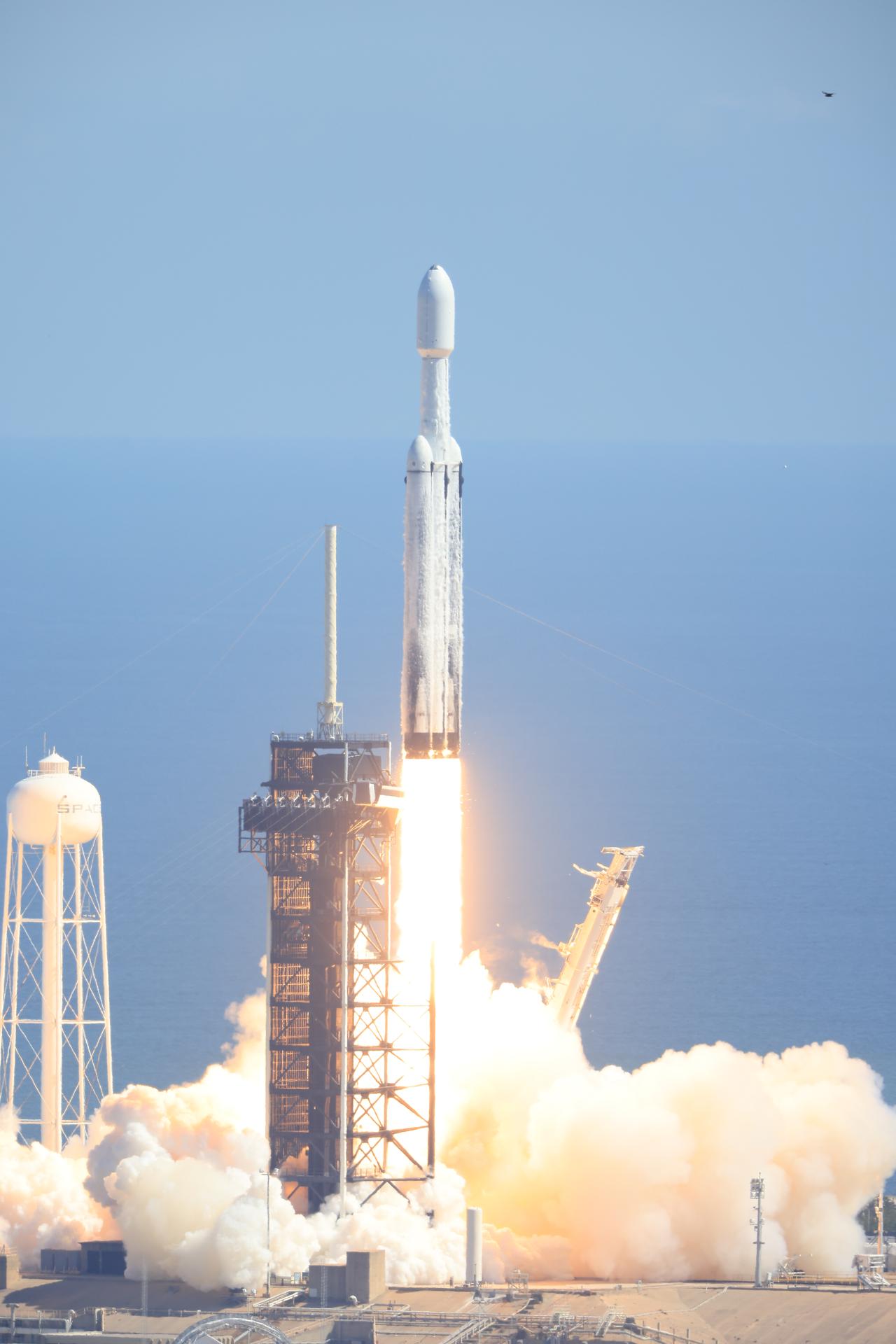
A SpaceX Falcon Heavy lifted the spacecraft off from Launch Complex 39A at Kennedy Space Center on October 14, 2024. The NASA photograph accompanying this article shows the launch, with the payload enclosed in the fairing and the rocket rising just above the pad. The launch sent Europa Clipper on a route that uses planetary flybys on the way to Jupiter. NASA’s launch photograph and flight details.
After a Mars flyby in February 2025, the route calls for an Earth flyby in December 2026. The spacecraft uses these encounters to change its velocity relative to the Sun. The Earth flyby is part of a journey NASA expects to bring Europa Clipper to Jupiter in April 2030. The two-year interval between the launch and the documentary release gives viewers a chance to revisit the engineering effort while the spacecraft is still in transit.
What the spacecraft will look for
Europa Clipper’s destination is a moon with an icy exterior and evidence of an ocean beneath it. The flybys will give scientists repeated opportunities to examine the moon and look for evidence about its environment. The documentary starts with the work required to make those observations possible, from translating scientific questions into engineering requirements to building a spacecraft capable of making the trip. NASA’s Europa Clipper mission overview.
Featured photograph: NASA/Kim Shiflett. Editorial reuse under NASA’s media guidelines.






No comment