
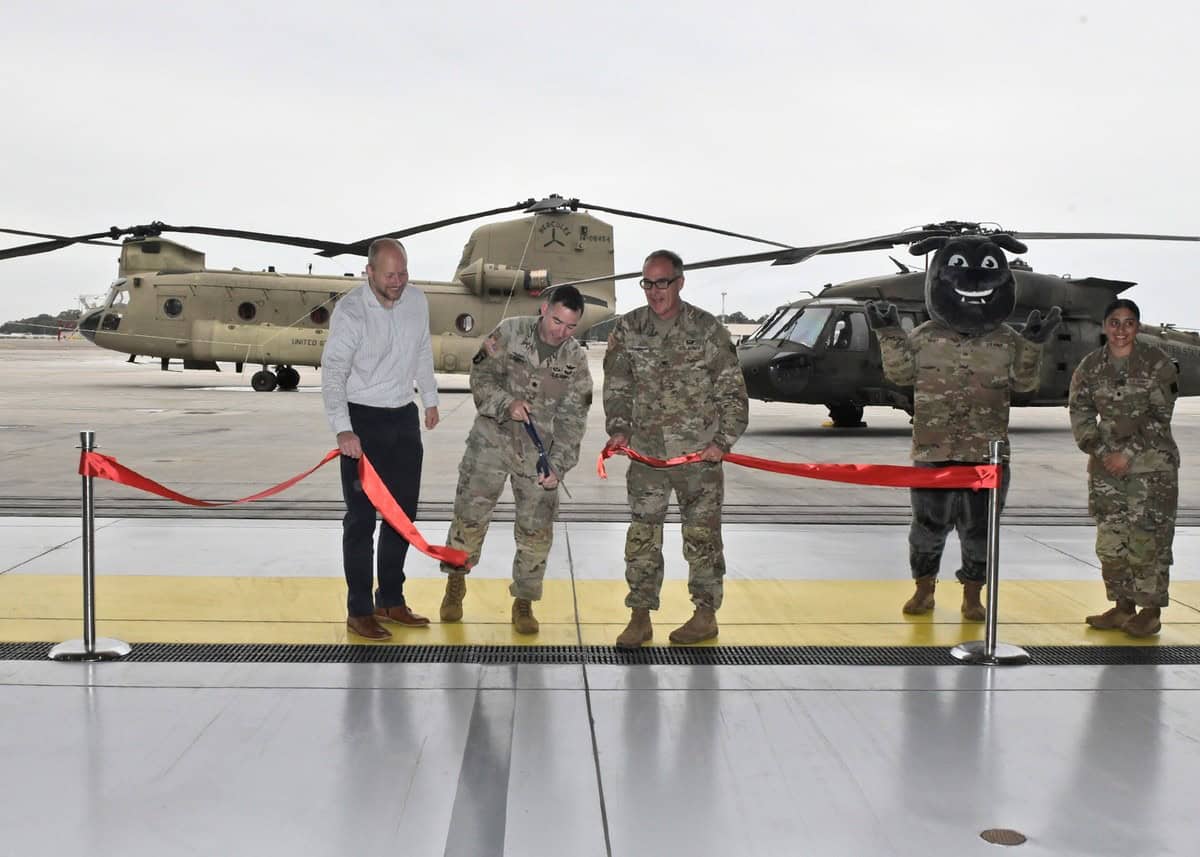
Hunter Army Airfield opened a $56.5 million aviation maintenance facility on Nov. 19, 2026, giving soldiers in 1st Battalion, 3rd Combat Aviation Brigade a hangar designed for Apache helicopter maintenance. The facility in Georgia also brings maintenance, flight operations and leadership together after years of working from separate spaces, according to the Army’s announcement.
What moved under one roof
The complex includes 40,000 square feet of maintenance space and 70,000 square feet of administrative facilities. The Army Corps of Engineers’ Savannah District designed the facility in-house. Before it opened, the battalion used separate hangars for maintenance and flight operations, and other support sections worked elsewhere on the airfield.
Capt. Michael Arnold, who leads the battalion’s airframe repair platoon, described the practical change as being able to walk across a hall onto the hangar floor. For an aviation unit, that proximity can make it easier for the people who plan flights to talk directly with the maintainers who know what work is underway. A shorter walk is a small change on paper, but it matters when those conversations happen throughout the day.
Inside the maintenance space
Battalion commander Lt. Col. Will Liggett highlighted the maintenance bays, access to overhead cranes and integrated diagnostics. The Army also reported that the building has air conditioning and a foam fire suppression system and was designed to withstand conditions up to a Category 3 hurricane.
Those features address different parts of the job. A maintenance bay provides the working space around the aircraft, a crane helps move heavy components, and diagnostic equipment supports troubleshooting. The Army described faster turnaround as an expected benefit. Its opening announcement did not report post-opening data on turnaround times or aircraft availability.
A four-year project
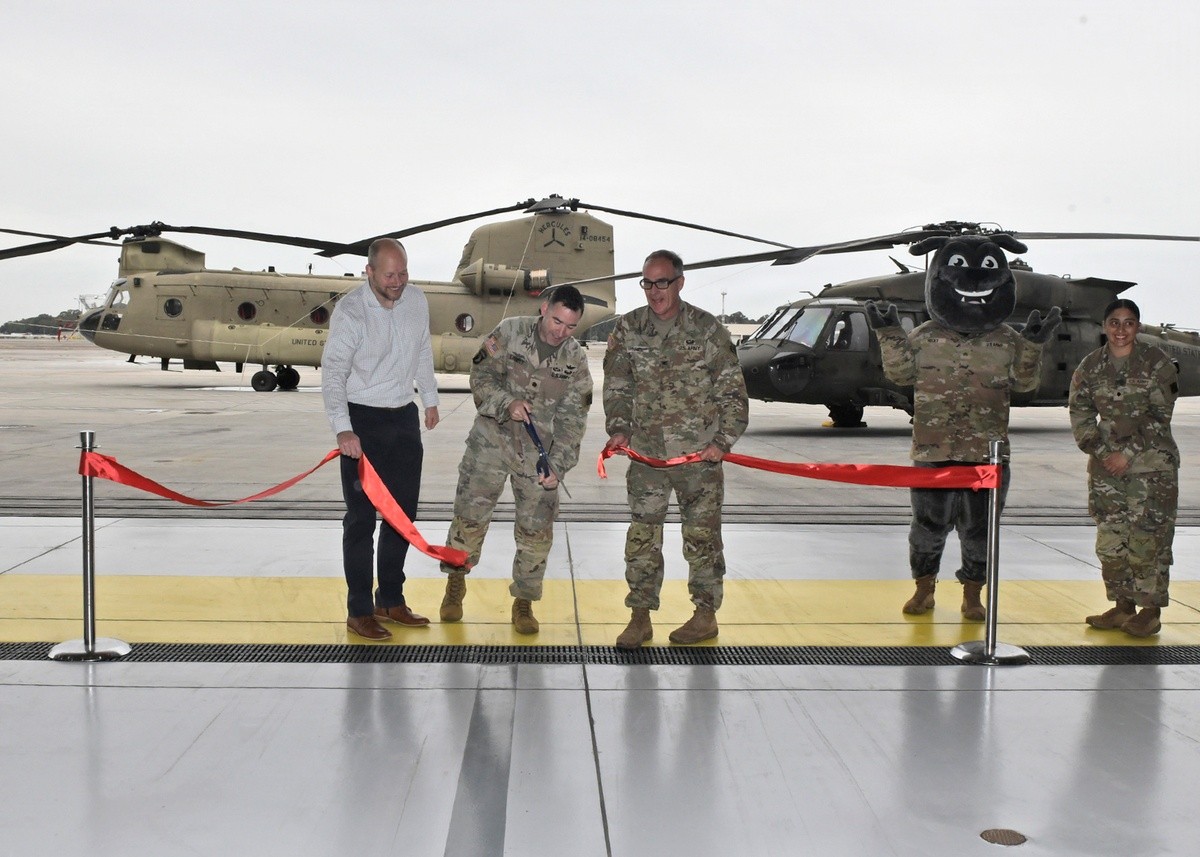
The Army said the project took a little over four years and encountered delays related to contract extensions and natural disasters. Leaders and community partners marked the opening with a ribbon cutting. For the battalion, the immediate change is a single facility where the people who maintain the helicopters and the people who plan their flights can work near one another.
Featured photograph: U.S. Army photo by Christopher Rich, showing the ribbon cutting. Original photograph, used under the Army’s editorial imagery policy.



No comment