
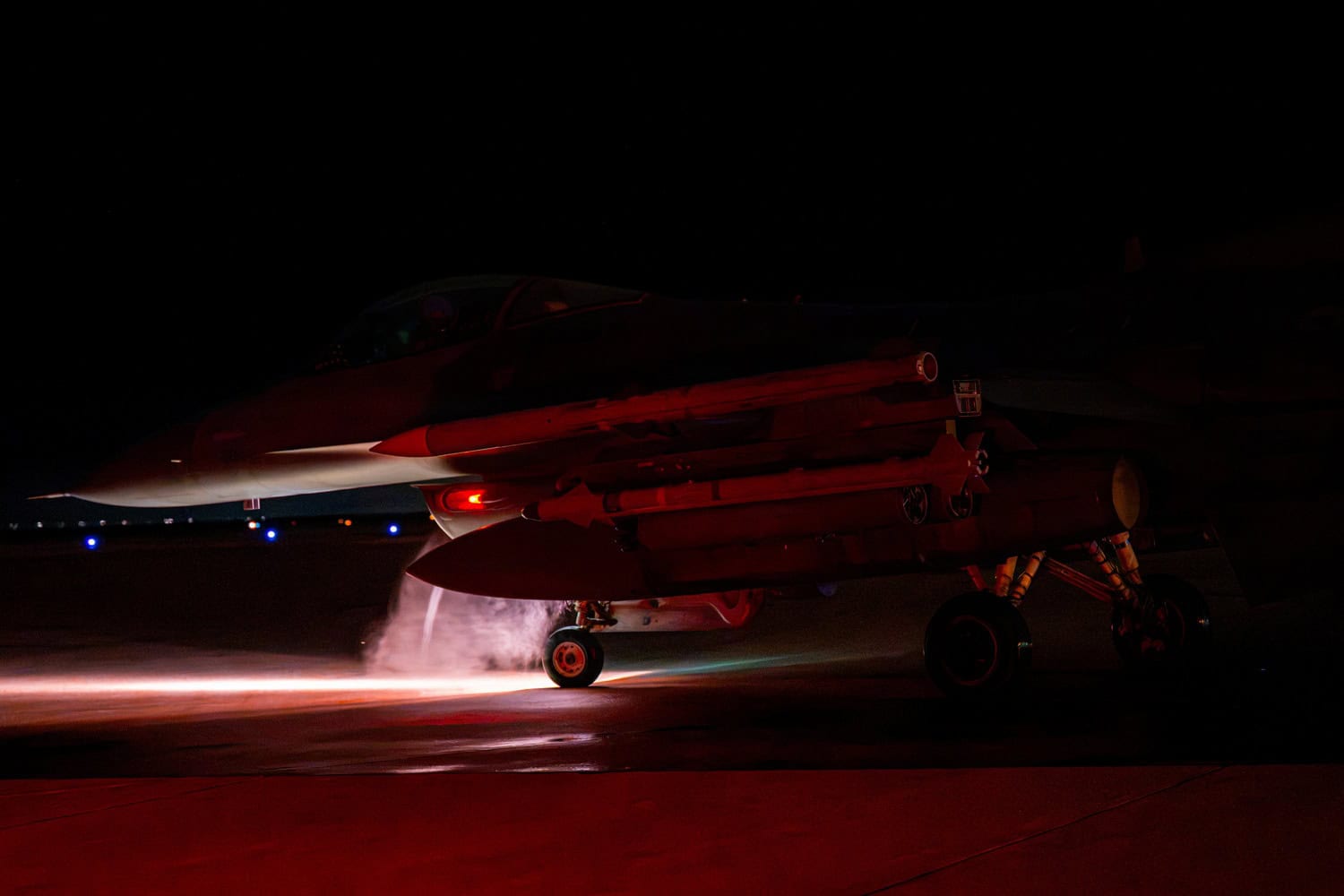
Images released by U.S. Air Forces Central on Nov. 16 show U.S. Air Force and Marine Corps personnel carrying out integrated combat turns on an Air Force F-16 at a base in the U.S. Central Command area of responsibility. The photo captions place the activity on Nov. 11; the location is not identified. One image shows a Marine working on the F-16, while another shows the fighter taxiing after the turn. The release documents a joint maintenance operation, but does not give the number of aircraft, the unit names, or the specific fuel and weapons tasks performed.
The images are notable because an integrated combat turn is designed to combine multiple aircraft servicing tasks into a rapid turnaround. The Air Force’s maintenance guidance describes it as a simultaneous operation involving fueling, servicing, loading and aircraft preparation. When those tasks are coordinated at one parking location, a fighter can spend less time on the ground before it is ready to fly again. The Nov. 16 photo release shows Marines and Airmen working on the same Air Force aircraft, a practical example of service cooperation in a forward operating area.
What the new photographs establish
The DVIDS collection, published by U.S. Air Forces Central, contains photographs made by Senior Airman Leighton Lucero. Their captions identify the aircraft as a U.S. Air Force F-16 Fighting Falcon and place the activity at an undisclosed base in the CENTCOM area. A caption identifies a Marine conducting an integrated combat turn on the aircraft; another describes the F-16 taxiing after a turn. The photo captions date the operation Nov. 11, while the collection was posted five days later.
The images do not describe the operational unit, the aircraft’s tasking, or its next destination. They also do not establish that the Nov. 11 turn included a particular weapons load, a hot-pit refueling procedure, or a combat sortie. Those details are not in the captions, and the location is withheld. The defensible takeaway is narrower: Air Force and Marine Corps personnel were shown conducting a combined turnaround process on an Air Force F-16 in the CENTCOM region.
Why integrated turns matter
A fighter’s ground time can involve several separate jobs: preparing the aircraft, checking and servicing systems, refueling, and loading or unloading stores. An integrated combat turn brings authorized tasks together under a coordinated plan. Air Force maintenance instructions call out the integration of weapons loading, refueling, minor inspection and servicing, and aircraft preparation as a way to improve aircraft availability during combat operations. The procedures are governed by maintenance publications and qualified personnel; the concept is not simply a faster version of routine flight-line servicing.
That coordination can matter when aircraft operate from locations where crews and equipment are distributed across units or bases. Air Force Central has previously described integrated turns as a means of returning fighters to the mission more quickly. In a 2021 account, the command said crews from Prince Sultan Air Base worked with personnel at Al Udeid Air Base to refuel and load live munitions onto an F-16, then return it to operations. That earlier event is useful context for the method, but it is not evidence that the same steps were performed in the Nov. 11 photographs.
In the latest images, the Marine role is visible as part of the team supporting an Air Force aircraft. That is operationally relevant in a region where U.S. forces may need to coordinate airfield support across services. The photographs alone do not show how the teams trained, how long the process took, or whether one service provided a specific specialty. They do show cross-service participation on the aircraft, with Airmen and Marines included in the same set of visual records.
What remains unknown
U.S. Air Forces Central has not released further details with this photo set about the base, units, sortie, or tasks completed. The captions do not say whether the F-16 was refueled, rearmed, inspected, or prepared for a follow-on flight during this particular turn. The images therefore should not be read as proof of a specific combat mission or a new capability. They document an activity and setting, not a mission outcome.
The distinction matters because integrated turns can involve different approved combinations of work. Air Force guidance defines a framework for those procedures, while the actual task sequence depends on the aircraft, mission, available crew and equipment, and the applicable technical instructions. A photo of a crew beside a fighter does not show which tasks were completed or certify that the aircraft was ready to launch.
Still, the latest release adds a current example to the public record of how U.S. forces practice aircraft support in the region. It places Marines alongside Air Force personnel on an F-16, and it records the aircraft moving after the turnaround. For the services, the operational question is how to keep aircraft support adaptable when units, airfields and crews must work together. The images do not answer every detail of that question, but they show one joint activity being carried out in a CENTCOM setting.
Sources
- U.S. Air Forces Central / DVIDS photo collection, including captions for the Nov. 11 F-16 integrated combat turns
- Air Combat Command supplement to AFI 21-101, aircraft maintenance operations and integrated combat turn guidance
- U.S. Air Forces Central, 2021 F-16 integrated combat turn collaboration at Al Udeid
- DVIDS copyright, public use and non-endorsement information





No comment