
The Federal Aviation Administration says its Strategic Management of Airspace, Routes and Trajectories system is now being used in the airspace managed by all 22 U.S. en route traffic control centers. The Nov. 10 expansion took SMART beyond its initial National Capital Region rollout and moves the agency’s data analysis tool into a nationwide operating footprint. The FAA says the aim is to help planners anticipate congestion, weather effects and capacity constraints early enough to recommend schedule or route changes.
SMART’s national expansion arrived only three days before the FAA issued a nationwide ground stop after a separate communications disruption. That timing prompted public questions about whether the new system played a part. The FAA says it did not: in its Nov. 15 explanation, the agency said SMART is a data aggregator that does not feed information into the air traffic control system. The distinction matters. The expansion is a significant operational change, but the FAA describes SMART as an advisory planning layer, not a system that controls aircraft or directs controllers’ screens.
What the FAA expanded
The FAA first announced SMART on Sept. 21, describing it as a cloud-based platform that combines roughly 200 data streams. Those include weather patterns, flight paths, traffic flow and controller staffing metrics. The system is intended to assemble those inputs into a view that helps specialists spot future pressure points in the National Airspace System. Its initial use centered on the Washington region; on Nov. 10, the agency said it would use SMART in the airspace of all 22 centers across the country.
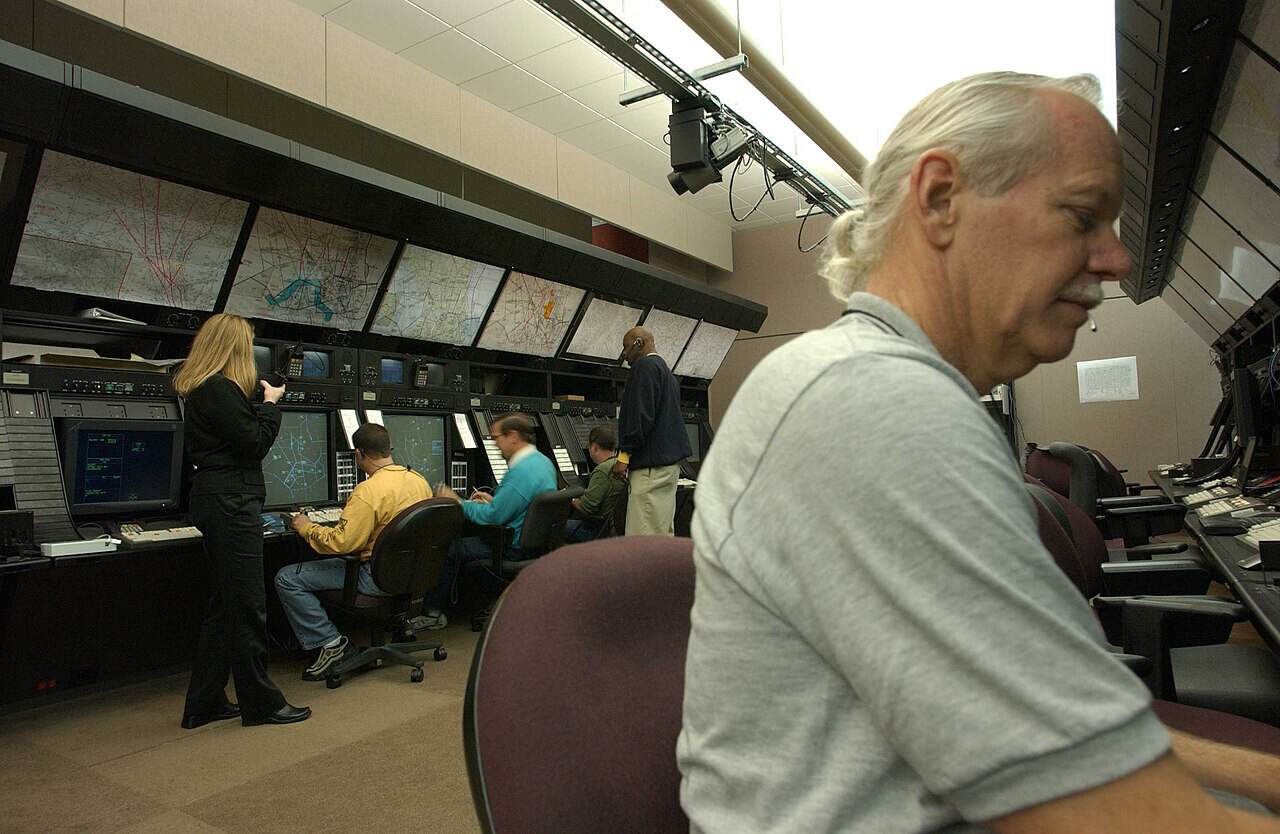
An Air Route Traffic Control Center, or ARTCC, manages aircraft moving between terminal areas and airports over a broad region. These centers coordinate high-altitude traffic and work with terminal radar approach facilities and airport towers. Extending SMART’s coverage to all 22 centers gives the FAA’s central specialist team a nationwide span for producing scheduling recommendations. It does not mean the FAA has replaced local traffic-management judgment or installed an autonomous flight-control system in each center.
How a recommendation is supposed to reach the sky
The FAA says specialists at its SMART center in Washington, D.C., analyze and validate the platform’s data. They send scheduling recommendations to the FAA’s Air Traffic Control System Command Center in Warrenton, Virginia. The command center routes recommendations to the facilities responsible for the affected airspace, where local leadership decides whether to consider them. In the FAA’s description, the system helps people make earlier decisions; operational authority remains with the agency’s human staff and controllers.
That workflow is important because SMART is described as supporting strategic planning over time, rather than providing a direct instruction to a pilot or a real-time separation command to a controller. The FAA’s September announcement said planners could use the information to look hours, days or weeks ahead. A weather system expected to limit capacity, a crowded arrival bank, or a conflict between scheduled demand and available routes could be identified before it becomes an immediate disruption. The potential value is in giving planners options sooner.
The system’s usefulness will depend on the quality and timeliness of its inputs, the accuracy of the forecasts and the practicality of the recommendations. The public materials describe a broad set of data inputs, but they do not publish a detailed engineering specification for every data feed, its refresh interval or how SMART resolves inconsistent inputs. The FAA has also not published center-by-center operational details in its Nov. 10 announcement. Those limits make independent measurement of performance especially important as the coverage expands.
Early results are the FAA’s own figures
The FAA reports that, since SMART began on Sept. 21, the system had helped reroute 180 flights, saved an average of 10 minutes per flight and saved an average of almost 80 gallons of fuel per flight. Those are agency-reported results from the initial rollout, not a measured result of nationwide use. They should be read as an early snapshot rather than a forecast of what passengers will experience across every center.
The figures also need a clear denominator and method to be useful over time. A reroute may avoid a delay, shorten a flight or shift a problem elsewhere in the network. Average time and fuel savings can vary by route, weather, aircraft and traffic conditions. As the tool’s footprint grows, the FAA will have more cases to evaluate, but the agency’s public statement did not include a technical report explaining the calculation, a comparison group, the range of outcomes or how it attributes the improvement to SMART rather than other traffic-management actions.
Why the rollout is under scrutiny
The expansion comes amid wider questions about the FAA’s technology modernization and the use of artificial intelligence in safety-sensitive settings. In October, Democratic members of the House Transportation and Infrastructure Committee asked the Government Accountability Office to audit SMART and the related Flow Management Data and Services platform. Their request cited concerns about safety-risk analysis, testing and certification, performance metrics, deployment planning, front-line workforce input and training.
The FAA says SMART recommendations are reviewed by specialists and local leadership, while the system itself does not feed information into air traffic control. That is a meaningful safeguard in the stated design. But a human decision-maker still needs enough time, information and authority to reject a weak recommendation. Oversight should examine not only whether the platform can produce a useful route suggestion, but also how its uncertainty is conveyed, how conflicting data is handled, what records are kept when staff accept or reject advice, and how the agency tests the tool against unusual conditions.
The House members’ request for a GAO audit is a request, not a finding that the system is unsafe or that the GAO has completed an investigation. The concerns nevertheless identify questions that can be answered with evidence. Useful public reporting would include how SMART recommendations are validated, whether controllers and traffic managers can see why a route is suggested, how often recommendations are rejected, and what post-deployment checks are in place. The FAA has not yet published those measures in the Nov. 10 expansion statement.
The recent ground stop is a separate event
The Nov. 13 nationwide ground stop was caused by instability in legacy FAA network equipment, according to the agency’s Nov. 15 account. The FAA said a surge of data on its telecommunications network disrupted aircraft communications and some radar feeds, leading it to stop departures while it stabilized the system. The agency identified two potential locations for the data flooding and said it and L3Harris were continuing to investigate the root cause. The FAA also said the ground stop was not caused by SMART and that SMART does not feed data into air traffic control.
The Associated Press reported that federal officials and SMART’s developer also said the outage was unrelated to the new tool. That independent report describes the difference between the systems: SMART analyzes schedules, weather and other information to offer recommendations, while the failed legacy network carried operational communications and radar feeds. The FAA’s findings on the outage remain subject to further investigation, so the connection should be described according to what officials have said rather than treated as a completed technical finding.
Keeping those events distinct does not remove the need for scrutiny. The outage has put renewed focus on the reliability of the FAA’s older infrastructure at the same time the agency is expanding new planning software. The two efforts address different functions. A planning tool cannot substitute for stable communications, radar, resilient network equipment or trained controllers; likewise, replacing a network does not by itself establish whether an advisory tool improves traffic flow safely.
What to watch next
The next meaningful test is whether the national rollout produces transparent, repeatable gains without obscuring the human decisions behind them. The FAA can strengthen confidence by publishing periodic results across more than the initial Washington-area trial, including the number of recommendations issued, the number accepted, the operational circumstances, and the measured effect on delays and fuel use. Reporting should distinguish a route recommendation from a controller instruction and should explain how the agency checks for inaccurate, incomplete or stale data.
For airlines and travelers, SMART’s promise is earlier coordination when weather or congestion limits the system’s capacity. For the aviation workforce, the central issue is whether the tool improves situational awareness while preserving controller authority and operational judgment. For the FAA, nationwide coverage creates a larger proving ground—and a larger responsibility to document how the software performs in real conditions. The Nov. 10 expansion marks the start of that broader evaluation, not proof that the projected benefits have already been achieved across the country.
Sources
FAA, “SMART Expanding Across the Nation,” Nov. 10, 2026; FAA, “Nationwide Ground Stop: Questions and Answers,” Nov. 15, 2026; FAA/DOT, SMART launch announcement, Sept. 21, 2026; House Transportation and Infrastructure Committee, GAO audit request; Associated Press, SMART and the November ground stop, Nov. 16, 2026.







No comment