
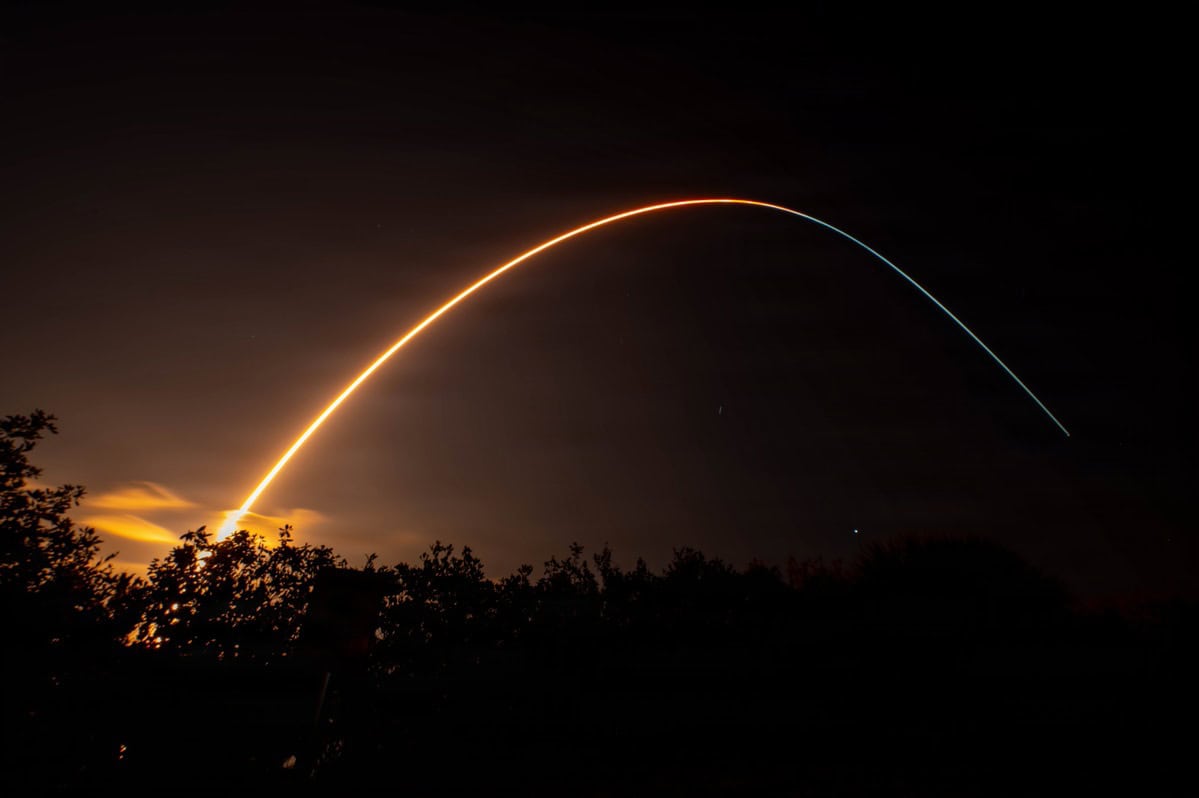
A second delay moves Vulcan Leo 1 to Sunday
United Launch Alliance has postponed its Vulcan Leo 1 mission for a second time, moving the launch of 40 Amazon Leo broadband satellites to Sunday, Nov. 15. The latest delay followed a network communication issue between ground equipment and the rocket that required reconfiguration beyond Saturday’s launch window, ULA said. The company’s mission page now lists a launch window from 12:11 to 12:40 p.m. EST. Local reporting citing ULA gives a target time of 12:11:30 p.m., pending range approval. ULA’s mission page and WFTV’s Nov. 14 update both identify Sunday as the next attempt.
The latest issue came one day after ULA scrubbed Friday’s planned launch because a power interruption at an off-site gaseous nitrogen plant caused the loss of high-pressure pumps. ULA said it could not confirm sustained nitrogen supply and moved the first attempt to Saturday. On Saturday, a separate communications problem between ground equipment and the launch vehicle extended beyond the available 29-minute window, prompting the Sunday reschedule. ULA has said the rocket and spacecraft remain healthy.
These are distinct ground-side issues, and ULA has not attributed either delay to the booster-nozzle problem that had kept Vulcan from flying since February. The mission is nevertheless significant as the rocket’s return to flight and as its first flight carrying Amazon Leo satellites. The team will be looking both to complete the mission and to gather data on changes made after the earlier nozzle anomaly.
Why this flight matters to Vulcan
Vulcan Leo 1 is the first of 38 missions ULA has contracted to launch Amazon Leo satellites. It will use the VC6L configuration, with six GEM 63XL solid rocket boosters, two BE-4 first-stage engines and a longer 70-foot payload fairing. ULA says it will carry 40 satellites, the largest batch planned for a single Amazon Leo launch to date. The mission is designed to place them in low Earth orbit for Amazon’s broadband network.
The mission also introduces a shortened, low-Earth-orbit-optimized Centaur V upper stage. ULA says the stage is approximately 35 feet tall, about six feet shorter than the version used on earlier Vulcan missions, and carries roughly one-third less propellant. Reducing the stage’s mass allows the rocket to devote more of its performance to the 40-satellite payload. The stage is not simply a smaller copy: the configuration is tailored to the planned Amazon Leo orbit and payload mass.
The six-booster configuration is another first for Vulcan. The vehicle’s two BE-4 engines provide the core first-stage propulsion, while the six solid motors add thrust during liftoff. ULA lists the rocket at 215 feet tall and says it will weigh about 1.99 million pounds when fueled. The company estimates that the mission will deliver more than 50,000 pounds of payload to orbit, a record for ULA if achieved.
The mission’s flight profile reflects the amount of hardware and the long sequence of deployments. ULA’s prelaunch plan calls for the Centaur stage to reach an initial parking orbit, coast for about 50 minutes, then perform a second burn to circularize the orbit at approximately 285 miles. Satellite deployment is planned to begin about 70 minutes after liftoff and continue for roughly 25 minutes. The 40 spacecraft will separate in 16 events, with the final 12 events releasing three satellites apiece. This is the published plan; no spacecraft have been deployed yet.
Amazon’s launch plan and the return-to-flight context
Amazon describes Leo Vulcan 1, also called LV-01, as its first Amazon Leo launch aboard Vulcan and the first of 38 contracted missions with ULA. Amazon’s mission overview says the 40 spacecraft make up its largest Leo payload to date and that the company is building a constellation of more than 3,000 satellites. The satellites are intended to provide broadband service, with the network still in its deployment phase.
The flight is also Vulcan’s first launch since a solid rocket booster nozzle anomaly during a February mission. ULA’s Nov. 10 technical update said the company, Northrop Grumman, the U.S. Space Force and other government agencies conducted an investigation that included analysis, laboratory material tests, component tests and a full-scale hot fire of a GEM 63XL motor in Utah. ULA said investigators identified three credible causes and incorporated design and manufacturing changes in the boosters assigned to Vulcan Leo 1.
ULA has said the investigation will continue while the rocket flies with the updated nozzle design. The company plans to compare flight data with the expected behavior of the corrective actions and continue evaluating possible design improvements. That distinction matters: a launch attempt is not by itself a complete resolution of the anomaly. The mission is intended to provide data in flight, while analysis continues after the vehicle has flown.
The return-to-flight mission follows a roughly nine-month gap since Vulcan’s February launch. Independent reporting by Spaceflight Now described the flight as Vulcan’s first since the nozzle anomaly and noted that national-security use of the rocket had been paused pending corrective action. ULA’s technical account provides the company’s explanation of the work performed and the changes made; the flight will offer a real-world test of those changes under launch conditions.
Two scrubbed windows, two separate problems
Friday’s delay involved the supply of gaseous nitrogen used by the launch operation. According to ULA’s statement, a power interruption at the supplier’s plant stopped high-pressure pumps. Without confirmation that the supply could be maintained, the team moved to a backup opportunity on Saturday. The rocket and payload remained healthy, but the launch could not proceed without the necessary ground-support conditions.
Saturday’s postponement had a different immediate cause. ULA said the communication issue arose between ground equipment and the launch vehicle and required reconfiguration. Because that work would have extended past the 29-minute window, the team ended the attempt and scheduled the next opportunity for Sunday. The company’s update did not identify the specific equipment involved, the detailed fault mode or whether a component was replaced. It would be premature to infer a vehicle defect from the limited public description.
The mission is subject to launch-range coordination and the usual countdown constraints. The Sunday window listed by ULA runs from 12:11 to 12:40 p.m. EST. That is the current announced opportunity, not a guarantee of liftoff. Additional technical or range conditions could still change the plan.
What to watch on Sunday
If Vulcan Leo 1 launches, the first major public milestone will be the vehicle’s performance through ascent and separation of the Centaur upper stage. The later milestones will include the Centaur’s planned burns and the start of satellite deployment. ULA’s flight profile places initial deployment at about 70 minutes after liftoff, with separation continuing over approximately 25 minutes. Amazon will then need to establish contact with the spacecraft and conduct health checks before raising them to their assigned operational orbits.
For Vulcan, the flight will also provide data on the updated solid rocket booster nozzle design. ULA has not publicly described a single pass/fail metric for the corrective work in the prelaunch update. The company has said it will use the flight to increase its understanding of nozzle behavior and evaluate the effectiveness of the changes. That monitoring is part of the mission’s technical significance, alongside its commercial payload.
For Amazon, the launch is a step in building a multi-thousand-satellite network and establishing a new launch lane with ULA. The mission will use dedicated processing facilities at Cape Canaveral, including a vertical integration facility and a launch platform developed for Amazon Leo missions. ULA says that infrastructure will allow two Vulcan missions to be processed in parallel, though the operational cadence will depend on the mission and launch schedule.
After two delays, the practical next step is the Sunday window. The causes publicly cited so far are a nitrogen-supply interruption on Friday and a ground-to-rocket communication issue on Saturday. ULA says the rocket and spacecraft remain healthy, and the company has announced no further change to the planned Sunday opportunity. Any eventual launch and deployment outcome should be reported only after ULA confirms it.
Sources
- United Launch Alliance: Vulcan Leo 1 mission page and current launch window
- United Launch Alliance: mission configuration and return-to-flight technical update
- Amazon: Leo Vulcan 1 mission overview
- WFTV: report on the Saturday delay and Sunday target
- Spaceflight Now: Vulcan return-to-flight context
- DVIDS: archival Vulcan launch photo, ID 9519030






No comment