
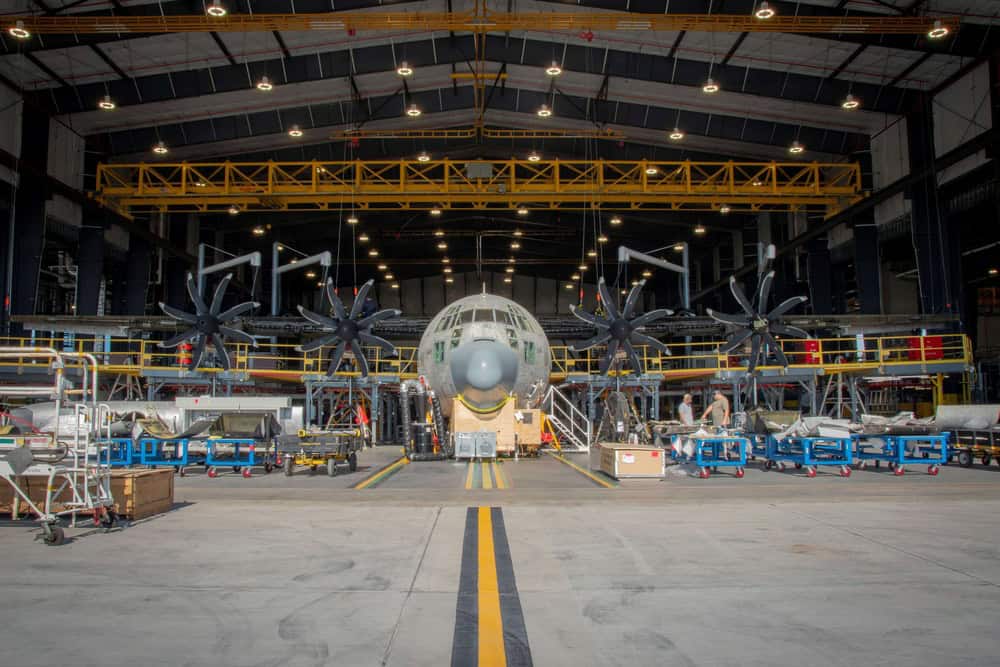
Fleet Readiness Center East (FRCE) has begun a new phase of C-130 sustainment work with the arrival of its first C-130T Hercules at the Navy depot’s new Global TransPark facility in Kinston, North Carolina. The aircraft’s induction on Oct. 15 launched the site’s first full-scale planned maintenance cycle and moved the facility closer to operational capacity, according to a Nov. 12 Navy release. (DVIDS / Fleet Readiness Center East)
The milestone is significant because it expands FRCE’s work beyond shorter, targeted inspections and field support. The depot was designated as the Navy’s repair point for the C-130 fleet three years before this induction. The new Kinston facility is intended to handle heavier, longer maintenance work while existing teams continue to perform inspections at Marine Corps Air Station Cherry Point and deploy to flight lines elsewhere.
A first aircraft begins the Kinston maintenance cycle
FRCE said the C-130T was cleaned and stripped at Tinker Air Force Base in Oklahoma before arriving in North Carolina. The aircraft touched down, and maintenance began three days later. Officials described the arrival as the culmination of months of planning and years of preparation for the depot’s expanded C-130 workload.
The aircraft is the first to enter the facility for scheduled maintenance. That does not mean the depot is starting from zero: FRCE personnel have already carried out minor depot inspections, or MDIs, on C-130s. The release describes MDIs as roughly 30-day targeted work periods that address structural repairs and corrosion beyond what operational squadrons and intermediate-level maintainers handle.
Moving from those shorter inspections to planned maintenance intervals requires a larger workflow. FRCE said its planners studied how other military and commercial depots manage C-130 work before preparing to perform multi-month overhauls. The Kinston site gives the command a dedicated place to build that process around the aircraft and its maintenance requirements.
How the new site fits into C-130 support
The Global TransPark facility spans about 75 acres and more than 700,000 square feet, according to FRCE. It has direct taxiway access to the airport’s 11,500-foot runway. The release says the C-130 line is projected to generate more than 350,000 direct artisan labor hours by 2030, a projection that reflects the planned workload rather than work already completed.
FRCE expects its own paint and stripping capability at the complex to be operational by early 2027. Until then, the first aircraft’s preparation took place at Tinker. The command says future C-130s should not need that offsite step once the Kinston capability is ready.
FRCE’s approach combines the new heavy-maintenance site with its existing MDI program and mobile teams. The release says specialized teams continue traveling to flight lines to provide depot-level service. In practice, the Kinston facility is designed to add a fixed location for deeper work while those shorter inspections and deployed repairs continue.
Why the C-130T remains a demanding sustainment job
The Navy release describes the C-130T as a medium tactical transport supporting operations in difficult environments. Its missions include moving personnel and cargo, emergency evacuation and humanitarian relief. Keeping an aircraft available for those tasks involves more than routine servicing: structural repairs, corrosion treatment and scheduled overhaul work can require long periods of depot maintenance.
The first induction is therefore a test of the maintenance organization as much as a new use of hangar space. FRCE leaders described the work as a coordinated effort involving the depot workforce, federal partners, and state and local organizations. The site’s long-term value will depend on converting its scale and workforce into completed maintenance and aircraft returned to operational units.
FRCE Commanding Officer Col. Christopher C. McDonald II said the new capability is intended to strengthen fleet readiness. C-130 branch heads Chris Melton and Matt Sinsel pointed to the opportunity to refine the maintenance process at Kinston and build experience there. The release also said several Navy customers had already asked about sending aircraft to the site, though it did not identify those customers or provide a future induction schedule.
What comes next
The first C-130T begins the full-scale maintenance phase at the new location, but FRCE’s stated goal is a sustained program rather than a one-time event. The early-2027 target for in-house paint and stripping work is one near-term capability milestone. The broader measure will be how the facility performs scheduled maintenance while supporting the Navy’s continuing C-130 workload.
The Navy release does not specify the first aircraft’s expected completion date, the exact maintenance tasks planned for its cycle, or a detailed annual throughput target. Those details will be important indicators as the Kinston operation matures. For now, the documented milestone is the start of the first planned maintenance interval at a site built to expand FRCE’s role in C-130 sustainment.





No comment