
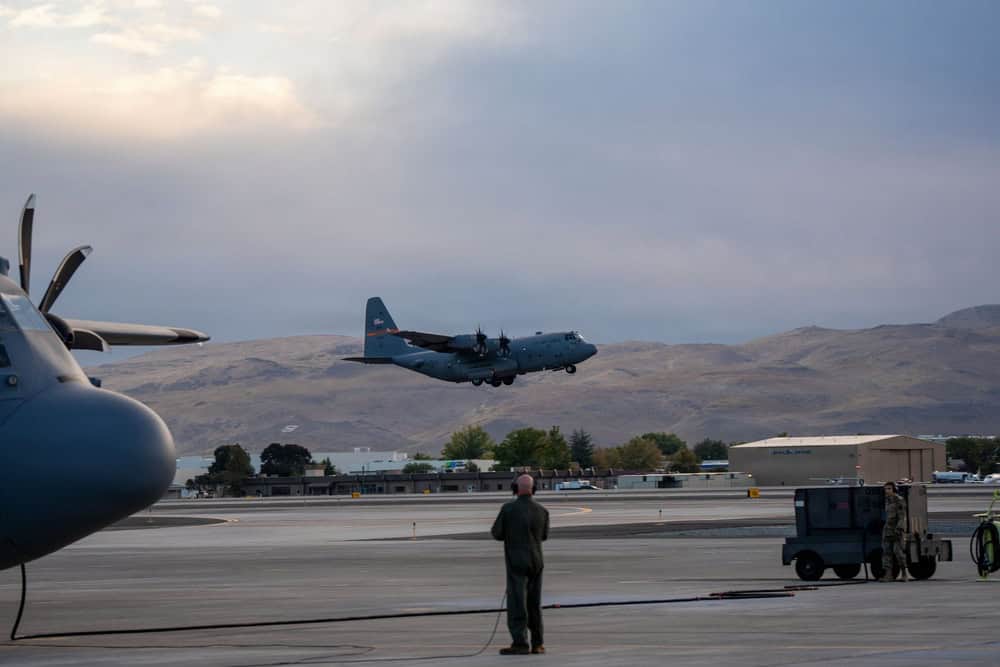
U.S. Air Force C-130 Hercules 93-2041 left the Nevada Air National Guard Base in Reno on Sept. 28, 2026, for its final flight to Sheppard Air Force Base in Texas. After more than three decades of service, the aircraft is moving from operational duty into a new role as a maintenance training airframe, where students will practice hands-on work with the aircraft’s systems and components. The move closes one phase of the Hercules’ service while keeping the aircraft in use for the Airmen who will maintain future fleets.
The transfer also carries a singular history. In 2010, 93-2041 was struck by enemy fire during an airdrop mission over Afghanistan. One of the aircrew members on that flight, then a staff sergeant and loadmaster, later became a C-130 pilot and returned to fly the same aircraft on its final journey. The 152nd Airlift Wing’s account of the transition documents both the aircraft’s combat damage and the personal connection that brought the pilot back to the airplane. The Air Force story and its related public-domain photo record provide the details.
A last flight, then a new assignment
The flight from Reno to Sheppard was not a museum transfer or a retirement to static display. Tail 93-2041 is intended to remain a working training asset. At Sheppard, future aircraft maintainers can learn by removing, installing and inspecting components on a full-size C-130, gaining practical experience before they move to specialized aircraft training. The airframe will no longer carry operational missions, but its structure and systems will still teach the work required to keep military aircraft serviceable.
That change reflects a common second life for aircraft that have reached the end of operational usefulness. A training airframe can absorb repeated instructional use without the flight-hour demands of an active fleet aircraft. Students can see how components fit, where systems are routed and how maintenance tasks are performed in context. For a transport aircraft as large and complex as the Hercules, access to an actual airframe offers a different kind of learning than classroom diagrams alone.
The C-130 family has performed transport, airdrop and other missions across decades of Air Force service. 93-2041’s next assignment is narrower, but it remains directly connected to fleet readiness: teaching maintainers the skills that operational aircraft require. Its final flight therefore moved the aircraft from one form of service to another rather than ending its usefulness.
The Afghanistan mission that marked the aircraft
In 2010, 93-2041 was conducting a low-cost, low-altitude airdrop mission to resupply troops in western Afghanistan during Operation Enduring Freedom. The aircraft approached a drop zone while carrying bundles for delivery. According to the crew member’s account in the 152nd Airlift Wing report, the crew heard a rapid series of impacts during the run. The aircraft continued the mission, completed the airdrop and returned toward Bagram Airfield.
Problems became apparent during the return flight. The copilot experienced instrument issues, and several interphone positions remained stuck on a hot microphone. Those symptoms prompted the crew to suspect the aircraft had been hit. After landing, maintainers found damage on the right side of the fuselage. The projectile passed through the aircraft’s skin and structural components, struck emergency oxygen equipment, penetrated an aluminum bulkhead and damaged wiring before losing energy near the navigator’s position, the official account said.
The aircraft survived the mission and returned to service. The report said the crew later received Combat Action Medals for the engagement. A patch covering a bullet hole remained visible inside the aircraft years afterward, an enduring physical reminder of the mission. The damage did not define every part of 93-2041’s service, but it made the airframe’s history unusually tangible for the crew members who flew and maintained it.
From cargo compartment to cockpit
Lt. Col. Bradley Emmett was a staff sergeant and loadmaster aboard 93-2041 during the Afghanistan mission. A loadmaster works in the aircraft’s cargo compartment, coordinating the movement, restraint and delivery of cargo and supporting the crew’s mission. In 2010, Emmett was preparing an airdrop when the aircraft was hit. He later completed pilot training and returned to the 169th Airlift Squadron as a C-130 pilot in 2014.
His path from enlisted aircrew member to aircraft commander gave him experience on both sides of the cockpit door. The DVIDS report notes that he estimated about 1,500 flying hours as a loadmaster and more than 2,500 as a pilot. That background shaped his perspective on crew coordination and the work performed in the cargo compartment. The same aircraft that once carried him as a loadmaster later became part of his pilot career, linking two distinct stages of service to a single tail number.
When 93-2041 approached the end of its operational flying career, Emmett volunteered to help deliver it to Sheppard. The final flight brought the aircraft and one of its former crew members together again, this time with Emmett at the controls. The official account describes the assignment as a personal full-circle moment, but the broader significance is practical: 93-2041’s history will accompany it into a training environment where maintainers can work directly with the aircraft.
What a training airframe preserves
A training aircraft preserves useful knowledge in a form maintainers can handle. Students can practice tasks on installed equipment, understand access limitations and see how individual components relate to the larger system. The aircraft does not need to be flightworthy to make those lessons valuable, though the training organization must still manage the airframe, tooling and instructional procedures safely.
For 93-2041, the transition also preserves a record of how an aircraft changes through service. Its panels, wiring routes and structural repairs reflect years of maintenance and operational use. The reported damage from the Afghanistan mission is part of that record, as is the care that kept the aircraft flying for decades afterward. In a classroom setting, students will encounter not an abstract model of a C-130, but a specific airframe with a documented operational past.
The transfer illustrates the distinction between aircraft retirement and retirement from all service. Tail 93-2041 has ended its operational flying career, but the Air Force’s maintenance training mission will give it another defined purpose. That distinction matters for aircraft inventories: some airframes leave flying units but continue to support instruction, test work or other ground-based functions.
The Hercules’ continuing role
The C-130’s long service history is built around adaptability. The aircraft family has been used to move people and cargo, deliver supplies by air and operate from a range of locations and conditions. Individual airframes accumulate their own histories within that broader fleet story. In 93-2041’s case, the final operational assignment is followed by a training mission designed to prepare the next generation of maintainers.
That role is especially fitting for an aircraft whose service depended on the work of both aircrew and maintenance teams. The crew carried out the Afghanistan airdrop after the aircraft was struck, while maintainers identified damage and supported the aircraft’s return to service. At Sheppard, the airframe will help students learn the procedures that keep aircraft safe and ready. The new mission turns the airplane into a direct teaching resource for the same kind of work that sustained it.
Tail 93-2041’s final flight from Nevada to Texas therefore marks a transition rather than a disappearance. Its years of operational service are over, but the airframe will remain part of Air Force training. For maintainers learning on it, the C-130 will offer a hands-on lesson in systems, inspection and the long chain of work behind every aircraft mission.





No comment