
Published November 21, 2026
On January 3, 1944, Coast Guard pilot Frank A. Erickson flew a Sikorsky HNS-1 helicopter to deliver blood plasma to Sandy Hook, New Jersey. Survivors of the destroyer USS Turner needed treatment after explosions sank the ship near the entrance to New York Harbor. A winter storm had grounded fixed-wing aircraft. The Coast Guard records Erickson’s delivery as the first helicopter rescue mission. The aircraft’s cargo was medical supplies, and the people it helped were already ashore. U.S. Coast Guard aviation chronology
An aircraft for places a runway could not serve
Erickson had served in the Navy before entering the Coast Guard and was commissioned in 1931. He qualified as Coast Guard Aviator No. 32 in 1935. During his posting in Hawaii, he read about Sikorsky’s early helicopter work and saw a way to reach people in the water. The difficulty of recovering wounded men during the attack on Pearl Harbor gave that idea greater urgency. National Coast Guard Museum’s Erickson profile
Erickson visited the Sikorsky plant in 1942 and set out possible Coast Guard uses for the aircraft. He worked alongside William Kossler, who led the service’s aviation engineering division and was also advocating for helicopter trials. Erickson was chosen as the first Coast Guard aviator to qualify on helicopters. He flew solo in a modified XR-4A in June 1943, just over six months before the Turner rescue flight. Museum account of the early flight program
Getting plasma to Sandy Hook
The Turner was anchored near Ambrose Light in Lower New York Bay when the first explosion occurred. Survivors were taken to a hospital at Sandy Hook. As the demand for plasma grew and weather restricted other options, the Coast Guard was asked whether an HNS-1 could collect the supplies at the Barge Office in Manhattan and fly them to the hospital area. Erickson and Coast Guard mechanic Walter Bolton made the flight to the pickup point. Bolton stayed behind after the loading, and Erickson continued with the supplies. Museum account based on the flight operations report
The helicopter carried the plasma secured to its floats. Patriots Point Naval and Maritime Museum reports that the load held more than 40 units. The date is significant because the flight used rotary-wing aviation for an urgent medical task in conditions that had already shut down the fixed-wing option. The delivery also showed the importance of the people on the ground who positioned and secured the cargo and treated the survivors. Coast Guard chronology · Patriots Point account
Why the delivery mattered
Erickson had spent much of the preceding two years arguing that the helicopter was worth testing for rescue. The Turner response gave the service an example from an actual emergency. A helicopter could arrive and depart without a runway, which made a difference at a pickup point like the Barge Office and in getting urgent supplies closer to a hospital. The storm still made the trip difficult. The museum’s account describes poor visibility and strong winds on the way to Battery Park. National Coast Guard Museum’s account of the flight
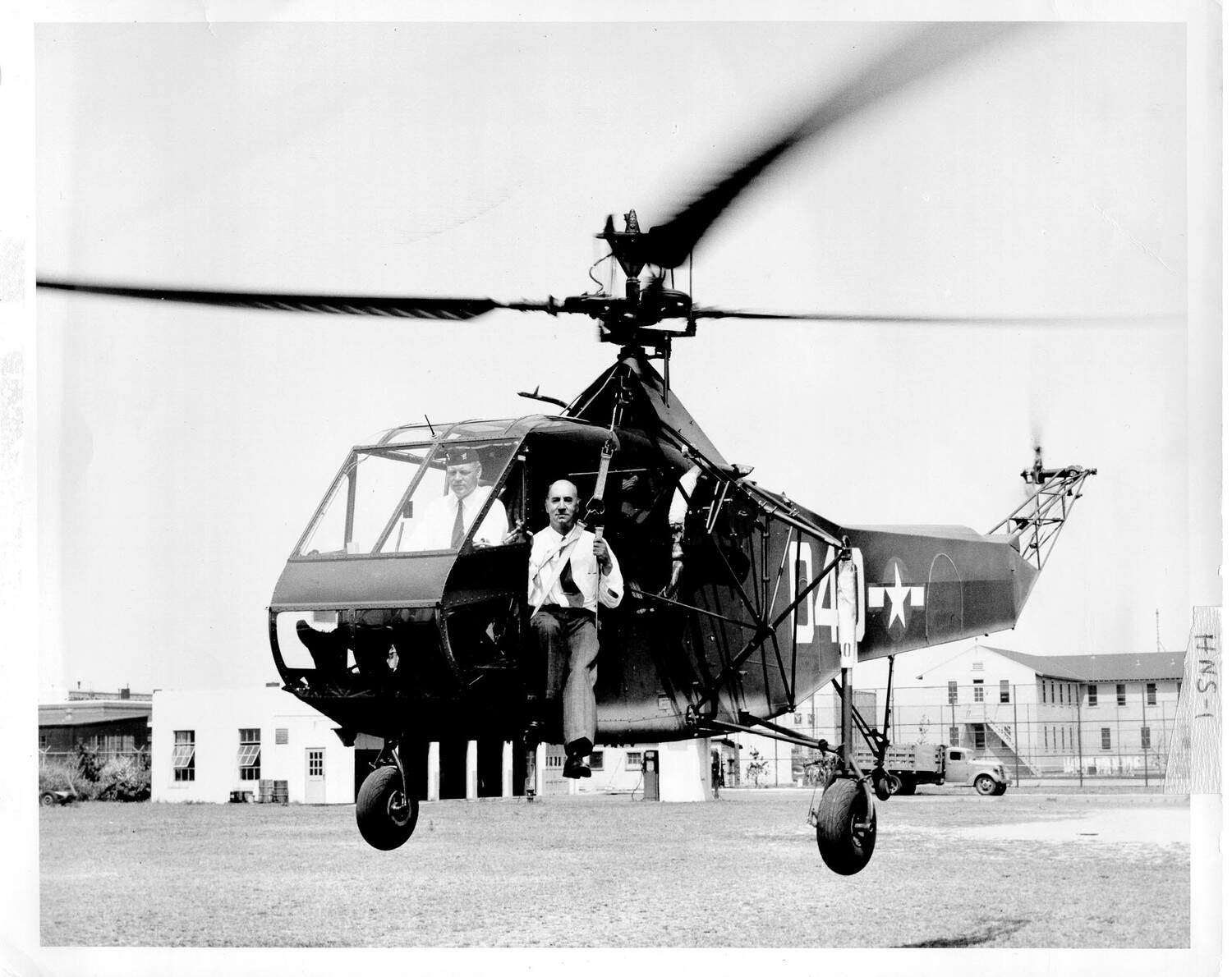
The photograph above was taken later that year. It shows Erickson with Igor Sikorsky and Coast Guard HNS-1 No. 39040 on August 14, 1944. The flight in January had put work by the manufacturer, Coast Guard engineers, maintenance crews and a qualified pilot to use on an emergency call. That combination is why the episode belongs in the history of air rescue. An aircraft still being evaluated for military purposes had already shown what it could contribute to medicine and lifesaving. U.S. Coast Guard photo record
Sources
U.S. Coast Guard aviation chronology · National Coast Guard Museum biography · Patriots Point Naval and Maritime Museum · Featured photograph source and public-domain rights
Featured photograph credit: U.S. Coast Guard, photo 232-8, public domain.





No comment