
Astronomers have reconstructed a merger in the outskirts of the Andromeda galaxy in which a star smaller than the Sun was swallowed by a much larger companion. The event, nicknamed Bao, offered an unusual chance to compare observations from before, during and after a pair of stars became one. NASA’s Nov. 18 report says the James Webb Space Telescope supplied the final observations the researchers needed to tie the sequence together.
A change that began before the eruption
The researchers first noticed the system in archival infrared data in 2023. Observations in 2024 showed it getting brighter and releasing dust. By July 2025, NASA’s SPHEREx survey had picked up a change in the balance between visible and infrared light. A ground-based survey recorded the eruption in October. Each observation covered a different part of the sequence, giving the team a way to distinguish the buildup from the outburst.
What Webb added
Webb observed the system in December 2025, 47 days after the eruption peaked. Its mid-infrared measurements gave researchers information about dust that the larger star had shed. By comparing those measurements with simulations and the earlier data, the team reconstructed a system in which a supergiant about seven times the mass of the Sun engulfed a companion estimated at about 0.7 solar masses. Columbia University’s account describes how first author Viraj Karambelkar and colleagues pieced together the observations.
During this kind of interaction, the stars can end up inside a shared envelope of gas. The smaller star’s orbit can shrink as it loses energy to that gas. In some systems, both stars emerge as a close pair. The team concluded that this time the smaller star spiraled into the larger one. That outcome makes Bao a case researchers can use to compare models of how binary stars evolve.
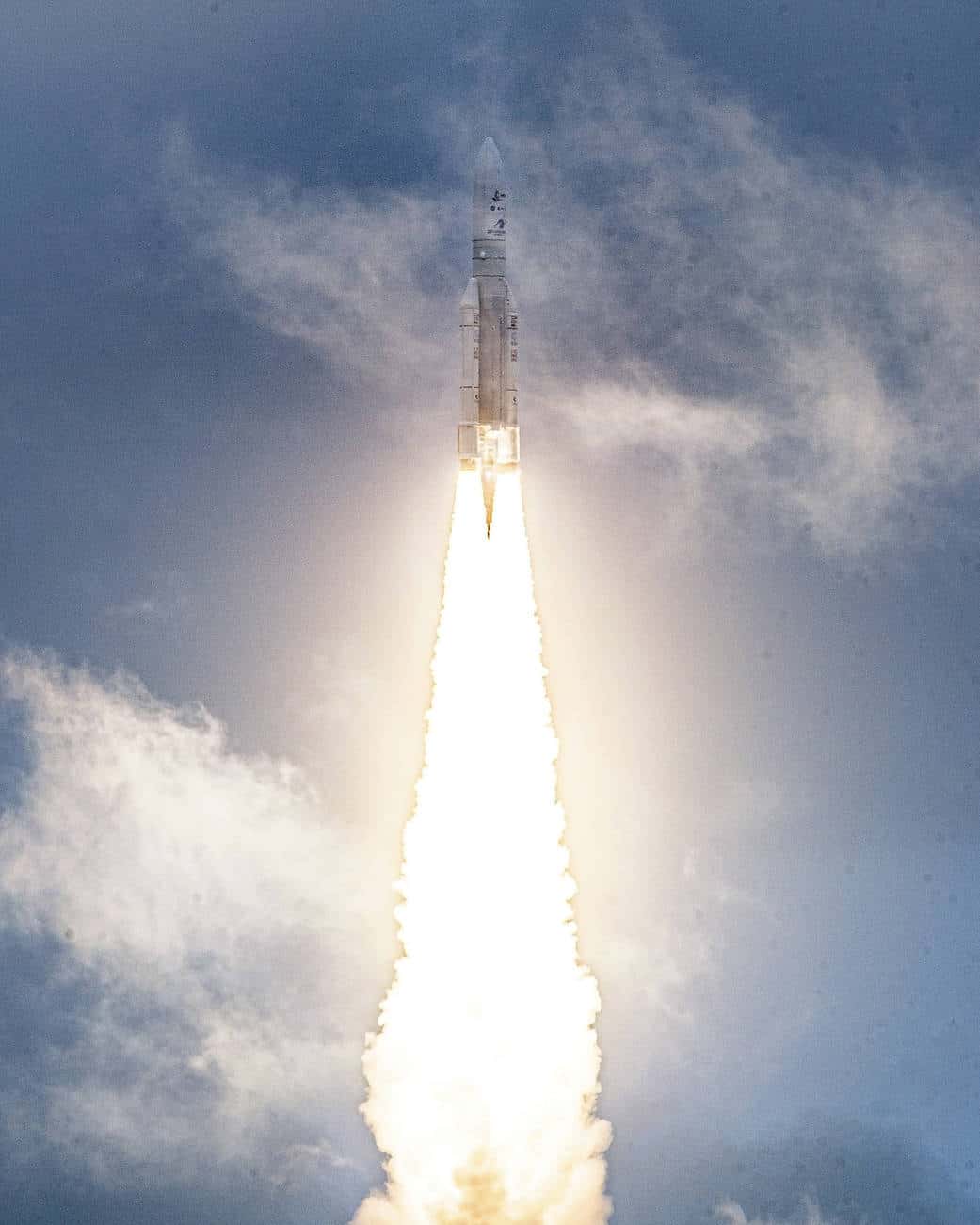
The remnant’s long-term appearance is still an open question. Additional observations would help show how it settles after the merger. The featured photograph is an archival view of Webb leaving Earth in 2021.
Sources
NASA Science report on the Bao merger and Webb observations
Columbia University research account






No comment