
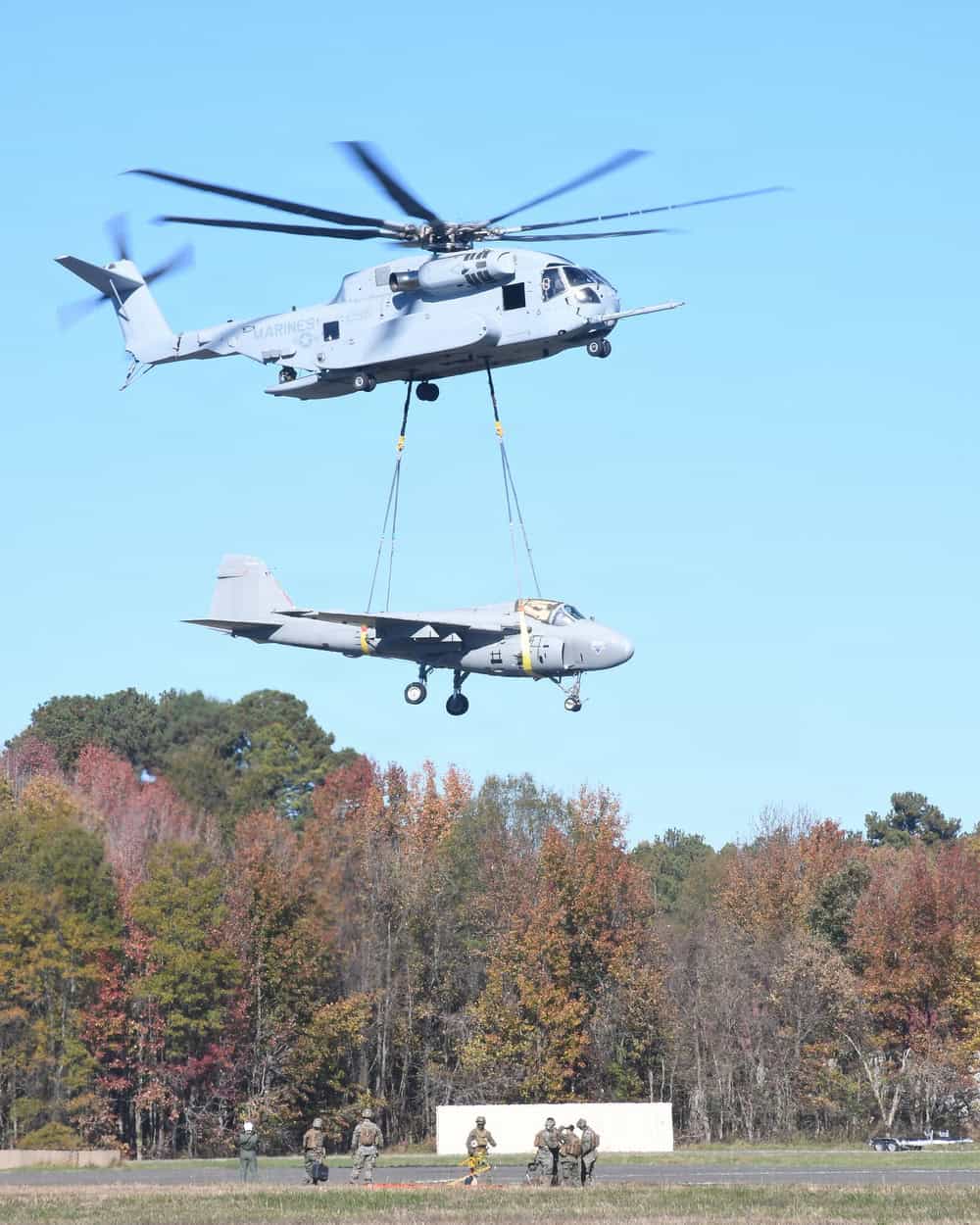
A U.S. Marine Corps CH-53K King Stallion lifted a retired Navy A-6 Intruder off the runway at Naval Support Facility Dahlgren, Virginia, on November 18, 2026. The Marines of Heavy Helicopter Squadron 461 moved the aircraft to Marine Corps Base Quantico, according to Naval Support Activity South Potomac. The service released a photograph of the lift the following day.
The move brought together two aircraft designed for very different work. The King Stallion is built to carry people and heavy equipment. The Intruder was built to operate from aircraft carriers, but this airframe stayed at Dahlgren after the Navy retired the type in 1997. Its job there was to support test operations. In the Navy photograph, it is suspended beneath the helicopter with its landing gear visible.
An aircraft moves after decades of test support
The release confirms where the move began and ended and identifies the squadron as HMH-461, known as Ironhorse. It does not identify the Intruder by bureau number, specify when it first arrived at Dahlgren or say what Quantico will do with it. The image documents the pickup at Dahlgren, and the Navy caption confirms the relocation to Quantico.
The Navy’s National Naval Aviation Museum describes the Intruder as an all-weather aircraft, with two crew members seated side by side. Its digital navigation and attack system gave the crew an electronic display for operating in poor visibility. Those features tell the story of the type in naval service. Dahlgren’s account documents a different chapter for this particular aircraft, which remained useful to a test facility long after the fleet stopped flying Intruders.
What the lift shows about the King Stallion
Naval Air Systems Command describes the CH-53K as the Marine Corps’ replacement for the CH-53E and lists ship-to-shore transport of heavy equipment and supplies among its primary jobs. Moving a complete airplane illustrates why carrying a load beneath the helicopter matters. The Intruder’s wings and fuselage give it a shape that could not fit inside the cargo cabin, even before accounting for its weight.
NAVAIR lists a maximum external lift capability of 36,000 pounds and a separate design benchmark of 27,000 pounds at a mission radius of 110 nautical miles under the Navy’s hot and high conditions. The figures describe different performance requirements. The Navy’s account of the Dahlgren move does not specify the weight of the Intruder as rigged, so the photograph cannot establish how much of that capacity the flight used.
The November 18 move was a practical use of the helicopter’s heavy lift role within Virginia. It also offers a rare view of a retired carrier aircraft still serving a purpose at a Navy test facility and then leaving it by air, carried beneath a helicopter nearly three decades after the Intruder’s fleet retirement.
Featured photograph: A CH-53K from HMH-461 lifts an A-6 Intruder at Naval Support Facility Dahlgren on November 18, 2026. U.S. Navy photo by Andrew Revelos. DVIDS photo 10105738, marked public domain.
Sources
Naval Support Activity South Potomac via DVIDS
Naval Air Systems Command CH-53K fact sheet
National Naval Aviation Museum A-6E Intruder profile






No comment