
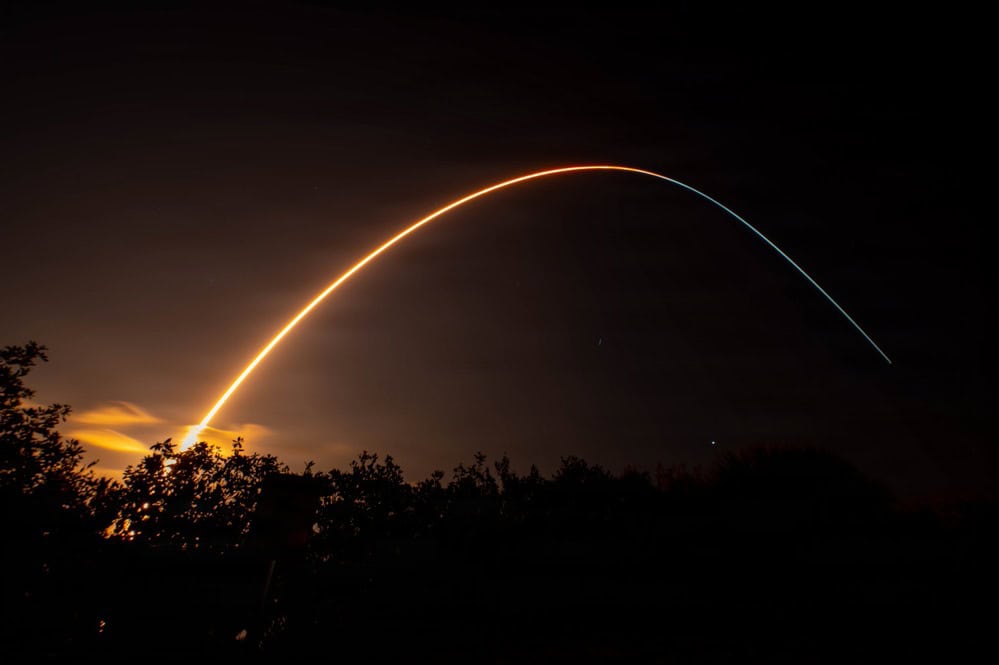
United Launch Alliance’s Vulcan rocket failed to deliver its first 40 Amazon Leo broadband satellites to orbit after an in-flight anomaly about 10 minutes after liftoff Sunday, Nov. 15. The launch from Cape Canaveral Space Force Station began at 12:40 p.m. Eastern, but ULA said the mission did not reach its intended outcome. The company said it had not yet identified the cause and would work with Amazon and other organizations on an investigation and corrective action.
The outcome turns Vulcan Leo 1 from a planned return-to-flight mission into the first full payload loss for the new rocket. It also interrupts Amazon’s planned deployment of 40 satellites in one mission. ULA’s statement said the vehicle “suffered an anomaly 10 minutes into the flight and failed to deliver the Amazon mission to orbit.” The company did not describe a specific failed component or say whether the payload was destroyed. Those details remain unknown as of Sunday evening.
What happened during the Vulcan Leo 1 flight
Vulcan lifted off from Space Launch Complex 41 at Cape Canaveral Space Force Station, carrying 40 Amazon Leo satellites. ULA’s mission plan called for the VC6L configuration, with six GEM 63XL solid rocket boosters, two BE-4 main engines and a longer payload fairing. The mission was intended to place the satellites into low Earth orbit, where Amazon plans to build a broadband constellation.
ULA’s initial updates reported that the solid rocket boosters had burned out and separated roughly a minute and a half after liftoff. The flight then continued toward upper-stage operations. The company later reported the anomaly at about the 10-minute point and confirmed that the satellites had not been delivered to orbit. It has not released flight telemetry or a more detailed sequence explaining what occurred between those milestones.
That distinction matters. Publicly available information confirms the mission failure and the approximate time, but it does not establish whether the problem involved the first stage, the Centaur upper stage, guidance, a separation event or another system. The sequence shown in a launch broadcast is not enough to identify a cause. ULA said it did not yet have specific data to explain the anomaly and promised further updates as information becomes available.
The rocket had been designed to fly through a long sequence before releasing the payload. ULA’s prelaunch mission overview described a first-stage burn of about five minutes, followed by Centaur upper-stage burns and a coast period before satellite deployment. Those timings were planned milestones, not a record of what happened on this flight. The payload was not placed in orbit, so the intended deployment sequence did not conclude as planned.
A 40-satellite mission for Amazon Leo
Vulcan Leo 1 was the first of 38 Vulcan launches Amazon has contracted with ULA for its Leo satellite program. Amazon described the flight as the first Vulcan mission carrying its satellites and said the 40-spacecraft batch would be the largest single Amazon Leo launch to date. The contract is part of a broader multi-rocket deployment campaign intended to establish a low Earth orbit network for broadband service.
For Amazon, the loss means the 40 spacecraft aboard this mission are not contributing to the constellation. Amazon said launch carries risk, particularly on inaugural missions, and described ULA as a trusted partner that it expects to learn from the flight. Neither company has announced a replacement launch date for the lost payload or described how the incident changes the wider deployment schedule.
The mission’s payload count was significant because large batches can accelerate deployment while reducing the number of launches needed to add spacecraft. ULA said the Leo-optimized Vulcan configuration was built to carry a high number of satellites, using a shorter Centaur V variant and a long payload fairing. The rocket’s capability and the mission’s planned architecture remain separate from the question of why this particular flight failed.
The first Vulcan failure follows a return-to-flight review
Vulcan Leo 1 was also Vulcan’s first flight since a solid rocket booster nozzle anomaly during a February 2026 mission. That earlier event did not prevent the payload from reaching orbit, but it prompted ULA, Northrop Grumman and government partners to investigate the booster hardware. In a Nov. 10 prelaunch update, ULA said the review identified several credible causes and that design and manufacturing changes had been tested and incorporated into the boosters assigned to the Leo mission.
ULA had characterized the November flight as an opportunity to gather additional data on those corrective actions while returning Vulcan to flight. The fact that the new mission suffered an anomaly does not, on its own, show that the February nozzle issue recurred. ULA has not attributed Sunday’s failure to the solid boosters, and its early update said those boosters had burned out and separated before the anomaly was announced.
Vulcan had previously completed missions despite booster nozzle issues, according to ULA’s prelaunch account. This flight ended differently: the customer payload was not delivered to orbit. Determining whether the earlier nozzle investigation is related to the new event will require the investigation and evidence that ULA has not yet released. At this stage, linking the two events would go beyond what the company has said.
Investigation and next steps
ULA said it would work with Amazon and other appropriate organizations to find the cause, determine corrective action and return to flight. The company also said its customers would have visibility into the investigation process. No schedule for a return to flight has been announced. Before Vulcan flies again, the investigation will need to establish what failed, whether the event affected the vehicle or payload, and what changes or checks are required.
For the launch industry, the result is a reminder that a successful liftoff is only the opening phase of a launch mission. The payload must pass through the remaining propulsion, guidance and deployment sequence to reach its intended orbit. The flight’s early milestones did not prevent a later failure, and the information needed to assess the vehicle’s performance is now part of the review.
ULA’s statement on Sunday did not assign blame or offer a technical explanation. Until the company publishes more findings, the established facts are limited: Vulcan launched from Florida carrying 40 Amazon Leo satellites, an anomaly occurred about 10 minutes into the flight, and the satellites were not delivered to orbit. The investigation’s findings will determine how the event affects Vulcan’s schedule and Amazon’s future launches.
Sources
- United Launch Alliance statement on the Vulcan Leo 1 anomaly, Nov. 15, 2026
- ULA Vulcan Leo 1 mission overview
- ULA’s Nov. 10 return-to-flight and mission background
- Amazon Leo mission information and launch statement
- The Space Coast Wire’s launch-day timeline and ULA update reporting
- Via Satellite’s launch coverage






[…] The Federal Aviation Administration has ordered United Launch Alliance to conduct a formal mishap investigation after the Vulcan Centaur’s Nov. 15 Amazon Leo flight failed to deliver its payload to orbit. The agency said it will oversee the company-led review, participate throughout the process and approve the final report, including proposed corrective actions. The FAA’s Nov. 16 announcement is a new regulatory development following the flight itself; SkyLord’s earlier report covered the launch failure and lost payload. […]