
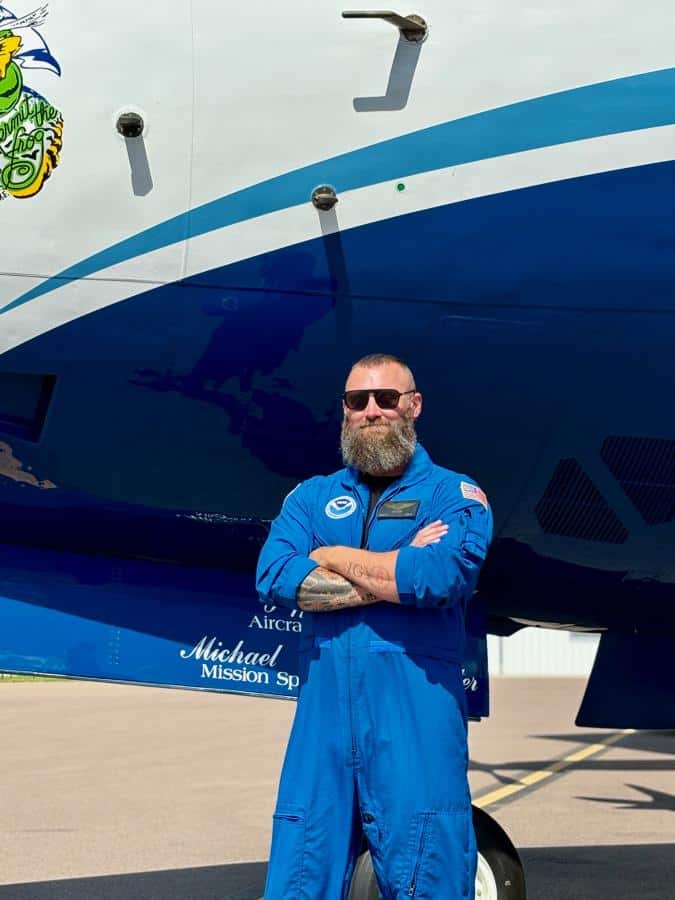
NOAA’s WP-3D Orion hurricane-research flights depend on a crew whose responsibilities begin well before an aircraft reaches a storm. In a Nov. 10 profile, NOAA Aircraft Operations Center flight engineer Rusty Dittoe described a job that spans inspections, aircraft loading, engine starts, power settings and monitoring systems in flight. The work blends aircraft knowledge with close coordination with the pilots. (NOAA Office of Marine and Aviation Operations profile)
Dittoe is one of the flight engineers assigned to NOAA’s WP-3D fleet. He describes flight engineers as aircraft-system specialists who help prepare the aircraft for a mission, verify that it is within weight limits and properly balanced, start engines, set power for takeoff and storm environments, and watch aircraft systems while airborne. They also back up pilots with technical knowledge and clear communication.
Preparation starts before takeoff
Aircraft loading is among the responsibilities Dittoe identified. A flight engineer checks that an aircraft is not overloaded and that its weight is distributed appropriately. This work supports safe operation before the mission begins, whether the aircraft is departing for research or another NOAA flight assignment.
The engineer’s tasks continue through engine starts and power settings. The settings needed for ordinary takeoff and for operations in storm environments can differ, and the engineer must understand the aircraft well enough to support the pilots as conditions and mission demands change. Dittoe described the position as an expert role in the aircraft itself, with duties before, during and after a flight.
Monitoring systems in the storm
Once airborne, Dittoe said, flight engineers monitor aircraft systems and serve as a technical resource for the pilots. That does not mean they replace the pilots’ decisions. It means another trained crew member is focused on the aircraft’s condition and can communicate what the systems are doing while the pilots concentrate on flying and the mission.
NOAA operates specialized aircraft to collect data that support research and public services. The agency says its Aircraft Operations Center has a fleet of 10 aircraft, used to gather information about the ocean and atmosphere and to help save lives and protect property. (NOAA Aircraft Operations Center overview)
NOAA’s WP-3D Orions are among the aircraft used in hurricane research and reconnaissance. The aircraft can carry scientific instruments and fly into tropical cyclones to collect measurements that help researchers and forecasters understand storm structure and behavior. NOAA describes its aircraft as flying laboratories and notes that its P-3s can be tasked by the National Hurricane Center for storm reconnaissance. (NOAA Hurricane Hunters)
A Navy background, then a NOAA mission
Dittoe told NOAA he spent 10 years as a U.S. Navy flight engineer before joining the agency. After Naval Aircrew School, he went to VP-30 in Jacksonville, Florida, where he spent a year learning the P-3 Orion. A friend later referred him to an opening at NOAA. After learning about the agency’s missions, he said, he decided to return to flying.
That background gives him experience with the P-3 airframe, but NOAA’s profile does not suggest that the aircraft’s government and research missions are identical to Navy patrol operations. Dittoe’s description instead focuses on the practical skills shared across flight-engineering work: knowing the aircraft, preparing it correctly and communicating clearly with the pilots.
Remembering the first major storm flight
One of Dittoe’s favorite missions was Hurricane Beryl in July 2024. He recalled flying through the storm as it moved through tropical-storm and hurricane categories, ultimately reaching Category 5. He described the nighttime flight as dark and turbulent, and said it remained an exciting and humbling experience.
The account illustrates the human side of NOAA’s research work without suggesting that storm flights are undertaken casually. NOAA says its hurricane-hunter crews are trained to operate in adverse weather that would keep many other aircraft on the ground. Flight engineers, pilots, meteorologists and other specialists contribute different skills to the same mission.
For aspiring NOAA aviation workers, Dittoe’s path includes military training, years of aircraft experience and a transition to public-service research missions. He advised candidates to understand the flight schedule, prepare mentally for demanding work and build the technical foundation required for severe-weather aviation. NOAA’s Nov. 10 profile offers a close look at how one flight engineer applies those skills to the aircraft before and during a mission.






No comment