
Published November 27, 2026
James D. Wetherbee was born on November 27, 1952, in Flushing, New York. He went from Navy test flying to the Space Shuttle flight deck and eventually commanded five missions. On STS-63 in February 1995, he commanded Discovery on the first shuttle rendezvous with Russia’s Mir space station. That flight marked a change in what shuttle crews were being asked to do. A vehicle built to launch from Florida and return to a runway would now learn to work alongside an occupied station that had its own crew, flight rules and controllers. NASA astronaut biography
From test flying to orbital flight
Wetherbee studied aerospace engineering at the University of Notre Dame and became a naval aviator. His Navy career included carrier flying and work as a test pilot before his assignment to NASA. His first spaceflight came in 1990, as pilot of Columbia on STS-32. On that mission the crew deployed a communications satellite and retrieved the Long Duration Exposure Facility, an orbiting experiment platform that had spent nearly six years in space. NASA astronaut biography
The retrieval gives a sense of the work pilots learned to do in orbit. A target could already have been circling Earth for years by the time a shuttle set out to meet it. The crew had to bring the two trajectories together and then manage the orbiter’s position and movement at close range so the work could proceed. For a pilot trained to watch what a test airplane did as conditions changed, the shuttle added a new set of cues and a much longer approach.
Discovery’s rehearsal near Mir
STS-63 gave NASA and its Russian counterparts a chance to practice an encounter before crews attempted a docking. Wetherbee’s crew included Eileen Collins, the first woman to pilot a space shuttle, and Vladimir Titov, a Russian cosmonaut with experience living aboard Mir. Discovery came within about 37 feet of the station. At that distance the crews could see each other’s spacecraft clearly while the orbiter maintained separation. NASA STS-63 mission record
That final stretch was the part of the flight the public could see in photographs. Work had begun much earlier, with planning for how two crews and their controllers would make decisions as the gap closed. Managers also had to review a thruster leak on Discovery before clearing the close approach. NASA’s mission account describes the discussions with the Russian team that allowed the rendezvous to proceed. The rehearsal tested coordination as well as flying.
From flying nearby to working together
Wetherbee returned to Mir as commander of STS-86 in 1997. This time Atlantis docked, and the crews exchanged astronaut residents. David Wolf stayed aboard Mir, and Michael Foale came home aboard the shuttle. In 2001 Wetherbee commanded Discovery on STS-102, which took the Expedition 2 crew to the International Space Station and brought Expedition 1 home. His final mission, STS-113, again carried a new station crew and brought the previous one back. NASA mission summaries in Wetherbee’s biography
Those assignments trace the shift from practicing near a station to using the shuttle as transportation for people who lived in orbit. The visitors had launch and landing dates to meet. The residents stayed on after the orbiter departed. Wetherbee’s career included both the rehearsal that helped crews learn to operate close together and the later flights that made crew handovers a regular part of station life.
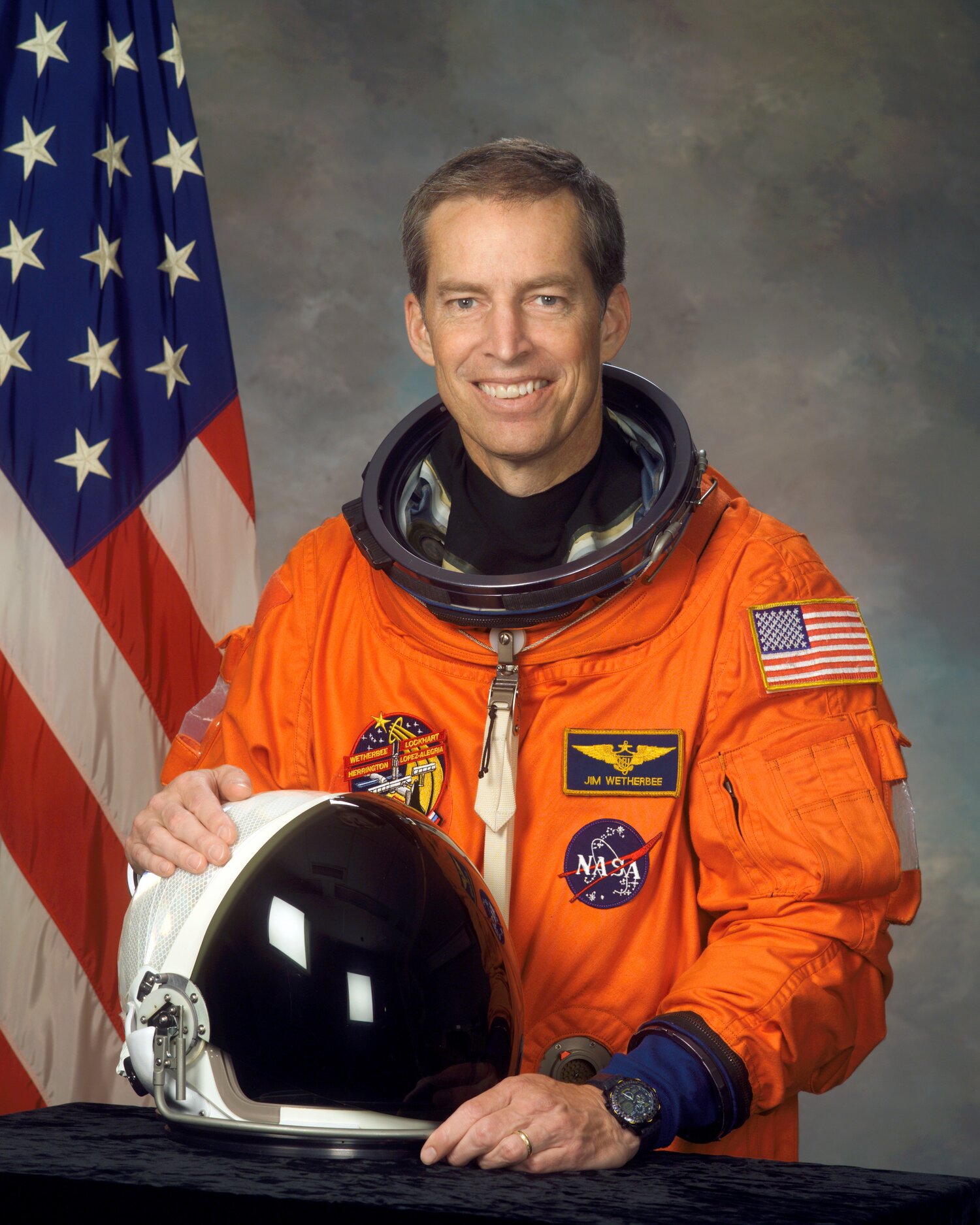
Featured photograph — Official NASA portrait of James D. Wetherbee, July 11, 2003. Mark Sowa / NASA, JSC2003-E-48323. Public domain. Photograph and rights record



No comment