
Published November 28, 2026
On November 28, 2018, commercial air service for Bohol moved from Tagbilaran to the new Bohol-Panglao International Airport. The Philippines’ airport project memorandum gives November 28 as the opening date, and contemporary reporting confirms that Philippine Airlines moved its Bohol flights that day. The dedication had taken place the previous day. That distinction gives the airport two dates in the record: one for the ceremony and one for the transfer that changed where passengers landed. Philippine airport project memorandum · Contemporary report on the airline transfer
A replacement for Tagbilaran
Before the transfer, travelers used Tagbilaran Airport on Bohol’s main island. The replacement was built on nearby Panglao Island, in Barangay Tawala. The Civil Aviation Authority of the Philippines described the new airport as a way to accommodate growing demand and address limits on expansion at the older site. The project gave the province a different place to accommodate airline operations as traffic grew. Civil Aviation Authority airport profile
The change had immediate practical consequences. For passengers arriving on the first operating day, the airport at the end of the flight had moved to another island. For airlines, it meant moving scheduled arrivals and departures, and for people meeting those flights it meant using a new terminal and ground route. Airline service could continue across the transition because the scheduled flights moved to the replacement airport.
Building an airport for a growing market
Planning and construction drew on support from Japan through the Japan International Cooperation Agency. The Japanese embassy’s account records the Nov. 27 inauguration and explains that the project aimed to address increasing demand for air travel to Bohol. That aim helps explain why a separate site mattered. An existing airport may have a runway and terminal that can serve current flights, while the surrounding land limits what can be added as traffic grows. Embassy of Japan inauguration account
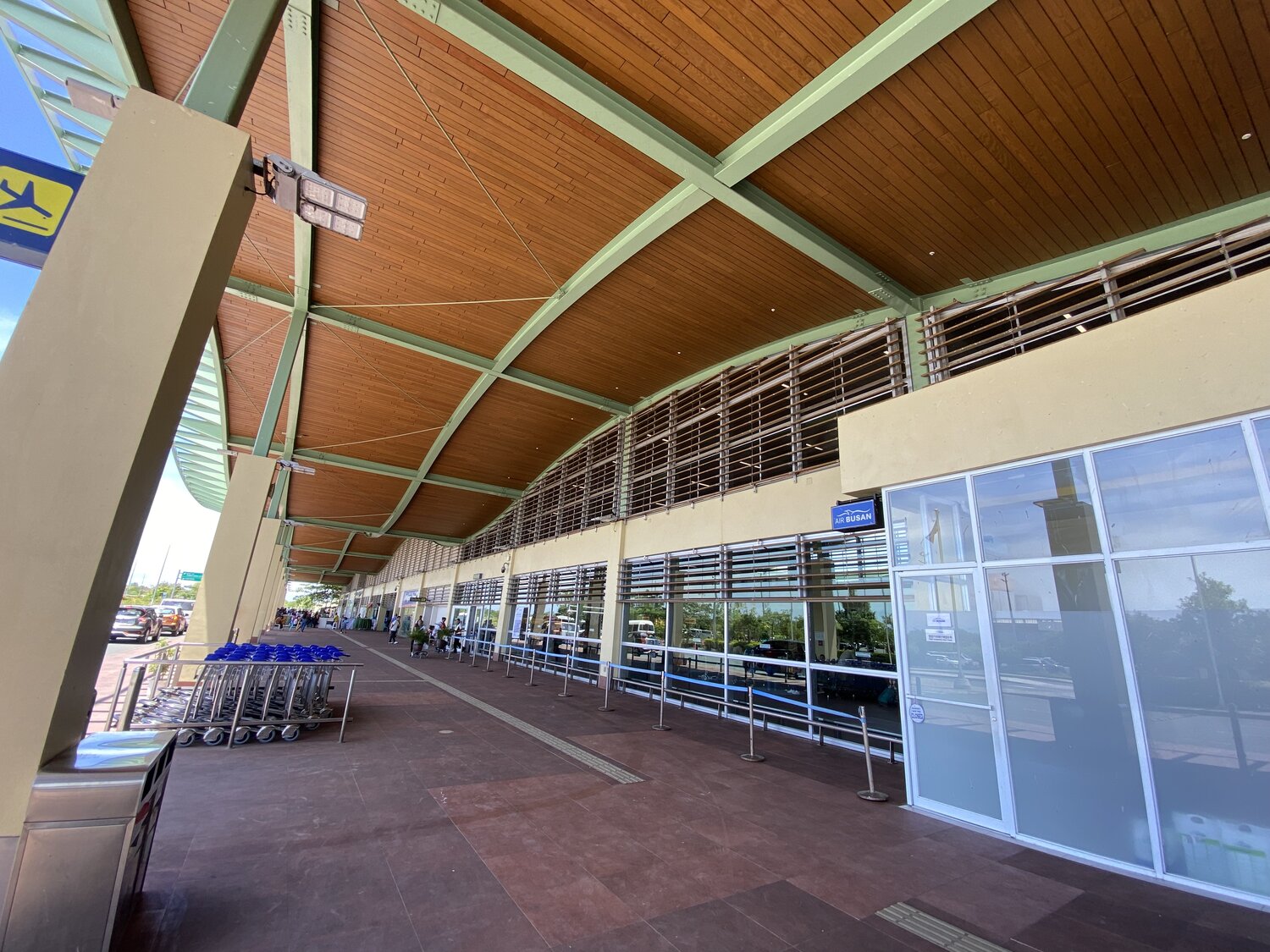
The terminal in the featured photograph is part of what passengers gained from the switch. An airport’s terminal must handle travelers who arrive at different times, pass through separate departure and arrival processes, and sometimes reach the building in groups within a short span. A new site allows those processes to be planned together with the airfield, the roadway outside and the space available for future work. That is a different undertaking from adding a room to the previous airport.
What the operating record shows
The civil aviation authority’s later project memorandum traces passenger traffic and aircraft movements before and after the move. The figures include a marked decline during the pandemic and a subsequent recovery. The authority’s profile therefore tells a longer story than the ribbon cutting. The airport opened as a replacement for a facility with limited room to grow, then had to serve a travel market whose demand changed sharply in the following years. CAAP project information and traffic tables
The traffic figures also put the scale of the change in perspective. CAAP lists about 1.14 million domestic passengers in 2022 and 1.30 million in 2023. In the same table, aircraft movements climbed from 8,082 to 11,124. Those figures count different things: passenger totals describe the number of people the airport handled, while aircraft movements describe the activity the airfield accommodated. Looking at both helps explain why the project addressed the terminal and the runway system together. CAAP traffic tables
The cutover also illustrates why an airport opening can be more than the completion of construction. A terminal can be ready for a ceremony before airlines begin using it. The operational date is when flight schedules, passenger directions and ground transportation must all point to the same place. In Bohol’s case, the record of Philippine Airlines’ transfer provides a check on that date from the passenger’s side of the move.
The November 28 anniversary belongs to the first day of those new operations. The ceremony on November 27 made the completed project visible to the public. The airline transfer the next day put the runways, terminal and ground connections into everyday use. For a traveler reading a ticket to Bohol, the lasting result was a change in where the trip began or ended.
Featured photograph — The terminal at Bohol-Panglao International Airport. ACTA314 / Wikimedia Commons, CC BY-SA 4.0. Full frame resized.
Sources
Philippines Public-Private Partnership Center — Airport project information memorandum
Civil Aviation Authority of the Philippines — Bohol-Panglao airport profile







No comment