
Published November 27, 2026
On November 27, 1957, six U.S. Air Force pilots took off from Southern California for Operation Sun Run. By the end of the day, McDonnell RF-101C Voodoos had established speed records in both directions between Los Angeles and New York, plus a record for the round trip. The flights put a new reconnaissance aircraft in the spotlight and showed what it could do with a network of tankers supporting it along the way. U.S. Air Force anniversary account
Three records on the same route
Ray Schrecengost led the operation in the Voodoo he called CIN MIN. According to the Air Force’s anniversary account, his eastbound time beat the mark set by John Glenn earlier that year. Schrecengost also lowered the westbound and round-trip marks. Other pilots in the same operation then improved his times, so the first records of the day and the final published results belong to different pilots. U.S. Air Force
The Air & Space Forces Association’s chronology credits First Lieutenant Gustav Klatt with the final eastbound mark of 3 hours, 7 minutes and 43 seconds. Captain Robert Sweet set the westbound mark in 3 hours, 36 minutes and 33 seconds and the round-trip mark in 6 hours, 46 minutes and 36 seconds. The individual directional records were timed on different runs, so adding Klatt’s eastbound time to Sweet’s westbound time does not yield Sweet’s round-trip result. Air & Space Forces Association chronology
What the tankers made possible
A high-speed crossing and a fast round trip presented different problems for the crews. A one-way pilot could fly through the timing point on the opposite coast and land in that region. A round-trip pilot had to turn the airplane around and cover the country again. The longer run also required the crew planning the flight to account for fuel on both sides of the turnaround.
The RF-101Cs relied on KC-135 tankers for aerial refueling. Each meeting required an airplane flying a timed route and a tanker flying its own schedule to arrive together. The time spent coming alongside a tanker and taking on fuel went into the overall performance. The Voodoo’s speed mattered, and so did the ability to keep it moving across a continent without a landing for fuel. The result helps explain why a record flight by a single-seat airplane depended on crews spread across the country. Account of the tanker support
The airplane that survived the record day
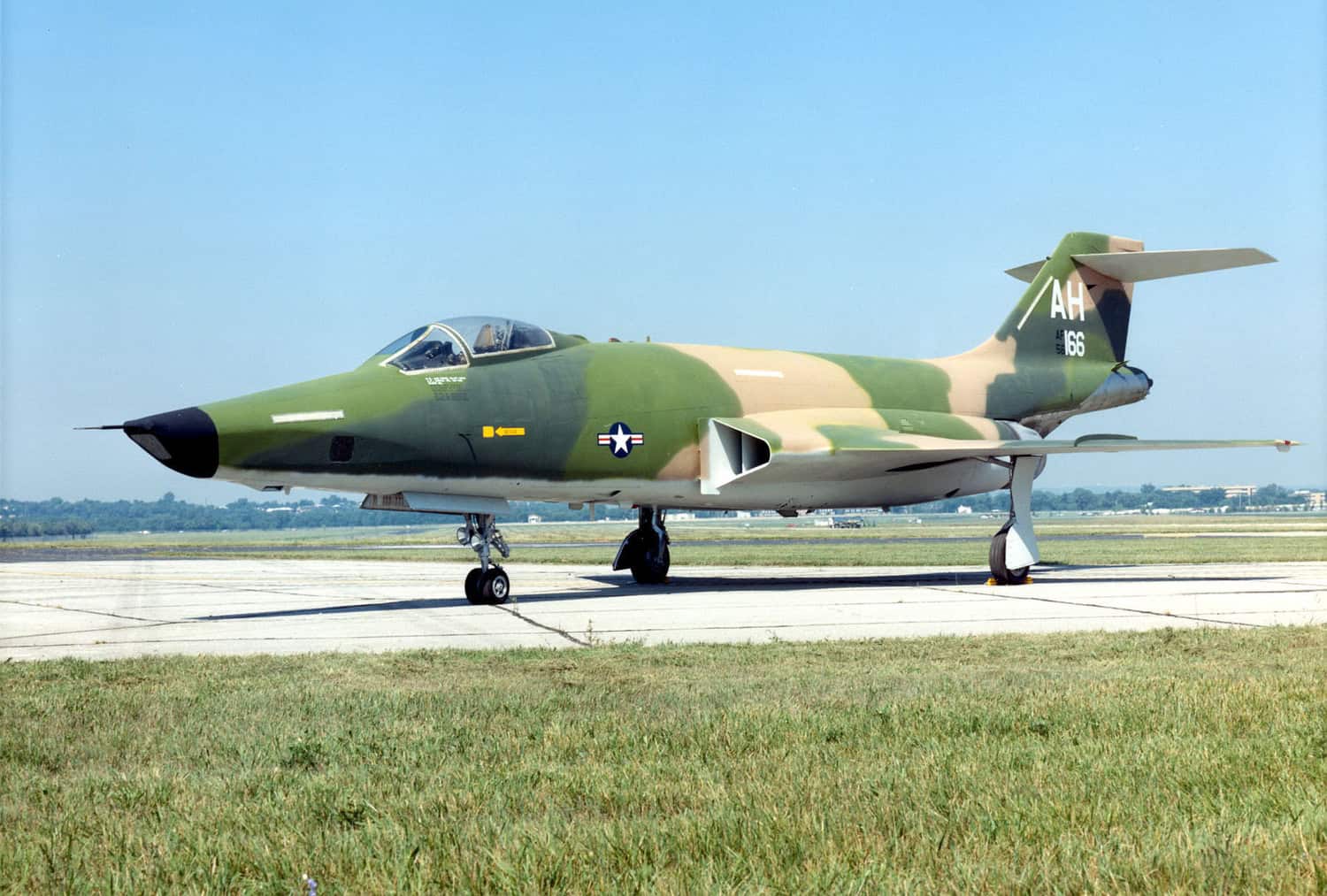
The Voodoo in the photograph above is the actual airframe Schrecengost flew on the Sun Run, serial number 56-0166. The museum photograph dates to March 2005 and shows the aircraft in markings representing later service in Southeast Asia. Its appearance is therefore part of the airframe’s museum interpretation. The 1957 name, CIN MIN, came from Schrecengost’s daughters, Cindy and Mindy. Photograph and airframe identification
Cindy Miller was five when her father flew the Sun Run. At the mission’s 50th anniversary, she recalled watching him come in to land and seeing her younger sister lifted up to greet him at the cockpit. Miller returned for the museum commemoration with Robert Burkhart, another Sun Run pilot. By then, the aircraft her father had flown was already on public display. The 2007 gathering brought a pilot from the operation, a witness to the landing and the surviving airplane together in the same gallery. U.S. Air Force coverage of the commemoration
The records capture the performance of the Voodoo on one November morning. The airframe and the recollections of the people who flew and watched the mission preserve something the elapsed times leave out. They show how a transcontinental speed attempt could involve several pilots competing against the clock while depending on the same carefully coordinated operation.
Featured photograph — RF-101C Voodoo 56-0166 at the National Museum of the U.S. Air Force, March 17, 2005. U.S. Air Force photograph 050317-F-1234P-045, public domain. Photo record and rights
Sources
U.S. Air Force — 50th anniversary of Air Force mission remembered
Air & Space Forces Association — Kitty Hawk Chronology
Wikimedia Commons — U.S. Air Force photograph of RF-101C 56-0166



No comment