
Published November 28, 2026
In December 1999, Claude Nicollier spent more than eight hours outside the space shuttle Discovery helping install two pieces of equipment that Hubble needed for its next decade of observations. One was a new computer. The other was a fine guidance sensor, an instrument that helps the telescope hold its aim. Nicollier and fellow astronaut Michael Foale performed the work on the second of three spacewalks during NASA’s Servicing Mission 3A. For the Swiss astronaut, it was his fourth shuttle flight and his second visit to Hubble.
From flight testing to shuttle robotics
Nicollier brought together two careers that might otherwise have remained separate. He trained as a Swiss Air Force pilot and graduated from the University of Lausanne in physics and the University of Geneva in astrophysics. He also flew for Swissair and later qualified as a test pilot at Britain’s Empire Test Pilots’ School. The European Space Agency’s biography traces his route from ESA’s first astronaut selection in 1978 to shuttle mission specialist training at Johnson Space Center in 1980.
Much of his shuttle work happened on the ground. ESA lists assignments in flight software verification, methods for retrieving a tethered satellite and support for shuttle and space station robotics. Those roles show what international cooperation looked like from inside the program. An astronaut assigned by one agency could spend years helping another agency test software and work through procedures that future crews would use in flight. Nicollier’s four missions left a public record of that work in orbit, but his technical assignments were part of the same career.
His first visit to Hubble
In December 1993, Nicollier flew aboard Endeavour on STS-61, the first Hubble servicing mission. He operated the shuttle’s robotic arm in support of a repair that involved five spacewalks. The astronauts installed corrective equipment to compensate for a flaw in the telescope’s primary mirror. The orbiter’s arm supported the work by giving crew members a position from which they could reach into the telescope’s equipment bays. The mission demonstrated how a shuttle crew could work on an observatory already in orbit and return it to scientific service.
The rest of Nicollier’s flight record gives that first Hubble visit context. He flew on STS-46 in 1992 and STS-75 in 1996, both of which carried a tethered satellite experiment. His assignments across the four flights ranged from operating shuttle equipment inside the cabin to working directly on hardware outside it. When he returned to Hubble in 1999, he had already seen the demands of orbital servicing from the arm operator’s station.
Why the second visit mattered
By late 1999, failing gyroscopes had made Hubble’s next servicing trip urgent. The telescope entered safe mode after a fourth gyro failed, suspending normal observations. NASA split the planned servicing mission so Discovery could reach Hubble sooner. Across the three spacewalks, the crew replaced the gyroscopes and addressed other aging equipment. Nicollier and Foale handled the computer and guidance sensor during the second outing.
Those two upgrades addressed different jobs. The computer ran the observatory’s onboard operations. The guidance sensor helped it keep a precise lock on guide stars while scientific instruments observed a target. NASA’s description of the sensors also explains their scientific role: they can make precise measurements of the relative positions of stars. Replacing a guidance sensor restored a piece of Hubble’s ability to steer and measure, while the new computer expanded its capacity for onboard processing.
Hubble’s servicing history is often told through the instruments astronauts installed and the images those instruments produced. Nicollier’s two visits make the maintenance work visible as well. On the first mission, he helped position the people doing the repairs. On the second, he was one of the people making the repairs. Both roles contributed to getting an orbiting observatory back to the astronomers who depended on it.
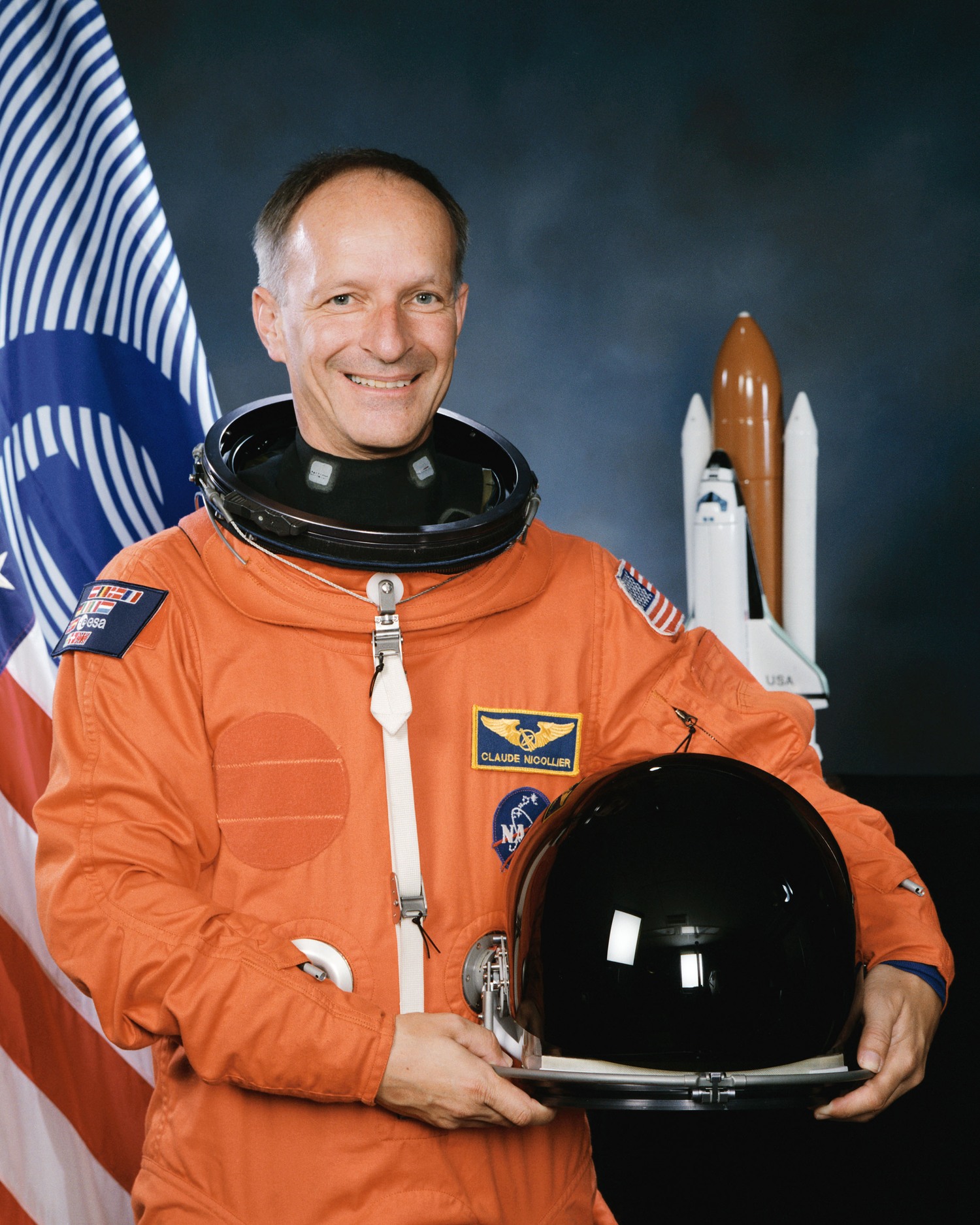
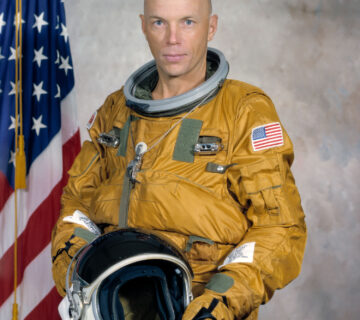
Featured photograph: ESA astronaut Claude Nicollier, July 1, 1993. NASA / Johnson Space Center, S93-40688. Original photograph and U.S. public-domain rights record.
Sources
ESA astronaut biography · NASA Hubble servicing missions · NASA Servicing Mission 3A · NASA Fine Guidance Sensors · NASA portrait and rights record


No comment