
Published November 22, 2026
On November 22, 2002, a flight test with an F/A-22 Raptor marked the first test of a communications link between two ranges in the American Southwest. The Air Force Test Center’s historical account identifies the system as the East Data Acquisition Transmission System, or EDATS. The new link gave engineers at Edwards Air Force Base in California a way to follow aircraft testing at White Sands Missile Range in New Mexico as the flight unfolded.
The experiment was on the ground as well as in the air
A test aircraft is one part of a flight-test operation. On the ground, engineers and controllers need to see what the aircraft is doing and follow measurements from the flight. That work becomes harder when the team with the equipment and expertise is based hundreds of miles from the range where the airplane is flying. EDATS addressed that distance by carrying test data to the Ridley Mission Control Center at Edwards.
A team can learn from recordings after an airplane lands. Real-time access serves a different purpose. It lets people on the ground follow the same test while it is still underway. For this project, the value was that the specialists at Edwards could remain in their usual control room and monitor a flight at White Sands. Their location and the aircraft’s location could be planned independently.
A new use for existing infrastructure
The Air Force Flight Test Center and the Federal Aviation Administration worked together on the project. In the Air Force account, the FAA already had a relay network in the region and used it for radar and air traffic control information. The project put existing communications infrastructure to work for flight testing. The innovation was in how the agencies connected their facilities and used the link to support a live test.
That approach matters because flight-test facilities represent different investments. An airfield, an instrumented range and a staffed control room can each serve different purposes. Linking them makes a facility’s capabilities useful outside its immediate surroundings. The historical account places the Edwards–White Sands link in a wider network that also included facilities at Vandenberg, China Lake and Point Mugu. The November 22 flight is a documented milestone in that effort to make separate sites work together. The two agencies brought experience from different kinds of flying to the project. The FAA supported civil air traffic, while the flight test center needed to gather data for aircraft evaluation.
The Raptor’s role
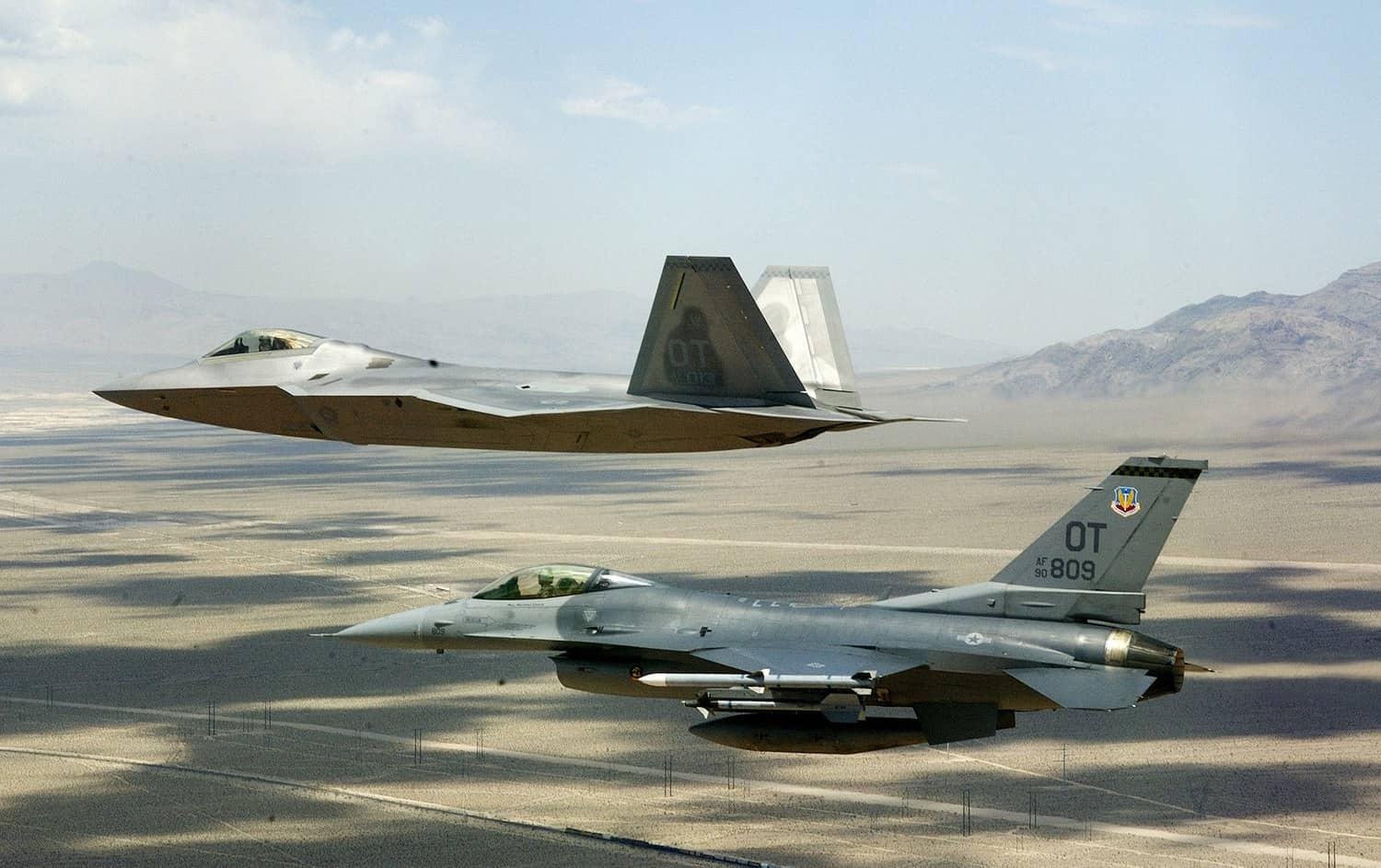
The first test used the aircraft then referred to as the F/A-22. The Air Force’s account identifies it as the early user of the system and explains that the link could serve other programs that needed remote flight-test support. The accompanying photograph comes from the Air Force’s archives and shows a Raptor alongside an F-16 on a training flight from Nellis Air Force Base in June 2004. The photograph illustrates the aircraft type during the testing era. The date of the EDATS milestone comes from the Air Force Test Center’s history.
The Raptor gave the engineers an aircraft with which to try the system. The first test gave two distant locations a way to share information from a flight while it was still in progress. The milestone shows how changes to equipment on the ground could expand where engineers could do their work in the air.
Featured photograph. U.S. Air Force photo 040623-F-6911G-002 by Tech. Sgt. Kevin J. Gruenwald, public domain. Full frame resized.
Sources
Air Force Test Center, East Data Acquisition Transmission System Testing
Department of Defense archival photograph and caption via Wikimedia Commons






No comment