
Published November 28, 2026
Barbara Radding Morgan was born on November 28, 1951, in Fresno, California. She taught elementary school before NASA selected her for the Teacher in Space project, and she later joined the astronaut corps as a mission specialist. When she flew aboard Endeavour in August 2007, her duties included education, cargo and robotics on a mission to assemble and supply the International Space Station. Her path to the flight deck traced a change in how NASA brought classroom teachers into human spaceflight. NASA astronaut biography
From school to astronaut training
Morgan studied human biology at Stanford University and earned a teaching credential. Her teaching career included time in McCall, Idaho. NASA selected her in 1985 as the backup to Christa McAuliffe for Teacher in Space. Morgan trained with McAuliffe and the Challenger crew at Johnson Space Center. She later returned to the classroom in Idaho, while keeping ties to the agency. NASA history of the Teacher in Space project
The first selection brought Morgan to NASA for a particular opportunity, while her later selection brought her into the work of the astronaut corps. Those paths placed different demands on the same person. The teacher who had prepared to bring spaceflight into lessons now had to prepare to serve as a member of a crew whose assignments could extend well beyond education.
A second selection and a different job
NASA selected Morgan as a mission specialist in January 1998. After training and evaluation, she worked in the astronaut office on space station operations, crew communications and robotics. In Mission Control she served as a capsule communicator, the person assigned to speak directly with a crew on behalf of the team on the ground. Each of those assignments put her in a different position in the system that supports a flight. NASA’s record of Morgan’s technical assignments
NASA’s educational materials describe educator astronauts as classroom teachers selected to become fully qualified astronauts. Morgan’s work shows what that description meant in practice. A teaching background was part of what she brought to the agency. She also had to learn the technical vocabulary and routines that crews and controllers use to keep a mission moving. On her flight, those two parts of her experience belonged to the same set of crew responsibilities.
The work aboard Endeavour
Endeavour launched on August 8, 2007, on STS-118. NASA says the crew added a truss segment, a replacement gyroscope and an external spare-parts platform to the station. It also activated a system that let a docked shuttle draw power from the station. Morgan served as loadmaster and operated the shuttle and station robotic arms. She was a flight deck crewmember for entry and landing. NASA STS-118 flight summary
An assembly flight gives a crew several kinds of work to fit into the same visit. New equipment has to get from the shuttle to the station, exterior hardware has to be moved where it belongs, and existing equipment may have to come home. The robotics and cargo duties in Morgan’s flight record show how much of the work happens between liftoff and landing. The flight gave her direct experience with the activities that she could then describe to students.
NASA’s educator materials still use Morgan’s flight to introduce students to the work of an astronaut. Her birthday offers a way into that story through a career that crossed from classroom teaching to Mission Control and then to orbit. Her contribution was to bring a teacher’s experience into the astronaut corps while taking responsibility for the same practical work that made Endeavour’s mission possible. NASA educator astronaut resource
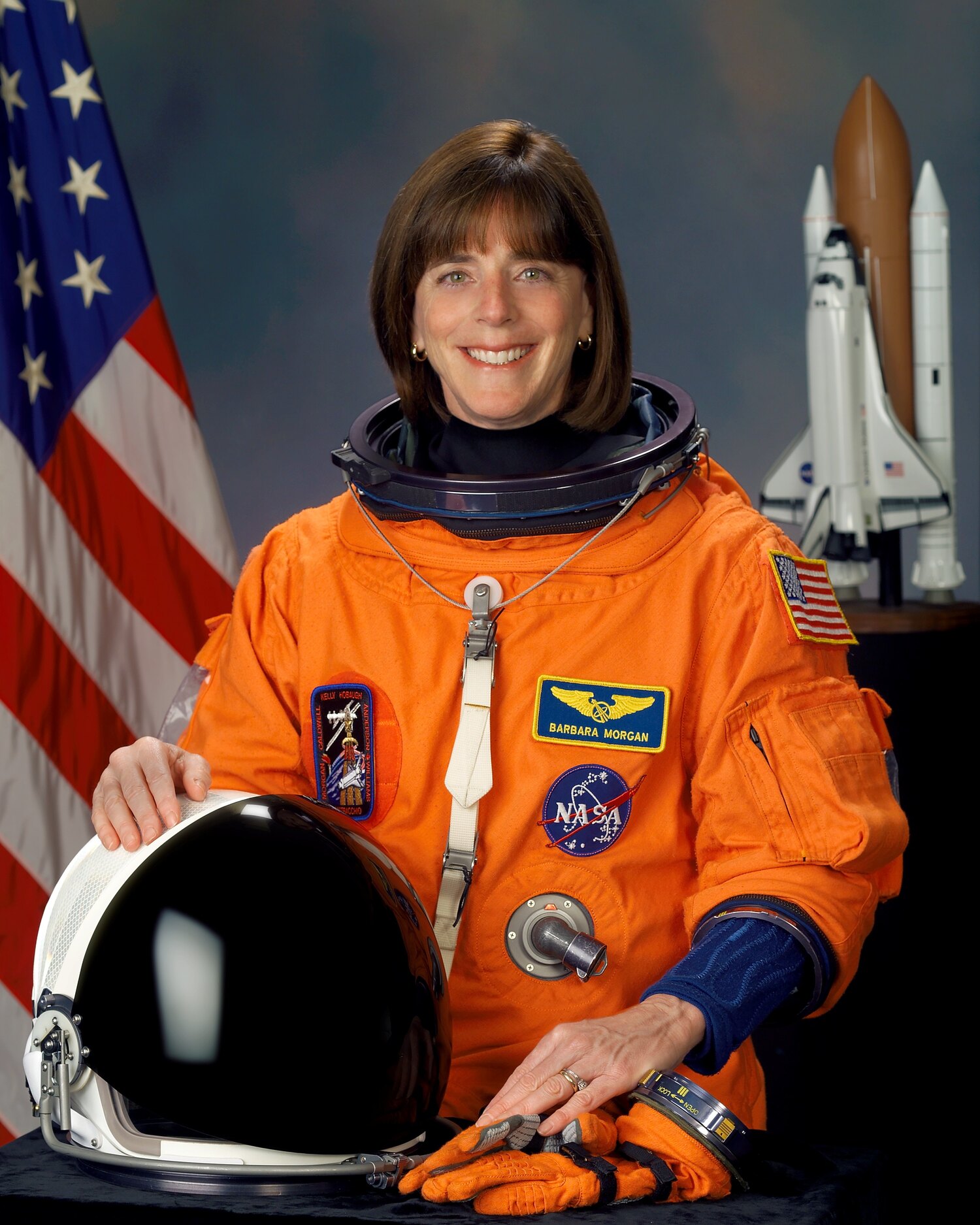
Featured photograph — Barbara Morgan in her official NASA astronaut portrait, November 28, 2006. NASA, public domain. Photo record and rights
Sources
NASA — Barbara Radding Morgan biography



No comment