
Published November 22, 2026
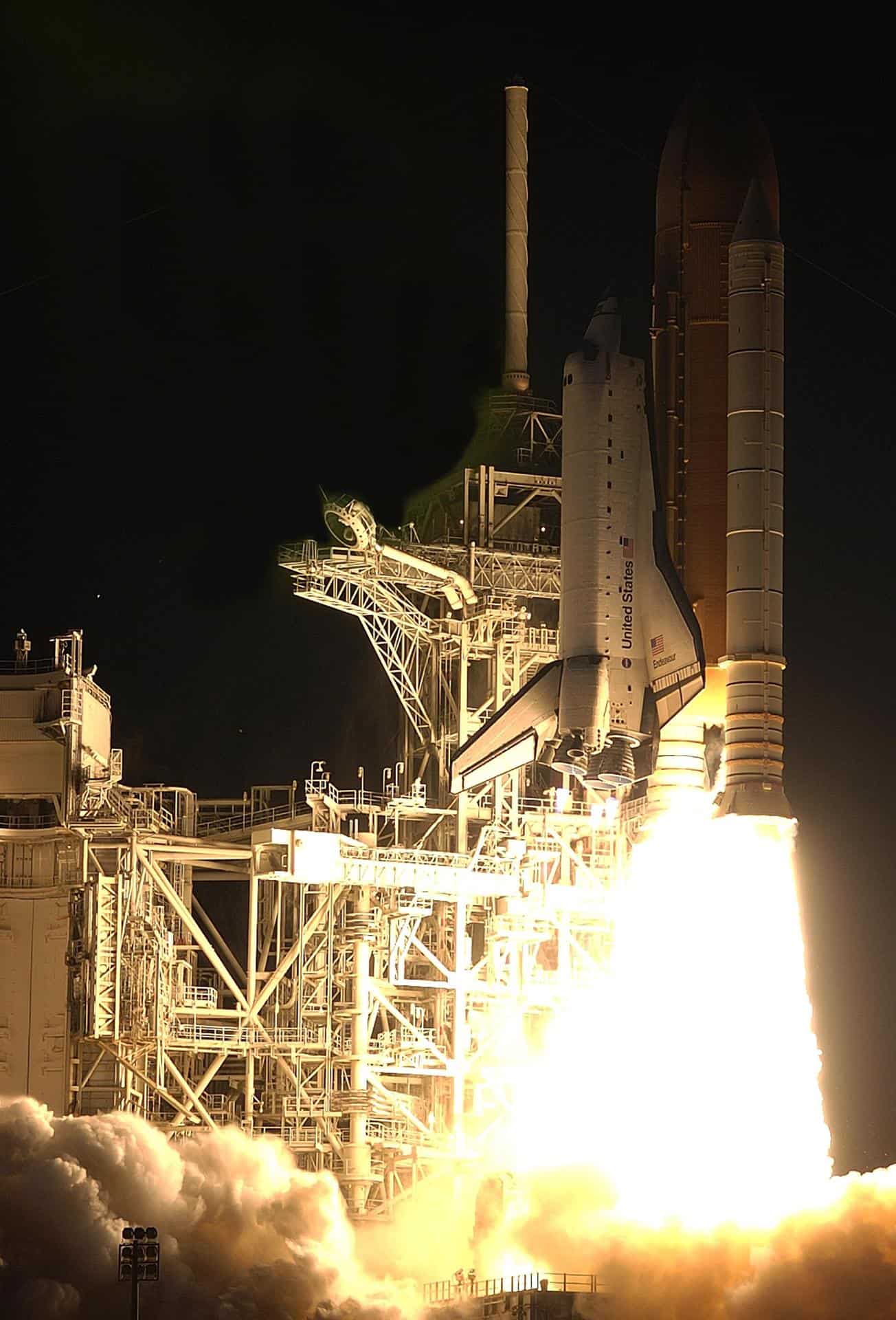
Space Shuttle Endeavour lifted off from Kennedy Space Center on November 23, 2002, carrying two things the International Space Station needed at the same time: a crew to live aboard it and a new section of the structure that would support its growing systems. The launch from Pad 39A came at 7:49 p.m. Eastern Standard Time. It began STS-113, Endeavour’s 19th flight and the shuttle program’s 112th. NASA mission record
A crew change and a construction job
Commander James Wetherbee, pilot Paul Lockhart and mission specialists Michael Lopez-Alegria and John Herrington flew Endeavour. Riding with them were the three members of Expedition 6: Kenneth Bowersox, Nikolai Budarin and Donald Pettit. Those three would stay aboard the station while the shuttle brought the Expedition 5 crew home. The seven people who left Florida therefore had different destinations even though they shared a vehicle and a launch pad. NASA preflight press kit
The crew exchange and the construction work were separate jobs with a common deadline. The shuttle was visiting the station for a limited time, and the station needed its new residents to take over while assembly continued around them. Endeavour supplied both the seats for the exchange and the cargo space for a large piece of station hardware. The flight illustrates how much of the early station depended on shuttles making regular trips between a runway on Earth and a worksite in orbit.
How the station gained another section
The cargo was the Port 1 integrated truss, or P1, a segment added to the left side of the station’s main truss. Its cooling equipment included three radiators. In orbit, heat produced by working equipment has to be moved to surfaces that can radiate it into space. The truss gave the station room for more of that equipment as the outpost expanded. A photograph of the completed station can make its structure look inevitable. Flights such as STS-113 show the separate deliveries and installation jobs that produced it. NASA’s account of the P1 installation
Getting P1 into place required two robotic arms. Endeavour’s arm lifted the segment from the payload bay and handed it to the station’s Canadarm2, which moved it into position. The arms could support and position the hardware while astronauts worked outside to complete the installation. Lopez-Alegria and Herrington made three spacewalks during the mission. The final one came on November 30, a week after the launch seen in the featured photograph.
A first for John Herrington
Herrington, an enrolled member of the Chickasaw Nation, became the first Native American in space on the November 23 launch. As a mission specialist he was part of the team working outside the station as its framework grew. NASA’s photograph of the final spacewalk shows him at the station and records a different moment from the liftoff: the work in orbit that followed the milestone on launch night. NASA’s photograph and account of Herrington’s spacewalk
Two crews, two return journeys
Endeavour landed at Kennedy Space Center on December 7 after nearly 14 days in flight. Expedition 5 came back aboard the shuttle, while Expedition 6 remained in orbit. Pettit and his fellow station residents eventually returned on Soyuz TMA-1 in May 2003. For the shuttle crew, the mission ended on a Florida runway. For the station crew, that same departure left them at the beginning of months living in the outpost they had just helped to expand. NASA’s Expedition 6 account in Donald Pettit’s biography
Featured photograph: Scott Andrews, NASA/Kennedy Space Center. The original NASA archive photograph, KSC-02pd1811, shows Endeavour leaving Pad 39A on November 23, 2002. Photo archive and credit.
Sources
NASA STS-113 mission record
NASA STS-113 press kit
NASA account of Herrington’s spacewalk
NASA biography of Donald Pettit
NASA/KSC launch photograph

No comment