
A satellite built by Rocket Lab is in orbit to help test how NASA could use commercial networks to keep future science missions connected. Maxwell, which Rocket Lab built for Viasat, launched on October 20 from Cape Canaveral Space Force Station on SpaceX’s Bandwagon-5 rideshare. It was one of two NASA-funded communications demonstrators on the flight. NASA confirmed both launches and identified Viasat and SES Space & Defense as the companies leading the two demonstrations.
The flight put the hardware in space. The next question for the program is how well the commercial links serve a satellite as it travels in low Earth orbit. Rocket Lab published Viasat’s account of the launch the following day. The announcements describe the work planned in orbit, without reporting completed test results.
Two kinds of connection for a spacecraft
A science spacecraft has more than one kind of information to send. A large file, such as imagery or a set of instrument measurements, benefits from a fast connection. Tracking, basic commands and information about the spacecraft’s condition can use a lower data rate. NASA says Viasat’s demonstration will examine both kinds of service. The two links address different problems: bringing substantial data back for analysis and maintaining contact for basic spacecraft operations.
A spacecraft in low Earth orbit moves relative to any given ground antenna. Without a relay, many links depend on the spacecraft passing through the station’s field of view. A relay in space offers another route for the signal, with a separate connection sending the data on to Earth. The purpose of the demonstration is to explore how commercial networks can perform that work for NASA’s missions.
Maxwell’s place in a broader NASA program
Viasat says Maxwell is its second demonstration mission under NASA’s Communications Services Project. The company also describes an earlier telemetry demonstration during a Blue Origin New Glenn launch in November 2025. Maxwell moves the emphasis to communications service for an orbiting spacecraft. It gives Viasat a vehicle aboard which to test the links. Separately, SES Space & Defense will demonstrate services through its own hardware and network.
NASA’s Glenn Research Center manages the project, and NASA says it plans to continue industry testing through 2027. Viasat places the effort in the context of NASA’s transition away from its Tracking and Data Relay Satellite fleet. For that transition, a launch puts a proposed service within reach of testing. The results of the demonstrations are what will show which kinds of missions the services can support.
SpaceX’s mission record puts liftoff at 7:04 a.m. Eastern on October 20 from Space Launch Complex 40. SpaceX lists 32 payloads on the rideshare. Rocket Lab’s role in this mission was to build Maxwell, the satellite that Viasat will use for its demonstration.
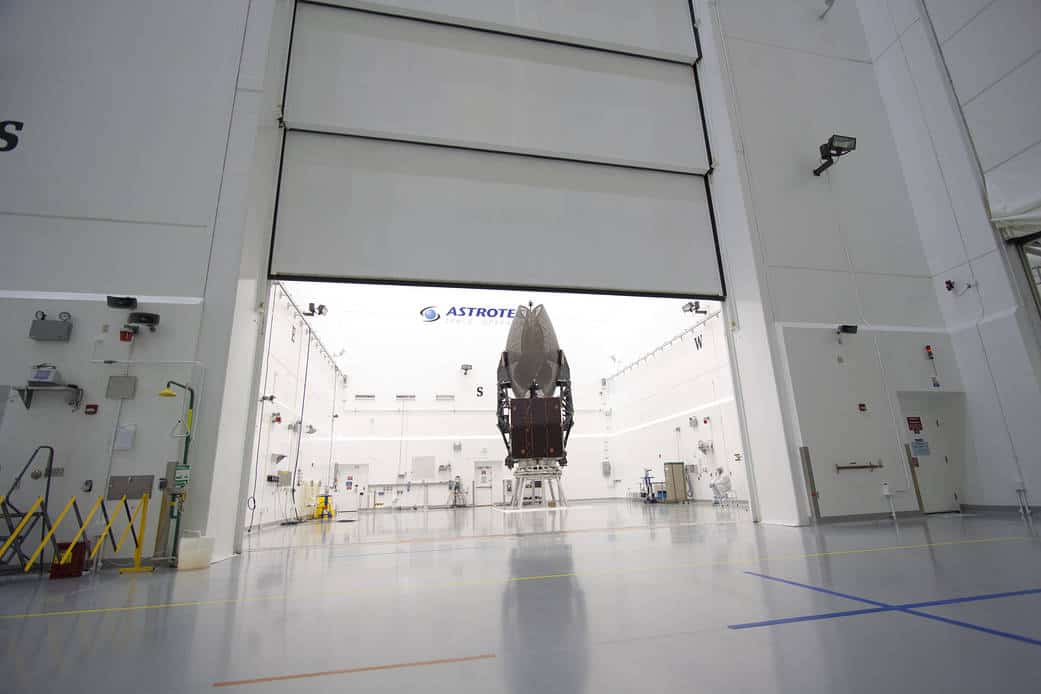
Featured photograph: NASA’s TDRS-K spacecraft during prelaunch checkout in January 2013. This archival photograph shows hardware from the NASA relay fleet that provides context for the commercial demonstration. Credit NASA/Jim Grossmann. NASA image archive.
Sources
NASA’s launch and demonstration update
Rocket Lab’s mission announcement
Viasat’s demonstration announcement
SpaceX Bandwagon-5 mission record






No comment