
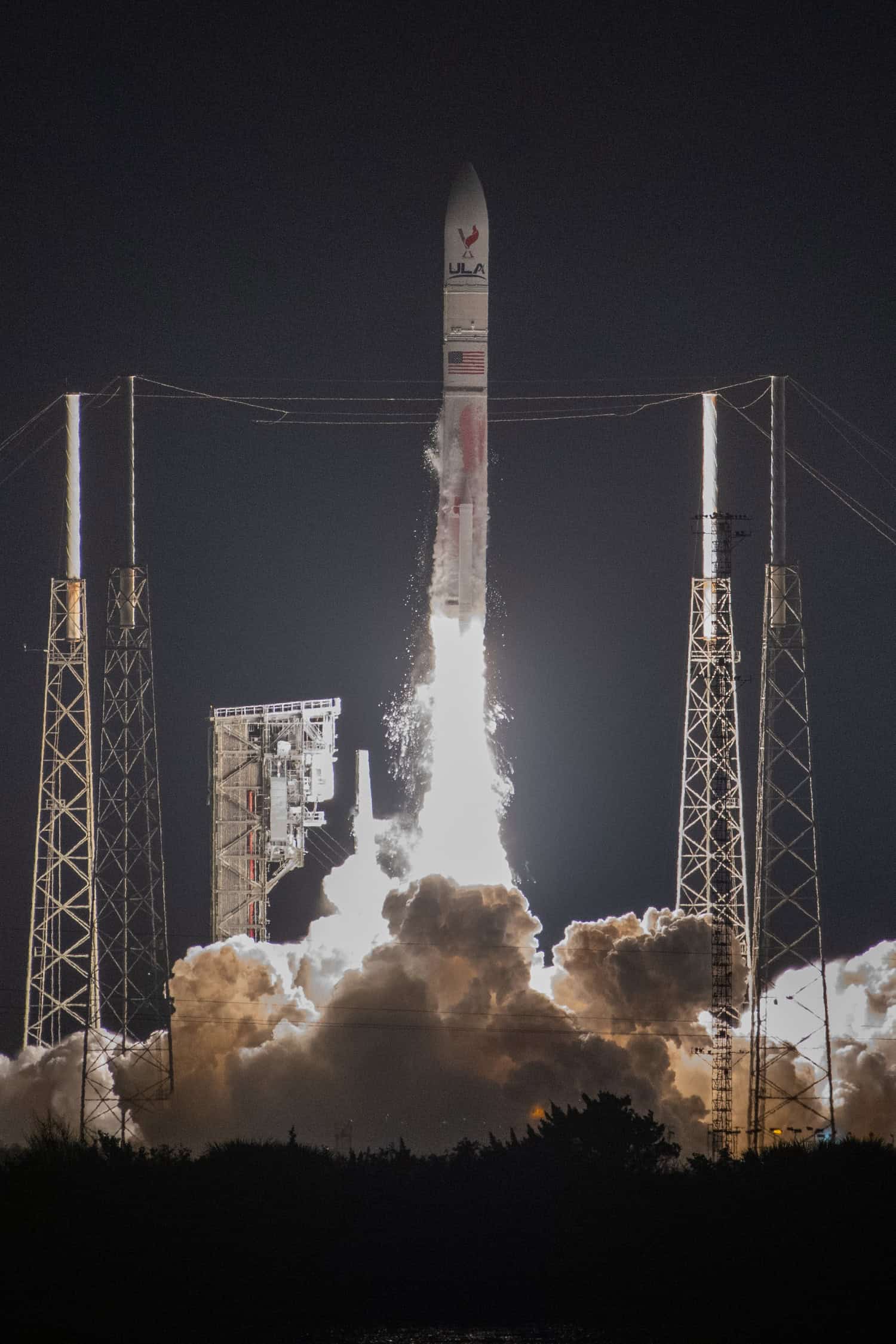
The Federal Aviation Administration has ordered United Launch Alliance to conduct a formal mishap investigation after the Vulcan Centaur’s Nov. 15 Amazon Leo flight failed to deliver its payload to orbit. The agency said it will oversee the company-led review, participate throughout the process and approve the final report, including proposed corrective actions. The FAA’s Nov. 16 announcement is a new regulatory development following the flight itself; SkyLord’s earlier report covered the launch failure and lost payload.
FAA puts the mishap under formal review
The FAA identifies the mission as Vulcan Centaur KV-01. United Launch Alliance and Amazon referred to the customer flight as Leo Vulcan 1, or LV-01. The agency says ULA must investigate the Nov. 15 mishap, with FAA involvement at every step and approval of the final report and corrective actions. The FAA has not announced a cause, preliminary findings or a schedule for completing the review.
The launch failure and the investigation are separate stages. The first establishes that the vehicle did not complete the mission; the second is intended to determine what happened and what changes are needed to prevent a recurrence. The FAA says a mishap investigation is designed to enhance public safety, identify root cause and establish corrective actions. It did not announce a preliminary finding about which part of the vehicle or operation may have been involved.
What the FAA’s investigation process requires
The FAA’s commercial space mishap guidance says licensed operators must maintain an FAA-approved mishap plan under 14 CFR 450.173. After a mishap, the operator is responsible for carrying out that plan, taking steps to protect the public and property, containing the consequences, preserving data and physical evidence, and reporting the event to the FAA. The operator must also file a preliminary written report with the agency’s Office of Commercial Space Transportation within five days of the event.
The FAA may conduct an investigation itself or authorize an operator to investigate under its approved plan. In ULA’s case, the FAA’s Nov. 16 statement identifies an ULA-led investigation and says the agency will oversee the work, participate throughout and approve the final report, including corrective actions. The FAA’s guidance says it can coordinate response planning with NASA, the National Transportation Safety Board and federal launch ranges operated by the U.S. Space Force when needed. It has not said which other agencies are participating in the Vulcan review.
The agency also says investigations vary in length: some may conclude in weeks, while more complex cases can take several months. That is general guidance, not a forecast for KV-01. The FAA has given no expected completion date for this investigation.
Air traffic measures followed unplanned debris
The FAA also disclosed an operational detail that was not central to the first launch reports: it activated two Debris Response Areas during the event. The agency said aircraft outside the designated closed hazard areas were briefly slowed, while some aircraft were held at their departure locations. The statement did not identify affected flights or airports, and it did not describe a nationwide ground stop.
A Debris Response Area is used when a launch vehicle anomaly results in unplanned debris falling outside the aircraft hazard areas identified for an operation. Under the FAA’s explanation, the agency can direct aircraft to leave the response area, prevent other aircraft from entering and hold departures at affected airports. Those measures manage airspace risk while the location and potential danger from debris are assessed. The two areas activated for KV-01 indicate that the FAA responded to a debris hazard beyond the planned closure areas; they do not establish where debris landed or what caused the vehicle failure.
What is known about LV-01
Vulcan lifted off from Space Launch Complex 41 at Cape Canaveral Space Force Station on Nov. 15 carrying 40 Amazon Leo broadband satellites. Reuters reported that ULA said the vehicle suffered an anomaly roughly 10 minutes into flight and failed to deliver the mission to orbit. Amazon’s prelaunch description identified LV-01 as the first Vulcan flight for its Leo constellation and said it was the largest number of satellites the company had planned to send on a single launch at that time.
LV-01 also followed a nine-month pause associated with work on Vulcan’s solid rocket boosters. In a Nov. 10 prelaunch update, ULA described the work after a February booster-nozzle anomaly: the integrated team conducted analysis, material and component testing, and a full-scale hot-fire test of a GEM 63XL motor. ULA said design and manufacturing changes had been incorporated into the boosters planned for LV-01, while analysis of the earlier issue continued. That booster investigation is separate background; neither the FAA nor ULA has connected it to the Nov. 15 failure.
ULA’s initial response, reported by Reuters, said its available flight data confirmed an anomaly and unsuccessful delivery of the Amazon mission, but did not yet identify what occurred. The company said it would work with Amazon and other appropriate organizations to determine the cause and corrective actions. The FAA’s order sets out the regulator’s oversight of the ULA-led investigation. No public technical explanation or return-to-flight date has been announced.
Return to flight is a separate FAA decision
The FAA says a return to flight for a vehicle involved in a mishap is based on whether systems, processes or procedures related to the event affect public safety. The agency’s guidance adds an important qualification: an operator may request permission to return before the full mishap investigation is complete. The FAA can review that request and, if it agrees the safety standard is met, authorize return while the investigation remains open.
That means completion of the full investigation is not automatically the only path to a future launch, but ULA cannot make that determination on its own. The FAA says it must decide whether the related public-safety concerns have been addressed. The agency has not said whether ULA intends to seek an early return-to-flight determination for Vulcan, what evidence it would require for such a request or how the recent debris response will affect its review.
The FAA’s review therefore has two connected but distinct outcomes: approval of ULA’s final mishap report and corrective actions, and a safety determination governing when the vehicle type may resume flights. The first documents the investigation; the second concerns whether the rocket can operate again without the mishap-related systems, processes or procedures affecting public safety. The agency has not published a timeline for either decision.
What remains unanswered
As of Nov. 17, the FAA has confirmed the investigation order and air-traffic response, but has not identified the root cause, named corrective actions or published a return-to-flight timeline. The current public information does not support attributing the failure to the boosters, Centaur upper stage, software, guidance or another system. The February nozzle work is relevant to the rocket’s recent return-to-flight history, but it is not evidence about LV-01’s cause.
The next meaningful update will be a verified finding from ULA, a public FAA determination about return to flight, or both. Until then, the established facts are limited: LV-01 suffered an in-flight mishap, the Amazon mission was not delivered, the FAA activated two debris response areas, and the agency has placed ULA’s investigation under formal oversight.
Sources
- Federal Aviation Administration, “FAA Requires Mishap Investigation of ULA KV-01,” Nov. 16, 2026
- Federal Aviation Administration, Commercial Space Compliance, Enforcement and Mishap Guidance
- Reuters, “Rocket from Boeing-Lockheed firm fails mid-flight, destroys payload of Amazon satellites,” Nov. 15, 2026
- Amazon, “Amazon Leo (LV-01): 40 satellites in the first Vulcan launch”
- United Launch Alliance, “Vulcan Leo 1: Delivering 40 satellites to space,” Nov. 10, 2026
- Archival featured photograph: U.S. Space Force photo by Airman 1st Class Spencer Contreras, DVIDS photo 8192711, public domain





No comment