
Published November 28, 2026
On November 28, 1967, the Douglas DC-9 Series 40 made its first flight. As Boeing’s historical account records, the new variant was about six feet longer than the Series 30 and could carry up to 125 passengers. The extra length marked another step in adapting the DC-9 to the different loads airlines wanted to carry. This was a development of an existing airliner family, and the first flight made the larger variant’s design a subject for flight testing. Boeing’s DC-9 history
More seats within an existing family
The Series 40 retained the family’s two rear-mounted engines and T-tail. Its extra length went into the fuselage, where it could make room for more seats without a corresponding increase in wingspan over the Series 30. The design therefore illustrates a decision aircraft manufacturers still face when expanding a family: how much to change to gain capacity, and how much of the existing airplane to carry forward. DC-9 Series 40 design summary
The published maximum also needs a little context. A passenger count describes how many seats a variant can accommodate in a particular arrangement. Airlines can choose different seating layouts, and the number carried on an individual flight can be lower than the maximum. What remained true regardless of the layout was that the Series 40 gave airlines more cabin length to work with than the Series 30.
What a stretch changes
A fuselage stretch changes more than the floor plan. Length added to an airplane changes the relationship between its overall weight, the distribution of that weight and the geometry of the aircraft on the ground and in flight. An airframe that shares a wing and an overall configuration with its predecessor still has to be evaluated in the new form. The November flight matters because it began to put the larger version into the air, where the effects of its changes could be assessed on the aircraft itself.
The added capacity also changes what an airline can do with a scheduled departure. A longer airplane can offer more seats on a busy route where the carrier wants to retain a given departure time. At the same time, the larger version is only one choice. On a route with fewer travelers, the smaller member of the family might be a better match. Anniversaries of individual variants make those choices easier to see than a single date for the entire airliner family.
The airplane in the photograph
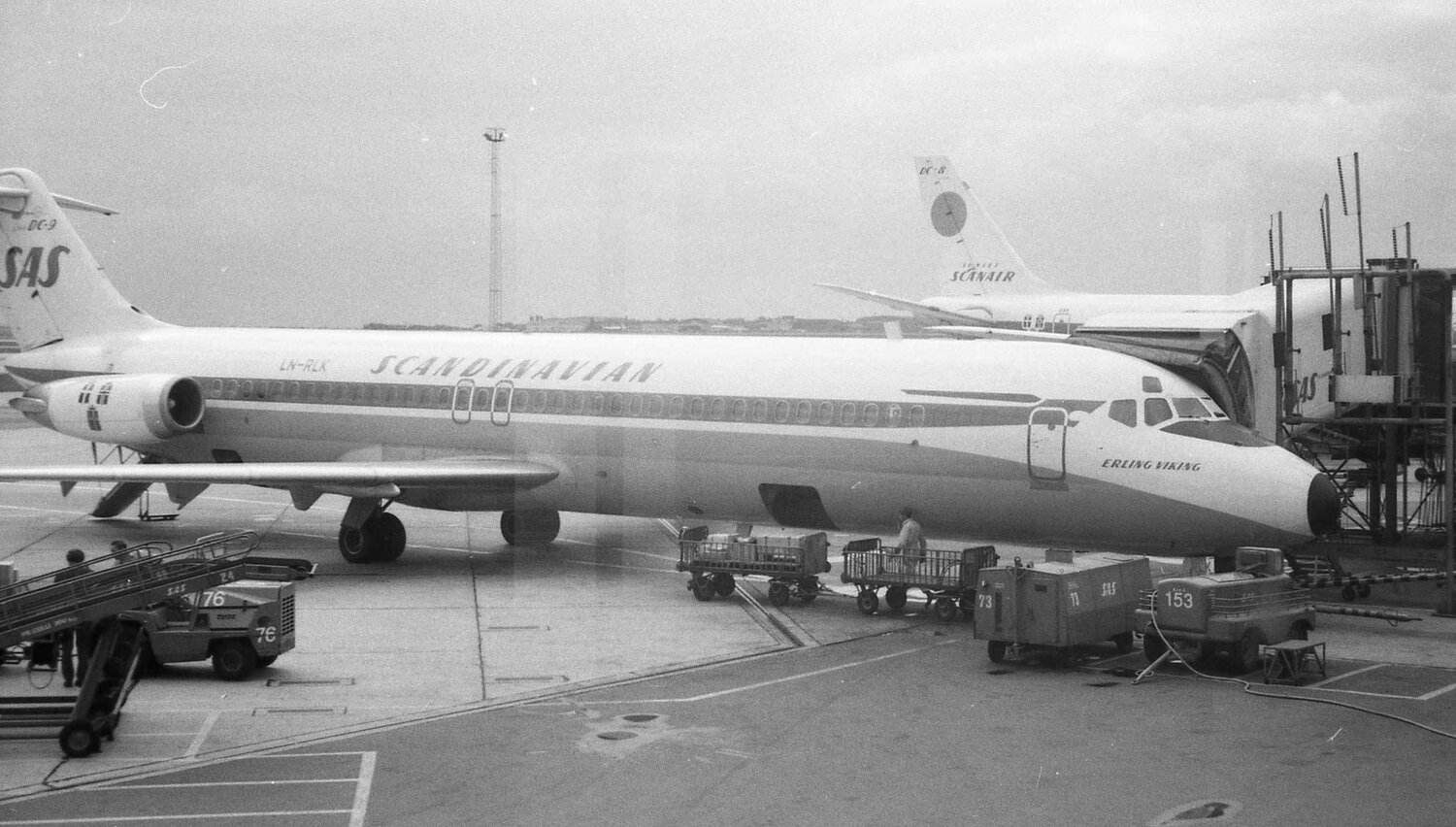
The featured photograph shows an example of the production Series 40 in Scandinavian Airlines service. The aircraft, LN-RLK, was a DC-9-41 named Erling. According to the photograph’s archive record, this airframe first flew in April 1968 and was delivered to SAS the following month. The 1967 date marks the first flight of the series. The 1968 dates refer to the individual airframe shown here. Photo and airframe record
Douglas took the concept further with the Series 50, another stretch that first flew in 1974, according to Boeing. In that sequence, the Series 40 shows an intermediate stage of growth. The extra cabin space was the visible change, but the broader engineering idea was the ability to answer different airline capacity needs with related aircraft. That is the contribution the Series 40 first flight marks. Boeing historical snapshot
Featured photograph — SAS DC-9-41 LN-RLK. Piergiuliano Chesi / Wikimedia Commons, CC BY-SA 3.0. Full frame resized.






No comment