
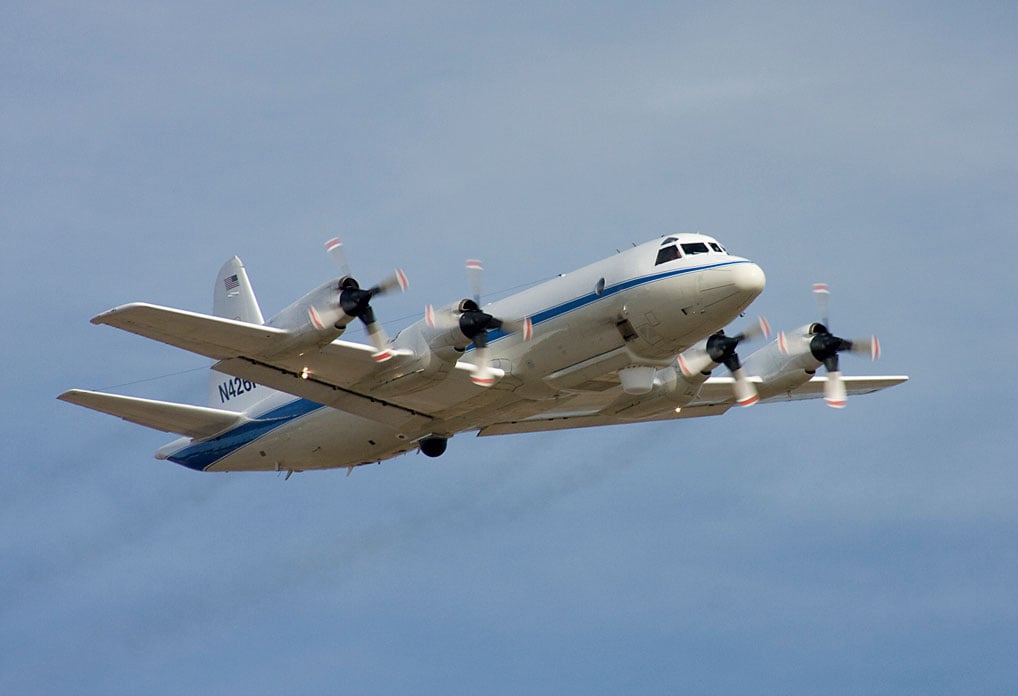
NASA plans to fly its P-3 Orion research aircraft over cropland in the Midwest and California’s Central Valley during the 2027 growing season. The flights are part of FarmFlux, a project studying how agricultural emissions interact with the atmosphere. NASA’s Nov. 17 update gives a March-to-July window for the P-3 flights. It does not give individual flight dates.
From Texas livestock operations to cropland
The earlier deployment used a Dynamic Aviation A200. NASA’s updated notice placed those low-altitude flights near Amarillo, Texas, between Oct. 22 and Nov. 2, 2026, with a focus on animal feeding operations. For the 2027 deployment, NASA has identified a different aircraft, different regions and a focus on cropland. The notice describes the planned work and does not report findings from the Texas deployment.
FarmFlux is jointly led by NASA’s Goddard Space Flight Center, Colorado State University and Boston University. NASA says the project will use more than a dozen sensors to study gases and airborne particles. Its measurements include methane, ammonia, ozone and particulates. Looking at several species together gives researchers a way to distinguish what is emitted near the surface from what changes as the air moves and mixes. NASA’s FarmFlux mission overview describes the atmospheric research.
How the aircraft supports the measurements
NASA’s P-3 Orion is a former U.S. Navy patrol aircraft adapted to carry scientific instruments. NASA Goddard operates it through the Aircraft Office at Wallops Flight Facility in Virginia. The platform lets research teams bring instruments to the air they want to sample. For field work over agriculture, this means researchers can gather measurements across a region and compare conditions along a flight instead of relying only on instruments at a fixed point on the ground.
The NASA aircraft fact sheet shows the P-3 in a typical science configuration during a check flight. That archival photograph illustrates the platform selected for the 2027 campaign. NASA’s FarmFlux notice does not specify the aircraft’s final instrument layout for the cropland flights.
What the campaign is intended to answer
The emissions that leave a field or livestock operation can mix with emissions from other sources. A sample taken farther away can therefore differ from one collected near the surface. Low-altitude airborne observations help scientists build a record of those differences. FarmFlux also examines the interaction between agricultural emissions and atmospheric chemistry, so the chemical makeup of the air matters alongside the quantities measured.
NASA has described the Texas work and the cropland flights under the same project. The Texas notice focused on livestock operations, while the 2027 work will concentrate on crops during the growing season. The March-to-July window spans several months in two broad regions. The published update does not give exact flight tracks, and its schedule should be read as the agency’s current plan. NASA’s deployment update provides the dates and locations released so far.
Sources
NASA — FarmFlux flight deployment update
NASA Science — FarmFlux mission overview
NASA Airborne Science — P-3 Orion fact sheet and archival photograph





No comment