
Published November 22, 2026
Wiley Post was born on November 22, 1898, near Grand Saline, Texas. Thirty-four years later, he returned to the New York airfield from which he had departed a week before, becoming the first person to fly around the world alone. Post used the same Lockheed Vega for another kind of pioneering work. By taking it high into the atmosphere while wearing a pressure suit he helped develop, he turned a record-setting airplane into a platform for high-altitude research. The Smithsonian’s historical study of Post and his airplane documents both parts of his career.
Two journeys in the Winnie Mae
Post’s first flight around the world was a partnership. In 1931, he flew the Winnie Mae with navigator Harold Gatty. Post handled the airplane while Gatty navigated. The Smithsonian’s aircraft record puts their journey at just over eight days. The flight demonstrated what a fast landplane and a two-person crew could do on a route where every fuel stop and change of weather had consequences for the next leg.
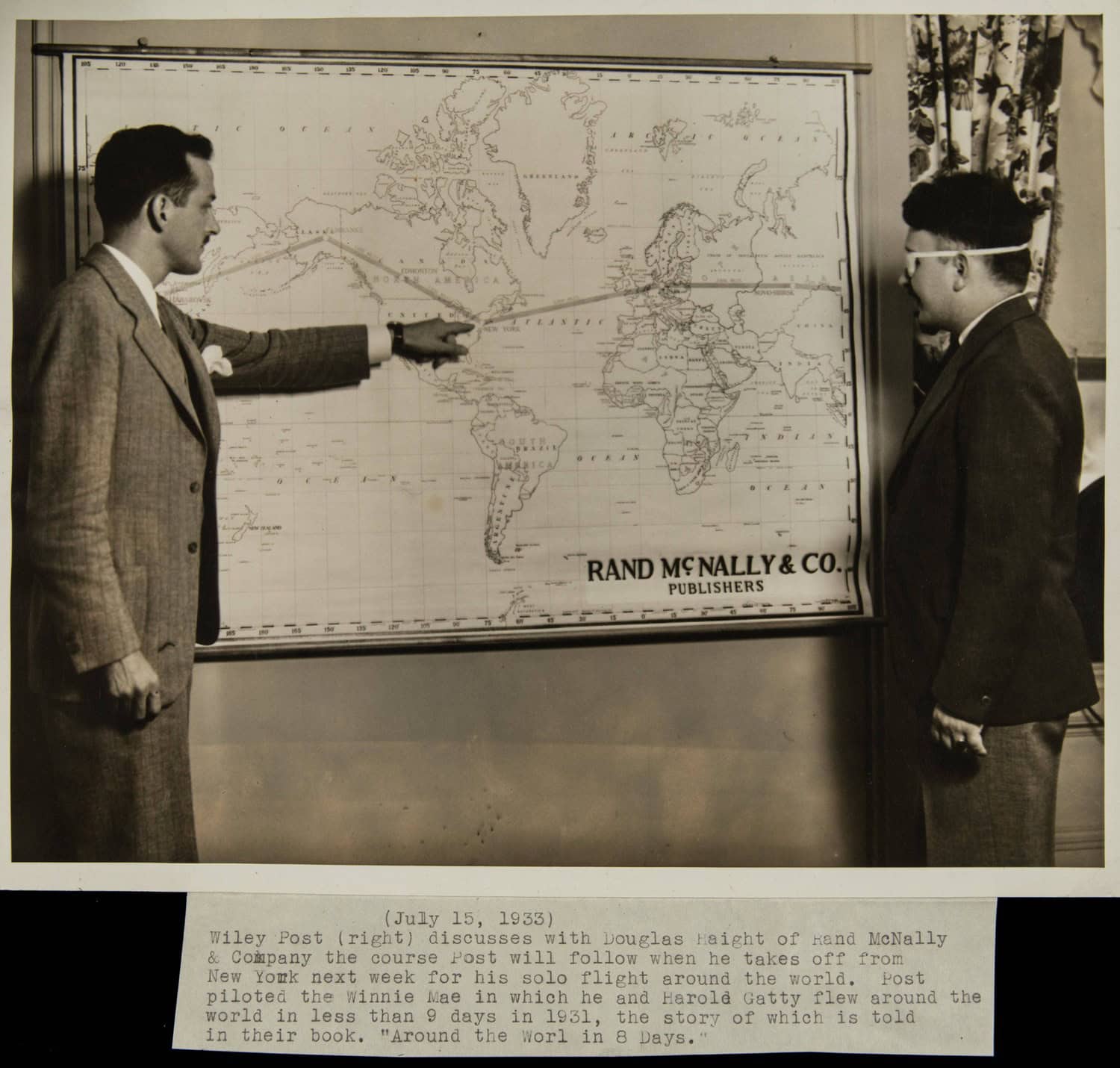
In July 1933, Post took the Vega around the world again, this time with no one in the other seat. The National Air and Space Museum’s account records that he completed the circuit at Floyd Bennett Field on July 22, after seven days, 18 hours, 49 minutes and 20 seconds. A solo pilot had to fit the work of navigating and keeping a schedule around flying the airplane. The Smithsonian study describes the equipment Post used to make that combination practical, including an automatic pilot and a radio direction finder.
The automatic pilot could take over some of the work of keeping the airplane on course. Radio direction finding offered another way to establish direction when a pilot could receive a suitable signal. Those tools changed what Post could manage alone. The flight still depended on his decisions about where to fly and when to stop, and the equipment’s usefulness depended on the pilot knowing when to rely on it.
From long-distance flight to high-altitude research
The Winnie Mae gave Post a familiar airplane in which to tackle a new problem. As an airplane climbs, the air pressure drops. A pilot working at unusually high altitudes needed a way to stay protected in an airplane whose cabin was open to those conditions. Post worked with the B.F. Goodrich Company on a suit intended to provide a pressurized environment around his body. The Smithsonian’s study traces successive versions of that suit and the problems the team worked through before Post used it in flight.
In 1935, Post flew the Vega into the stratosphere. The museum’s description of the airplane recounts how he took advantage of strong winds at altitude. The result brought together two areas of investigation. The suit addressed the conditions the pilot could endure, while the high-altitude flights showed what the winds could mean for the airplane’s progress over the ground. Post’s work helped make the challenges of flight at those heights more concrete for the people developing the equipment.
The Winnie Mae survives in the Smithsonian’s collection. Its history connects the flight with Gatty, the solo circuit and the pressure-suit tests. The first two ventures extended the distances a single airplane could cover on a demanding timetable. The last asked what it would take for the pilot to work in an environment that ordinary flying equipment had been built to avoid.
Featured photograph. Wiley Post and Douglas Haight, July 22, 1933. Rand McNally and Company, Newberry Library, via Wikimedia Commons. Public domain in the United States. Full frame resized.
Sources
Smithsonian Annals of Flight, Wiley Post, his Winnie Mae, and the world’s first pressure suit
Smithsonian Institution, Lockheed Vega Winnie Mae collection record
National Air and Space Museum, Wiley Post photograph and flight record





No comment