
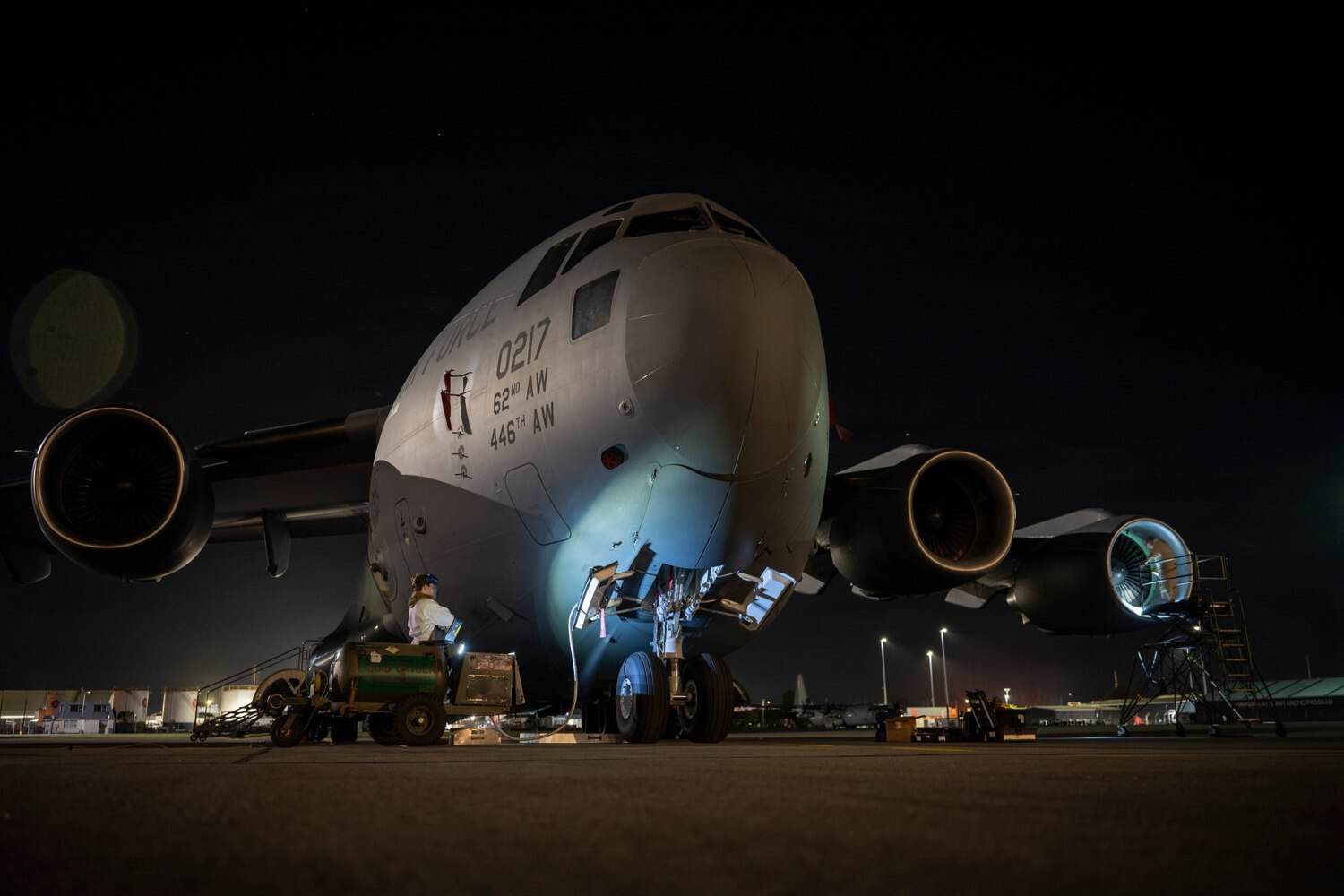
A U.S. Air Force C-17 Globemaster III had returned from Antarctica when maintainers went to work on the ramp at Christchurch International Airport. In a photo series released Nov. 20, the 446th Airlift Wing documented the work between flights, including inspections and servicing by personnel from the 62nd and 446th Airlift Wings. The images show what it takes to keep the airlift operating after an aircraft comes home.
For Operation Deep Freeze, Christchurch serves as a staging point for flights supporting the U.S. Antarctic Program. It is where crews can prepare aircraft, passengers and cargo for the next leg south. It also gives maintainers a place to inspect the aircraft after a polar flight, using the personnel and equipment available at an established airport.
What happens after landing
The Air Force photo series describes engine checks and servicing of the C-17’s liquid oxygen system after an Antarctic mission. A second photograph shows aircraft structural technician Jakob Wolfe checking tire pressure. These are distinct jobs, and the images make clear how much of an aircraft turnaround happens on the ground after the flight crew has brought the airplane back.
The tires are checked individually. Oxygen servicing is another task entirely. In a separate frame, crew chief Staff Sgt. Jacob Eakle services the liquid oxygen system. The sequence captures the work at the level of individual checks, where a broad assignment such as keeping an airlift running becomes a series of concrete responsibilities.
Why the northbound leg matters
The southbound flight gets the attention because it reaches Antarctica. The return to Christchurch is what allows the aircraft to be serviced before going south again. Aircraft availability depends on that interval, which also involves preparing the next load and coordinating with the people handling it. Another frame in the Air Force series shows an American loadmaster working with New Zealand Defence Force personnel to load a pallet of airline seats onto a C-17.
The Air Force’s Antarctic C-17 operations guidance treats Antarctic airlift as a distinct assignment with its own procedures. The newly released images show one part of that assignment from the maintenance crew’s point of view. The engine, tire and oxygen checks are easy to overlook in a story about the aircraft’s range or payload. In Christchurch, they are the jobs that prepare the aircraft for whatever mission comes next.
Featured photograph: U.S. Air Force photo by 1st Lt. Heather Cozad Staley, public domain via DVIDS. The full frame was resized proportionately.
Sources
446th Airlift Wing/DVIDS photo release
DVIDS tire inspection photograph
DVIDS oxygen servicing photograph
Air Force Antarctic C-17 operations guidance






No comment