
Published November 25, 2026
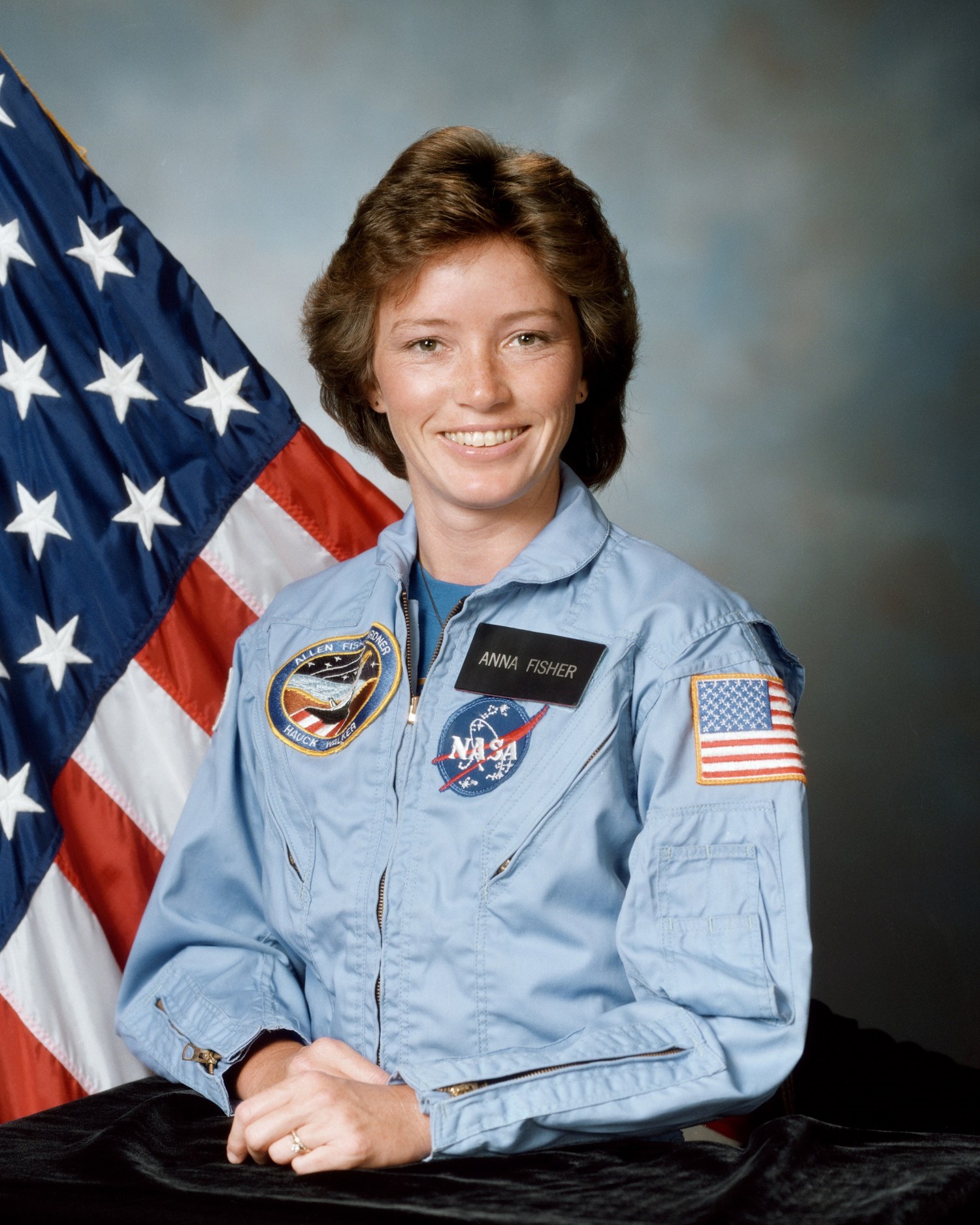
During Discovery’s second flight, NASA astronaut Anna L. Fisher operated the shuttle’s robotic arm as the crew brought two malfunctioning satellites aboard for return to Earth. The operation gave NASA its first test of the shuttle’s ability to retrieve satellites and carry them home. Fisher was a mission specialist on STS-51A, which launched November 8 and landed November 16, 1984. She was also the first mother to fly in space, a milestone NASA highlighted when she retired in 2017.
A shuttle flight with two kinds of cargo work
The ability to put a satellite into orbit was already part of the shuttle’s work. STS-51A combined that familiar job with the reverse operation. Early in the mission the crew deployed two satellites. Later, two spacecraft left in unusable orbits after an earlier shuttle mission became the objects of retrieval. They were the communications satellites Palapa B2 and Westar VI. Bringing them aboard meant catching hardware that had already been sent out and then finding a way to secure it for a return to Earth.
Mission specialists Joseph Allen and Dale Gardner used maneuvering units to reach the satellites outside Discovery. Fisher worked with the shuttle’s remote manipulator system. NASA’s mission summary credits her with grappling the satellites and depositing them in the payload bay. The arm joined work happening in two places. The spacewalkers could move out to the satellites, while Fisher could guide the hardware into the place it would occupy for the rest of the flight. NASA’s report presents the result as a test of a capability the shuttle had been designed to offer.
That outcome is a reason to remember Fisher’s flight alongside the personal milestone. The retrieval was a crew accomplishment in which the astronaut operating the arm had a clearly documented part. It also illustrates why the title mission specialist covered such a wide range of work. Inside the orbiter, a crew member could be directly involved in a complex operation taking place beyond the cabin.
A career spanning three spacecraft programs
Fisher trained in chemistry and medicine at UCLA and worked in emergency medicine before NASA selected her in January 1978. Her NASA biography records that she supported the first four shuttle orbital flight tests as a physician at launch and landing sites before flying aboard Discovery herself.
Fisher belonged to NASA’s first astronaut class to include women. Her career continued well beyond the 1984 flight. The agency’s retirement announcement describes her work on crew training and operating concepts for the space station, including the station’s health maintenance facility. From 1996 through 2002 she led the astronaut office’s Space Station branch during early work on the International Space Station. In that job she coordinated astronaut office input and worked with international partners.
Years later, she served as a capsule communicator in Mission Control and became lead communicator for Expedition 33. The communicator is the link between the ground team and the crew during operations. That work brought Fisher to another side of the exchanges that make spaceflight possible. Earlier she had worked from a shuttle cabin with colleagues outside it. In Mission Control she was part of the team supporting a crew already in orbit.
NASA also credits Fisher with work on displays for Orion. Across those assignments, the recurring subject is how crews use spacecraft and work with the people supporting them. The robotic arm on Discovery was one example, and crew input for station operations and future displays were others. The record of STS-51A gives that broader career a particularly concrete starting point: two satellites came home aboard Discovery after Fisher helped move them into its payload bay.
Featured photograph: Anna L. Fisher in a NASA portrait, circa 1984. NASA via Wikimedia Commons, public domain. The image was resized proportionately with the full frame preserved.
Sources
NASA STS-51A mission summary
NASA career summary and retirement announcement
NASA portrait and public-domain record



No comment