
Published November 25, 2026
Split Airport opened to traffic on November 25, 1966. The airport’s official history places the opening in Kaštela and Trogir, west of Split, and describes a facility that could initially handle only a small number of aircraft. Sixty years later, the opening date marks the beginning of an airport built to connect central Dalmatia with domestic and international destinations. The European Union Strategy for the Adriatic and Ionian Region transport report also records the November 25 opening date.
A coastal gateway takes shape
The airport serves a region whose busiest travel periods reflect its position on the Adriatic. As more visitors came to the coast in the 1970s and 1980s, the airport had to accommodate more aircraft and people. The operator’s history traces that demand to the growth of tourism in Dalmatia, where a regional airport could provide a direct link to cities outside the region. The opening is therefore also a milestone in how visitors reached the coast and how residents traveled beyond it.
An airport’s opening fixes a date on the calendar. Its growth is easier to see through the facilities it had to add over time. Split’s new passenger terminal was completed in 1979, thirteen years after the field opened to traffic. A passenger terminal is where arriving and departing travelers, baggage and the aircraft schedule come together. Adding terminal capacity gave the airport more room to serve the traffic it was attracting as the coast became a busier destination.
From a small airport to a million-passenger year
By 1987, Split Airport had passed one million passengers for the first time, according to the operator. That figure gives a sense of the scale of the change from the opening years. It also shows why the 1979 terminal matters to the airport’s history. The growth story spans those years between the building’s completion and the passenger milestone, as the airport’s role expanded from a new transport link to an established point of entry for central Dalmatia.
Traffic did not grow in an uninterrupted line. The operator says military operations during Croatia’s war sharply limited traffic at the airport. The history of the field includes that period of disruption and the work of restoration as well as the better-known milestones in passenger numbers. The distinction matters because the infrastructure and the service it supports have separate histories. A runway and terminal can be in place while circumstances change how often people can use them.
A later view of the terminal
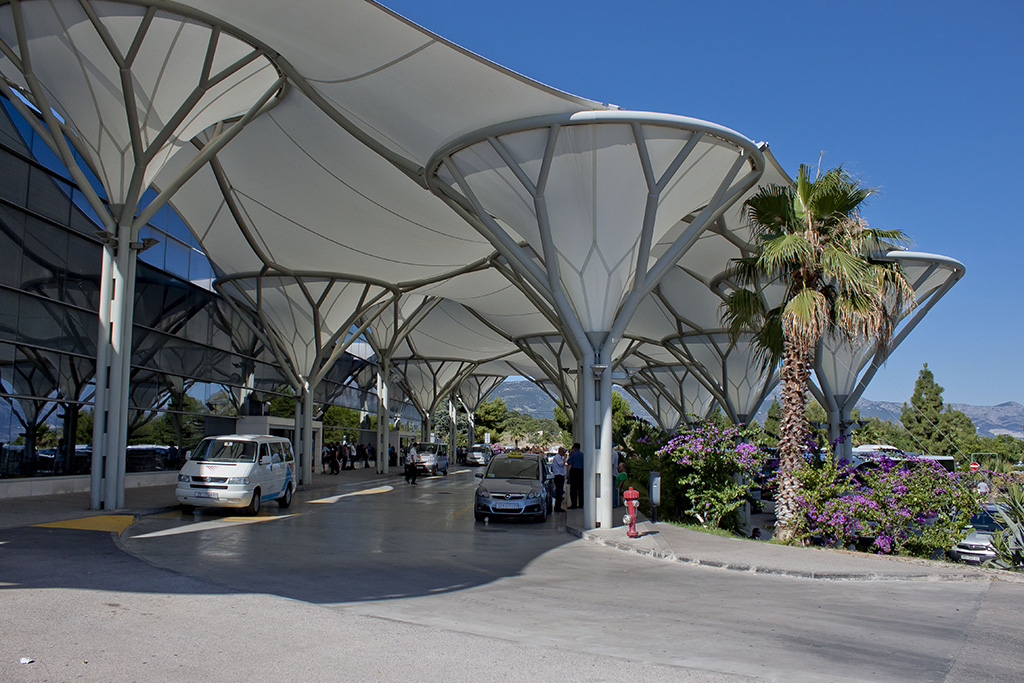
The photograph accompanying this feature shows the passenger terminal in June 2011, nearly 45 years after the airport’s opening and more than three decades after the terminal milestone cited in the official history. It offers a view of the airport at a later point in its development. The photograph’s date is separate from the 1966 anniversary, just as the 1979 building milestone is separate from the date the field first opened to traffic.
That sequence of dates is the story of the airport in miniature. The first marks the start of service, the second reflects investment in handling passengers, and the million-passenger year shows how extensively the connection came to be used. For an airport serving a coastal region, those milestones tell a history of changing travel demand as well as one of runways and terminals.
Featured photograph: Split Airport terminal, June 2011. Goran Les (Ballota), Wikimedia Commons, CC BY-SA 3.0. The photo is reproduced unchanged.
Sources
Split Airport official history
Adriatic and Ionian Region Transport Master Plan, Air Transport
Photograph and license record



No comment