
Published November 25, 2026
Soyuz TMA-19 landed on the Kazakhstan steppe at 11:46 p.m. Eastern on November 25, 2010, completing a flight home from the International Space Station. The capsule carried Russian cosmonaut Fyodor Yurchikhin and NASA astronauts Doug Wheelock and Shannon Walker. Their landing ended a stay of about five months and closed Expedition 25. The event fell on Thanksgiving night in the United States and on the morning of November 26 in Kazakhstan. NASA’s landing announcement gives both dates.
From the station to the steppe
Yurchikhin commanded the Soyuz for the return. NASA identified Wheelock as the Expedition 25 commander and Walker as one of its flight engineers. Those roles belonged to two different parts of the mission. The station expedition had its own command structure, while the returning spacecraft needed its own commander for the flight from the station to Earth.
The capsule undocked from the station’s Rassvet module at 8:23 p.m. Eastern. Three hours and 23 minutes later it was on the ground northeast of Arkalyk, Kazakhstan. The two timestamps bracket the final independent flight of the spacecraft. The return finished a journey that had started in June, when the same trio launched aboard TMA-19 from Baikonur Cosmodrome in Kazakhstan.
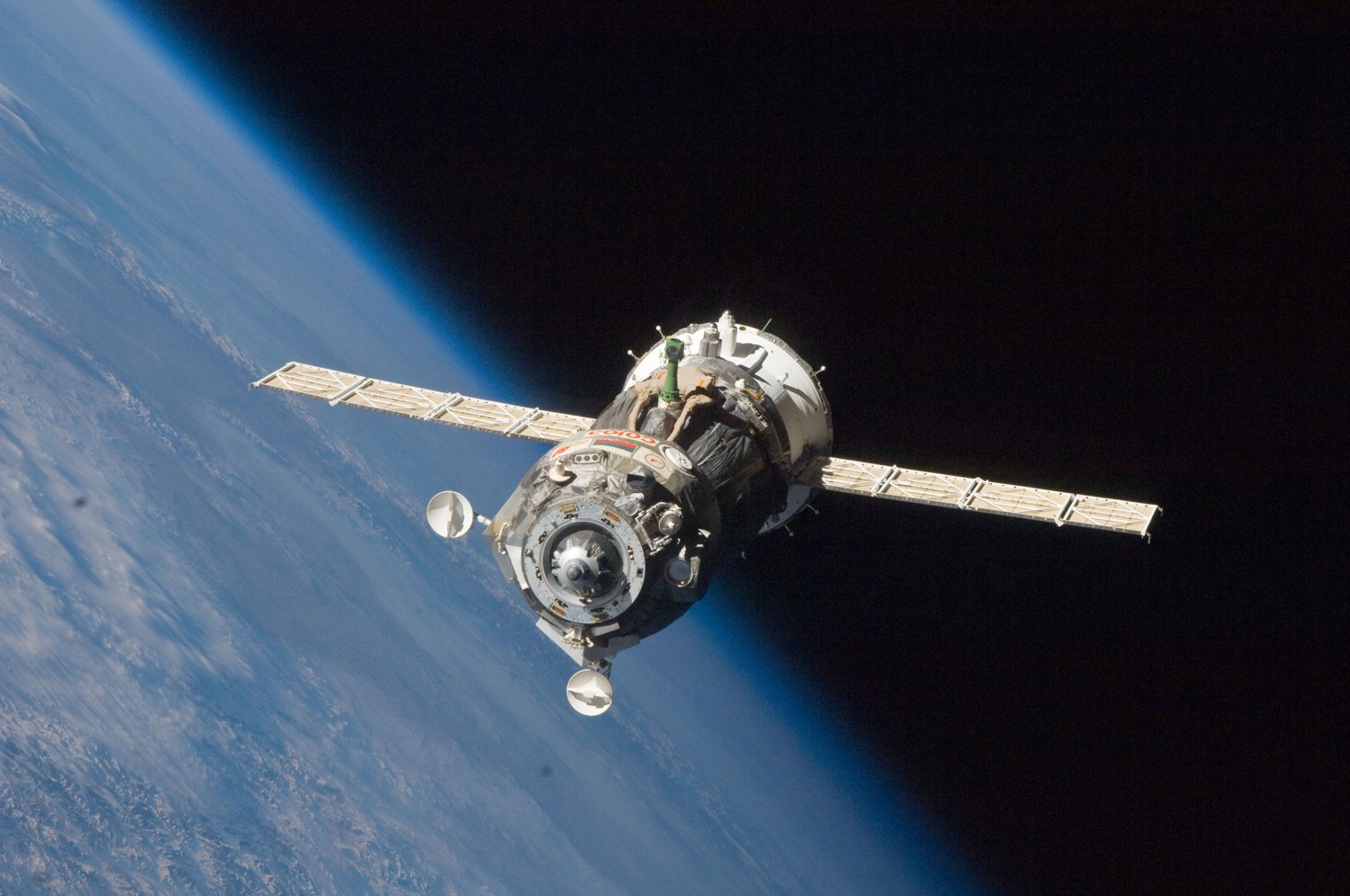
A NASA camera aboard the station recorded the spacecraft after departure. The photograph accompanying this article shows the Soyuz linked to the landing by the same sequence of events, beginning with its separation from the station. The image catalog uses November 26 in Coordinated Universal Time. NASA’s event release gives November 25 in Eastern time for the undocking and the landing. The dates describe the same return and reflect the time zones used to record it.
An expedition ends while the station stays occupied
The landing mattered beyond the homecoming. NASA described it as the conclusion of the station’s first decade of expeditions. The departing group had served aboard the outpost in the months leading up to the tenth anniversary of continuous human occupancy. The crew’s safe return brought that particular expedition to a close as the people who remained aboard carried the station into its next one.
That continuity depends on overlapping crews and return flights like this one. A crew rotation changes who is conducting the station’s work while keeping an operating team in orbit. The moments recorded in the landing release make that division visible. One group leaves the orbital laboratory and returns to Earth, and the next expedition continues aboard it. For the three aboard Soyuz, the same handover marked the end of months away from Earth.
Why the return has two calendar dates
The landing site was already in daylight at 10:46 a.m. local time on November 26. In the Eastern United States it was still 11:46 p.m. on November 25. NASA’s Houston reporting and the Kazakhstan recovery clock therefore place the completed flight on adjacent dates. The anniversary here follows the Eastern timestamp, with the local landing date included so readers can match it against international records and NASA’s image archive.
The term Historic Flight Anniversary refers to the completed return flight. The launch in June and the station stay are part of its background, while the qualifying event was the safe touchdown near Arkalyk. Together, the launch, station handover and landing show how a spacecraft that had spent months linked to a station became the crew’s transport home again.
Featured photograph: Soyuz TMA-19 departing the International Space Station. NASA, ISS026-E-005079, public domain. The photograph was resized proportionately with the full frame preserved.
Sources
NASA landing announcement and timestamps
NASA archival photograph and reuse record



No comment