
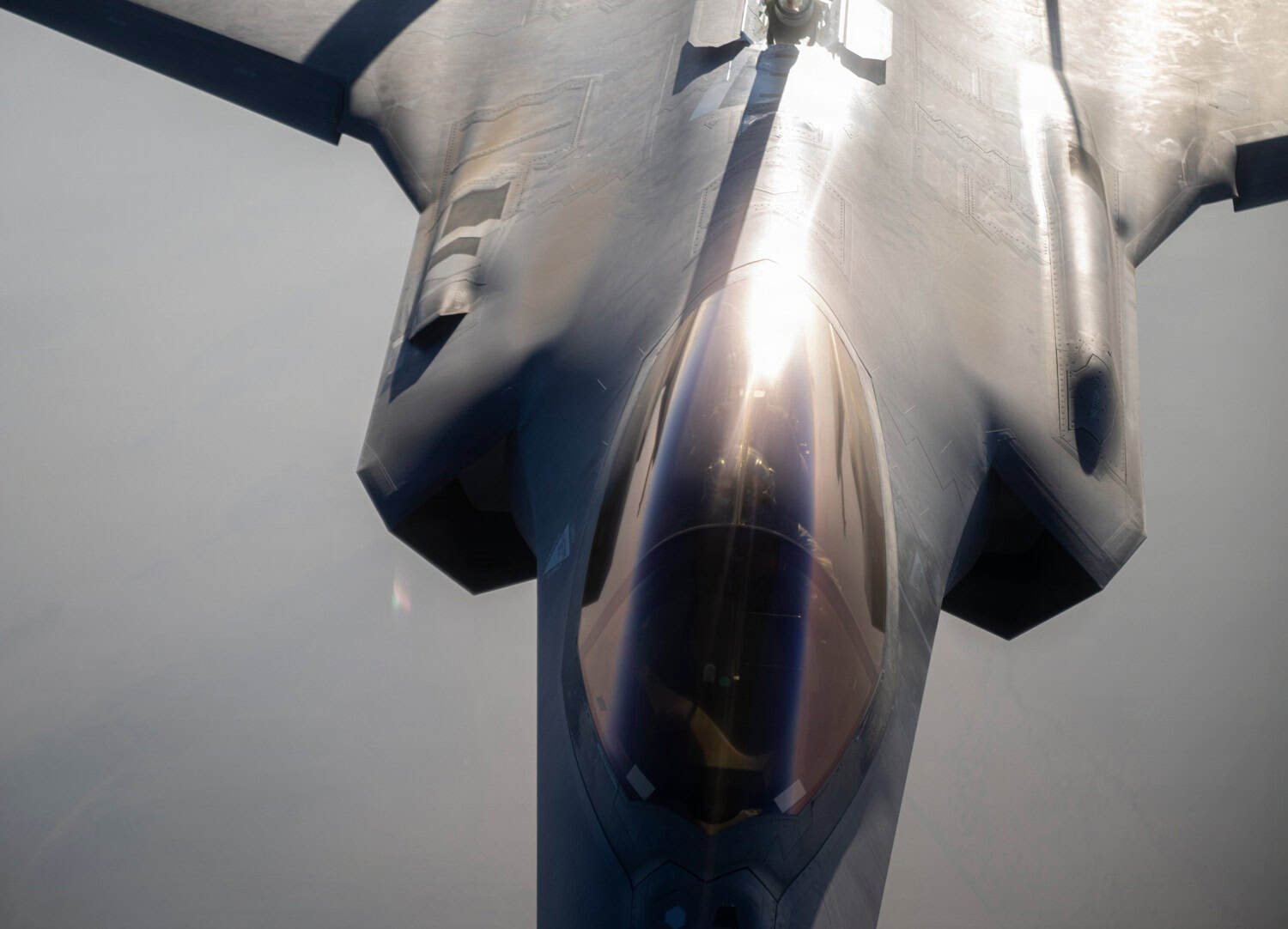
The U.S. Air Force released a photograph on November 21 showing an F-35 Lightning II taking fuel from a KC-135 Stratotanker. The image was taken earlier in November in the U.S. Central Command area of responsibility, according to the accompanying caption. It shows a modern fighter relying on an aircraft type the Air Force has used for aerial refueling for more than six decades.
What the photo shows
Senior Airman Thomas Hansford photographed the F-35 from the tanker during the refueling. From that vantage point, the picture puts the receiving aircraft in view at the point where the two airplanes briefly share a purpose. One is carrying fuel for more than its own flight. The other can continue flying without diverting to a runway to take on fuel.
The release identifies the aircraft and the broad region. It supplies no fuel-transfer total, destination, or account of what the fighter did after the refueling. The release also lists different days in its caption and date-taken field, so the flight is described here by month. The November 21 date is the date the image was posted.
Why tankers remain part of the flight plan
A tanker changes how a flight can be planned. An airplane that must land for fuel needs a suitable runway, ground support, and time for an extra departure. Aerial refueling moves some of that work into the air. The Air Force’s KC-135 fact sheet describes the Stratotanker as a core part of its refueling capability. Its job is to carry fuel that can be passed to other aircraft while both remain airborne.
One way to understand the value of the tanker is to think about time. Fuel affects how long an aircraft can remain in the air and which airfields are realistic options for its return. Extra fuel can give a crew more flexibility when a flight runs long, plans change, or available airfields are far apart. The photograph records an example of that capability rather than a new performance claim for either aircraft.
A pairing across generations
The F-35 and KC-135 were designed in different eras and for different purposes. The fighter depends on the tanker for the same basic reason other receivers do. Its own fuel supply is finite, and the tanker makes the fuel available where the receiving aircraft is already flying. The airframes do not have to share a generation for that arrangement to matter. They have to be compatible enough for the older aircraft to keep providing a useful service to the newer one.
That is the larger story behind a single frame. Aircraft performance often gets described in terms of speed, range, or payload, as though each airplane works alone. The newly released image shows one of the supporting aircraft that can change what another airplane is able to do on a given flight.
Featured photograph: U.S. Air Force F-35 Lightning II during aerial refueling from a KC-135 Stratotanker in November 2026. U.S. Air Force photo by Senior Airman Thomas Hansford, DVIDS 10097353, U.S. public domain. Full frame resized.
Sources
DVIDS, official Air Force photo release
U.S. Air Force, KC-135 Stratotanker fact sheet






No comment