
Rocket Lab’s 99th Electron flight delivered the Japanese radar-imaging satellite WADATSUMI-II to low Earth orbit from Māhia, New Zealand, on November 3 local time. The mission, named The Sea God Surveys, placed the spacecraft into a 575-kilometer orbit, Rocket Lab reported. Satellite operator iQPS separately confirmed that it established contact with the spacecraft after deployment.
From the pad to first contact
Electron lifted off at 5:41 a.m. New Zealand daylight time from Rocket Lab’s Launch Complex 1. The launch took place on November 2 in the United States, the date of Rocket Lab’s release. In Japan, iQPS recorded the liftoff at 1:41 a.m. on November 3. The reports describe the same event from different time zones.
The satellite also goes by the designation QPS-SAR-20. iQPS said it separated about 50 minutes after launch and that the ground team established initial communications roughly half an hour after deployment. The company reported that its first checks indicated that the equipment was working. Its remaining commissioning work at that point included adjustments, antenna deployment and acquisition of the first images.
Those milestones belong to different parts of a mission. The launch provider reports whether it delivered the spacecraft to its intended orbit. The satellite operator then has to establish a link and check that it can communicate with the hardware. A successful first contact is an early sign that the operator can begin commissioning. The announcement did not report that routine imagery service from WADATSUMI-II had begun.
Why that orbit was selected
WADATSUMI-II uses synthetic aperture radar to image Earth. A radar satellite sends signals and receives their echoes. Its motion along the orbit allows measurements taken from different positions to contribute to an image. Because the instrument provides its own illumination, it can collect observations during the night as well as during daylight. Radar can also observe through many clouds, which can make it useful when a target would be obscured in an ordinary optical image.
Rocket Lab said the orbit’s inclination was selected to improve how frequently the iQPS constellation could revisit the Asia-Pacific region. Inclination describes the tilt of the orbit relative to Earth’s equator. It helps determine which latitudes a spacecraft passes over. The useful interval between observations also depends on the other spacecraft in the constellation and how they are arranged. For iQPS, the significance of one more satellite lies partly in how it fits with the satellites already in orbit.
A dedicated launch in a longer sequence
The mission was Electron’s 20th flight of 2026, according to Rocket Lab. The company also counted it as its tenth consecutive successful mission for iQPS and said eight more dedicated Electron launches were booked for that customer at the time of the announcement. The 99th-flight figure describes Electron’s program history. The customer-specific figures describe a sequence of deliveries ordered to build and maintain a satellite network over multiple launches.
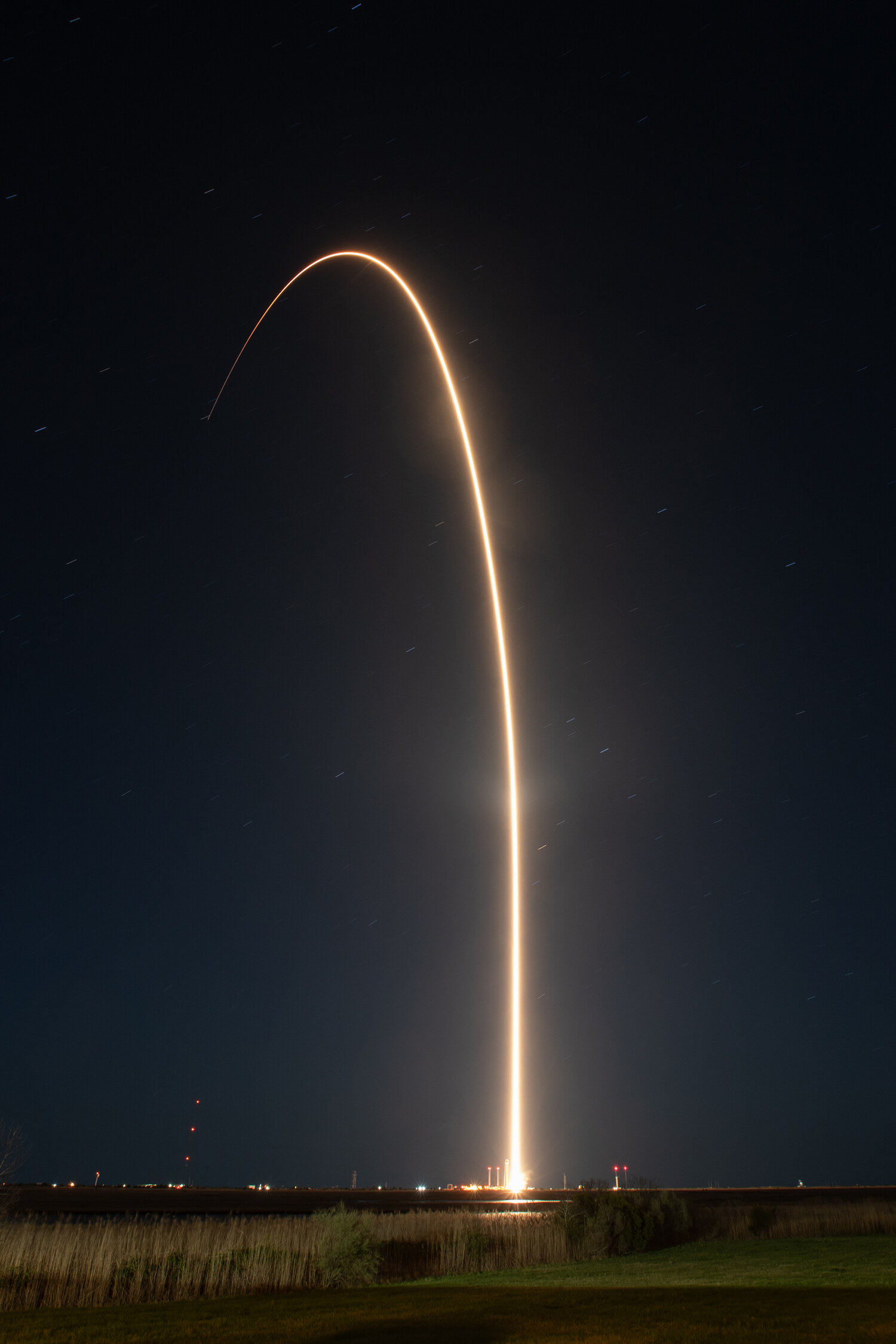
The featured image is a NASA file photograph of Electron flying a separate mission from Wallops, Virginia, in March 2024. The WADATSUMI-II flight described here launched from New Zealand.
Sources
Rocket Lab mission report
iQPS deployment and first-contact report
NASA file photograph and caption
NASA media usage guidelines
Featured file photograph by NASA/Jamie Adkins.





No comment