
Published November 26, 2026
On March 10, 1966, U.S. Air Force Major Bernard Fisher landed a Douglas A-1E Skyraider on an airstrip in South Vietnam’s A Shau Valley. A fellow pilot, Major D. W. “Jump” Myers, had crash-landed and taken cover near the runway. Fisher brought his airplane to a stop close enough to pick him up, then took off with Myers aboard. The two men survived. The National Museum of the U.S. Air Force recounts the rescue and preserves the airplane Fisher flew that day.
A mission changes in the valley
Fisher had taken off from Pleiku Air Base. His aircraft was diverted to support a U.S. Special Forces camp in the valley, where fighting was already underway. During the operation, Myers’s aircraft was hit and came down on the camp’s strip. Myers got out of his airplane and reached cover. Reaching that shelter solved the immediate problem of getting away from the wreck. It left him on the ground in a place where a rescue aircraft would have to reach him quickly.
The museum’s account describes an airstrip with damaged steel planking, holes and debris. It also explains the pressure on the pilots overhead. A helicopter could attempt a pickup, but Fisher judged that it could take too long for one to arrive. His immediate option was the aircraft he was already flying. A fixed-wing airplane would need enough runway both to land and to become airborne again.
The second seat
Fisher’s Skyraider had a right-hand seat that could carry Myers. That feature mattered once Fisher chose to land. He first had to reach the man on the ground and then get both of them away in the same aircraft. The museum describes Fisher taxiing to the downed pilot under fire and helping him aboard. Fisher then took off from the strip. The aircraft was hit during the rescue, but it remained flyable.
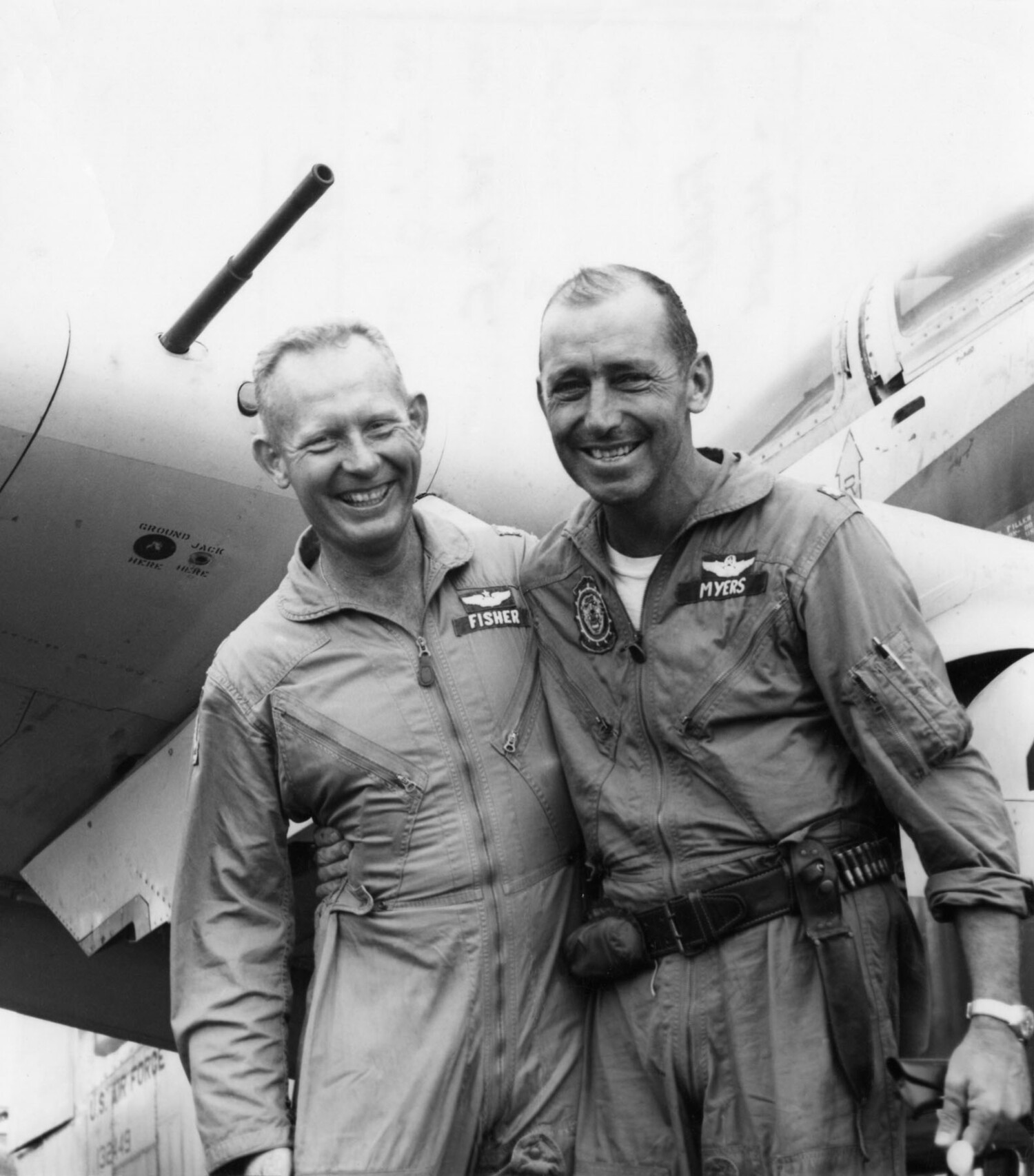
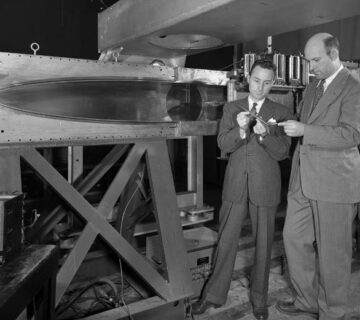
An archive photograph shows the two men by Fisher’s Skyraider afterward. There is no dramatic action in the frame. Both men are standing on the ground, with the aircraft behind them. Its value is as a record of the outcome. The abandoned aircraft and the damage to the runway help explain the risk. The photograph records the result that mattered, with both pilots alive after the pickup. The photograph’s archival description identifies the men, the date and the aircraft.
The airplane in the museum
The Air Force museum identifies its preserved A-1E as serial number 52-132649. The aircraft’s collection record links that specific airframe to Fisher’s March 1966 flight. That connection allows a visitor to consider the rescue as an aviation event. Seeing the aircraft gives a sense of what Fisher had available in the air that day. The runway, the seat beside him and the condition of the airplane were among the practical details that determined whether he could bring Myers out.
Fisher received the Medal of Honor for the rescue. The Air Force’s remembrance places that recognition in the context of his service. The reason the flight belongs in aviation history is also visible at a smaller scale, in the relationship between a pilot’s judgment and the airplane at his disposal. Fisher saw that there was room for Myers and that the strip still offered a chance to leave. The two men standing beside the Skyraider afterward show what that decision accomplished.
Sources
National Museum of the U.S. Air Force rescue account
National Museum of the U.S. Air Force A-1E collection record
U.S. Air Force remembrance of Bernard Fisher
Archive photograph and rights record
Featured photograph from the U.S. Air Force / National Museum of the U.S. Air Force, public domain.


No comment