
Published November 26, 2026
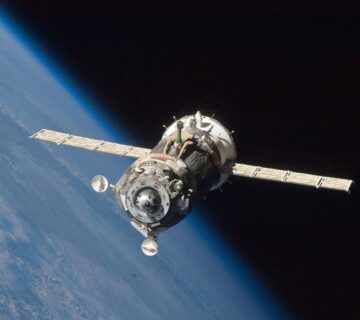
In October 2007, Peggy Whitson launched to the International Space Station aboard Soyuz TMA-11. As commander of Expedition 16, she became the first woman to lead a crew on the station. The assignment brought a former NASA biochemist back to the orbiting laboratory where she had worked on her first spaceflight. This time she would help guide an extended mission as the station received new hardware and its crew worked to keep existing equipment operating. NASA’s biography traces her path from the laboratory to the astronaut corps and station command.
A scientist learns to run a spacecraft
Whitson trained as a biochemist and earned a doctorate from Rice University. At NASA she worked on research and on preparations for science aboard the station, including as project scientist for the Shuttle-Mir program. That program gave American astronauts experience working with Russian colleagues during long stays in orbit. An experiment can be planned on Earth, but its timetable in space depends on the crew, the equipment and the other demands on the spacecraft. Preparing for those demands was part of making research possible in orbit.
NASA selected Whitson as an astronaut in 1996. She first flew to the station in 2002 and served as a flight engineer on Expedition 5. NASA named her the station’s first science officer during that mission. The title reflected the work required to keep a laboratory program moving while the people conducting the experiments also lived aboard the facility and helped maintain it. By the time she returned for Expedition 16, she had already experienced a long stay as a member of a resident crew.
The work behind the command
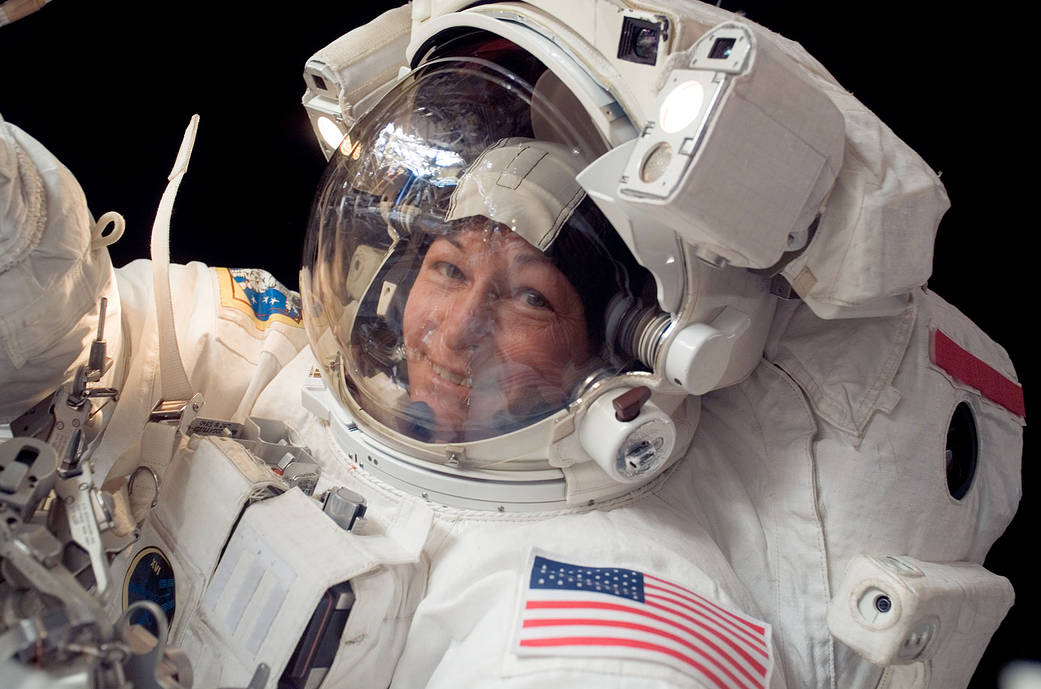
The featured photograph shows Whitson during a spacewalk on January 30, 2008. She and flight engineer Daniel Tani replaced a motor at the base of one of the station’s solar wings. The assignment took them outside the pressure hull for seven hours and ten minutes. NASA’s photograph and caption give the maintenance job a place in the record of her first command.
The work illustrates how a large research facility stays available to the people who depend on it. The station draws electrical power from solar arrays. Keeping the hardware that supports those arrays working helps keep the laboratory and the crew’s living quarters supplied. The photograph shows one part of that effort. Behind a spacewalk of that length were many hours of work by the crew and ground teams to plan the sequence, get the tools ready and agree on what they would do if a step took longer than expected.
Command after Expedition 16
Whitson later led NASA’s Astronaut Office and returned to orbit in 2016. During her third NASA flight she commanded the station again, on Expedition 51. Her assignments across science, crew operations and office leadership gave her experience at the station as a laboratory and as a spacecraft whose systems and people had to work together throughout a mission.
Her work in orbit continued after she retired from NASA in 2018. Whitson joined Axiom Space and commanded Ax-2, a private astronaut mission to the same station. NASA identifies her as the first woman to command a private spaceflight. Those assignments came under different organizations, but both depended on the detailed coordination that makes a visit to an inhabited spacecraft possible.
Expedition 16 remains a milestone because of the responsibility Whitson took on and the work she performed while holding it. The image from January 2008 makes that work concrete. A station commander was outside with a colleague, attending to equipment that the people inside used every day.
Sources
NASA biography of Peggy Whitson
NASA Expedition 16 spacewalk account and photograph
Featured photograph from NASA, ISS016-E-026125, public domain.

No comment