
Published November 25, 2026
Ladislao Pazmany was born November 25, 1923. His contribution to aviation was to make light-aircraft design accessible to people who wanted to build their own airplanes. He put designs into circulation as plans, wrote about the reasoning behind light-aircraft design, and gave pilots a chance to compare the performance of completed airplanes at Oshkosh. Pazmany Aircraft Corporation’s biographical entry records his birth date, and the Experimental Aircraft Association’s account traces the aircraft and projects that followed.
From prototype to someone else’s workshop
Pazmany developed personal aircraft alongside his full-time work. His PL-1 flew for the first time on March 23, 1962, according to EAA. Making plans available meant other builders could take up the design after the prototype had flown. It also gave the design a life beyond the shop in which it originated. Pazmany wrote Light Airplane Design, adding a written account of the subject to the drawings builders could work from.
The PL-1 also attracted an institutional customer. EAA reports that the air force in Taiwan acquired plans in the late 1960s for a version intended for primary training. That prototype flew in October 1968. The story illustrates how far a set of drawings can travel. An airplane developed through one engineer’s work on personal aircraft became the starting point for a trainer built for a different operator.
New aircraft and practical comparisons
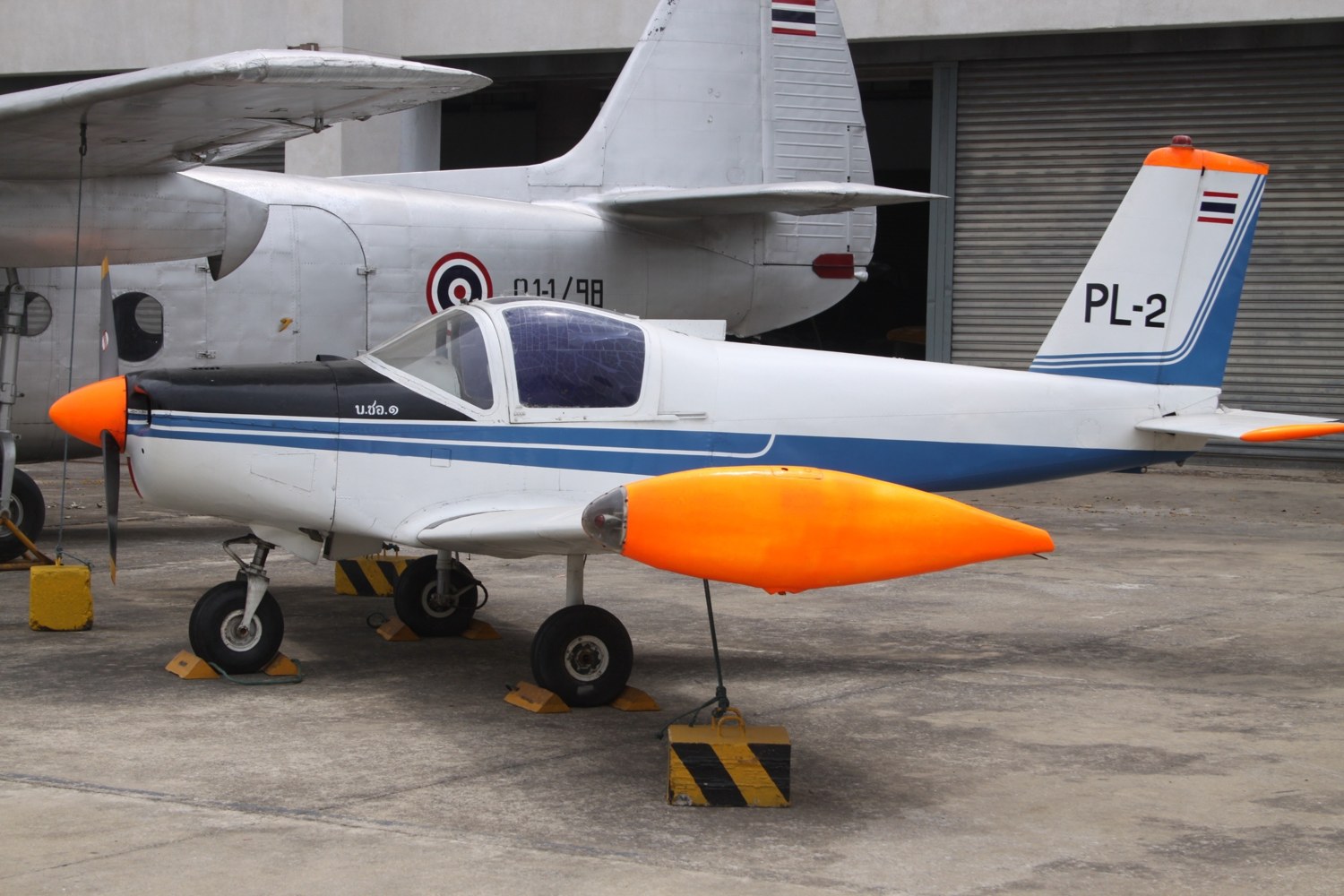
Pazmany continued with the PL-2, an improved development of the PL-1. The first example flew in April 1969. He then developed the single-seat PL-4, whose prototype flew in July 1972. Plans for each type meant that the project a builder chose could reflect the kind of aircraft they wanted. The PL-2 pictured here at Don Mueang International Airport illustrates one of those later designs.
During the 1970s Pazmany organized an efficiency contest at Oshkosh. EAA describes it as one of the homebuilt community’s early opportunities to see aircraft performance evaluated in practice. Drawings describe the intended aircraft, and a flying airplane gives a builder something to observe and measure. Putting different projects in the same setting helped make performance part of the conversation among the people who designed, built and flew them.
Recognition from fellow builders
EAA inducted Pazmany into its Homebuilders Hall of Fame in 1997. The honor connects several parts of his career that are easy to read separately. His prototypes showed that the designs could fly. His published plans allowed other people to build them, while his writing and the Oshkosh contest gave builders ways to think about the aircraft they were making. His birthday offers a reason to look at all of those contributions together.
For a person who encounters the name on an aircraft data plate or a set of drawings, the story starts with a specific design. For the homebuilding community, Pazmany’s work also mattered because he helped make design and performance subjects that builders could discuss with one another. The airplane at the end of the project was the visible result of that work.
Featured photograph: A Pazmany PL-2 at Don Mueang International Airport. aeroprints.com via Wikimedia Commons, CC BY-SA 3.0. Resized proportionately with the full frame preserved.
Sources
Pazmany Aircraft Corporation biography
EAA Experimenter profile
Photograph and license record



No comment