
Published November 25, 2026
On May 15, 1967, U.S. Army helicopter pilot Charles Kettles was already airborne when he learned that eight soldiers remained on the ground near Duc Pho, South Vietnam. They had been unable to reach the evacuation helicopters. Kettles turned his Huey back toward the landing zone, picked up the eight and flew them out in a helicopter that had taken further damage during the pickup. The Army credits him with helping save 44 lives over the course of the day. U.S. Army Medal of Honor citation
A day of repeated flights
Then a major, Kettles was a flight commander in the 176th Aviation Company. The morning began with helicopters carrying soldiers into a river valley. The troops came under fire soon afterward, creating two urgent needs for the aircrews: get reinforcements and supplies in, and get wounded soldiers out. Meeting both needs meant making several trips. Each round took the crews back to an area where the circumstances on the ground could change while they were away. Army News Service account
By afternoon, the operation had shifted to getting the remaining soldiers out. Some of the company’s helicopters had already been damaged, and another unit provided aircraft for the extraction. That detail matters to the story of the rescue. Kettles would make the final pickup with a single helicopter, but the evacuation as a whole depended on crews from more than one unit. The aircraft that could still fly, the people available to crew them and the latest reports from the ground all shaped what the formation could do. Army account of the evacuation
Eight still on the ground
The helicopters got away from the landing zone under fire. Only after they lifted did Kettles learn that eight soldiers were still there. He handed the lead to another helicopter and headed back. A rescued soldier and four crew members were already aboard his aircraft, according to the Army News Service. The eight waiting men would have to get in while the crew kept the helicopter on the ground long enough for them to board. For the people already aboard, getting clear of the landing zone meant surviving a second departure. Army News Service account
Fire broke the helicopter’s windshields, and the aircraft also took damage to the tail boom and a main rotor blade. The eight soldiers reached the Huey. With all of them aboard, the aircraft was heavier than the crew had planned for, and Kettles took over from his copilot during the difficult departure. He got the helicopter airborne and brought its occupants back to Duc Pho. The Army’s published accounts tell that part of the rescue from different perspectives. The citation records the damage and the outcome. The news story, drawing on Kettles’ recollection, describes the difficulty the crew had getting the loaded aircraft off the ground. Official citation · Army News Service interview
What the award recognized
Kettles completed two tours in Vietnam and flew more than 600 missions there. He initially received the Distinguished Service Cross for his actions on May 15. In July 2016, almost five decades after the evacuation, he received the Medal of Honor and was inducted into the Pentagon’s Hall of Heroes. The citation covers the whole day, from the earlier flights supporting the soldiers in the valley to the final return for the eight who had missed the extraction. Army report on the Hall of Heroes induction
When Kettles spoke with Army News Service in 2016, he credited the other pilots and crew members who had flown that day and emphasized that the soldiers were able to go home. The eight men still on the ground when the formation departed were a distinct part of a much larger effort. Remembering both numbers tells the story of the day: 44 people brought out, and eight of them reached only because a crew went back after the evacuation appeared to be over. Army News Service interview
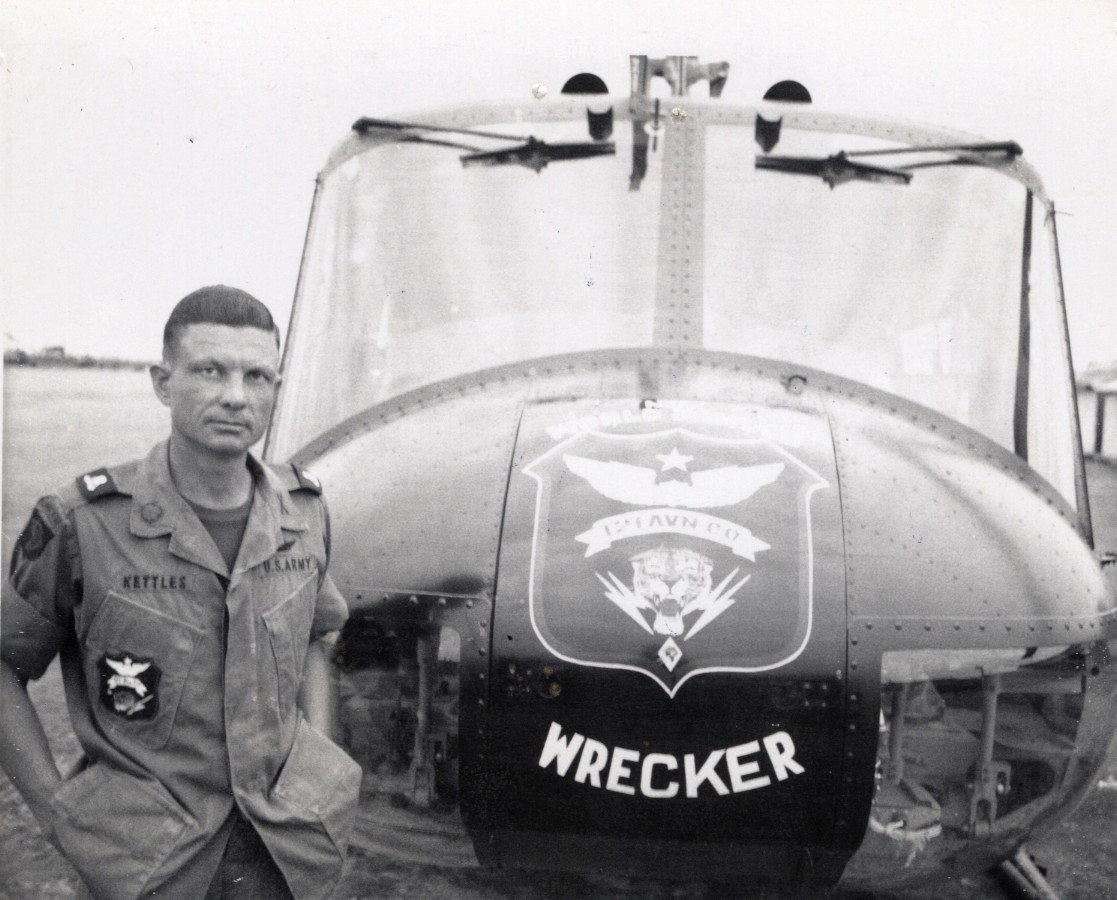
Featured photograph Maj. Charles Kettles beside a 121st Aviation Company UH-1H in 1969, during his second Vietnam tour. U.S. Army archive, public domain. Original photograph


No comment