
Published November 21, 2026
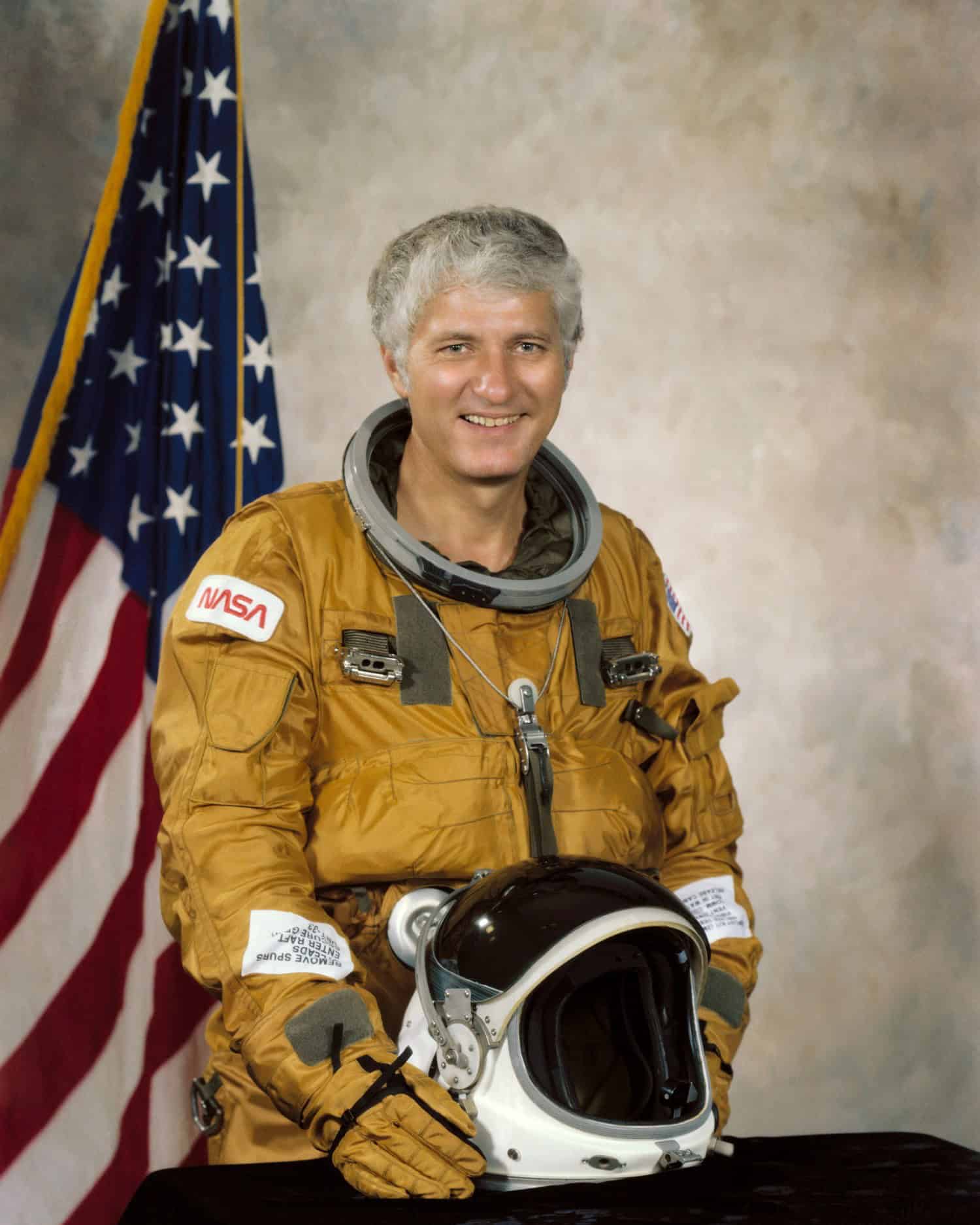
Henry W. “Hank” Hartsfield Jr., born November 21, 1933, in Birmingham, Alabama, helped develop the Space Shuttle’s entry flight controls before testing Columbia on the final mission of NASA’s orbital flight-test program. He went on to command the first flight of Discovery. His career connected work done in simulators and engineering offices with the judgment required in the cockpit of a new aircraft and spacecraft. NASA’s official biography records his birthday and flight-test assignments.
From the Air Force test school to NASA
Hartsfield graduated from the Air Force Test Pilot School at Edwards Air Force Base and stayed on as an instructor. The move from flying tests to teaching other pilots mattered because a flight-test program relies on crews who can describe what a vehicle does and make those observations useful to engineers. He joined NASA’s astronaut corps in 1969 and remained with the agency as a civilian after retiring from the Air Force in 1977.
Before his first spaceflight, Hartsfield supported development of the shuttle’s entry flight control system and the interfaces that went with it. The shuttle had to fly through the atmosphere after returning from orbit and complete a runway landing. Preparing for that phase involved deciding how the vehicle and crew would work together during a transition from spacecraft operations to atmospheric flight.
Columbia’s final orbital test
Hartsfield served as backup pilot for Columbia’s second and third orbital flights. His own flight came in 1982 on STS-4, with Ken Mattingly commanding and Hartsfield as pilot. NASA describes it as the last of the program’s four orbital flight tests. The mission gave Hartsfield a chance to fly the shuttle after years spent preparing it for use. The Encyclopedia of Alabama traces that progression from his training and military service through his shuttle flights.
Discovery’s first flight
Two years later, Hartsfield commanded STS-41D, the first flight of Discovery. Columbia’s test series had already given NASA experience flying the shuttle design, but Discovery was an individual orbiter on its maiden mission. It carried a crew and payloads while beginning its own service life. Hartsfield later commanded STS-61A aboard Challenger, his third shuttle mission.
The work he did before those missions is what makes his birthday a useful point for remembering the early shuttle era. He had studied and taught flight test, worked on the controls used during entry, and then flown a vehicle whose mission ended on a runway. The connection between those jobs runs through NASA’s account of his career and helps explain why the agency needed test pilots long before it could put an orbiter on a launch pad.
Sources
NASA official biography — birth date and flight-test work
NASA — Hartsfield’s shuttle flights and Discovery’s debut
Encyclopedia of Alabama — career and birthplace
Featured photograph: NASA Johnson Space Center portrait S79-36412, public domain.


No comment