
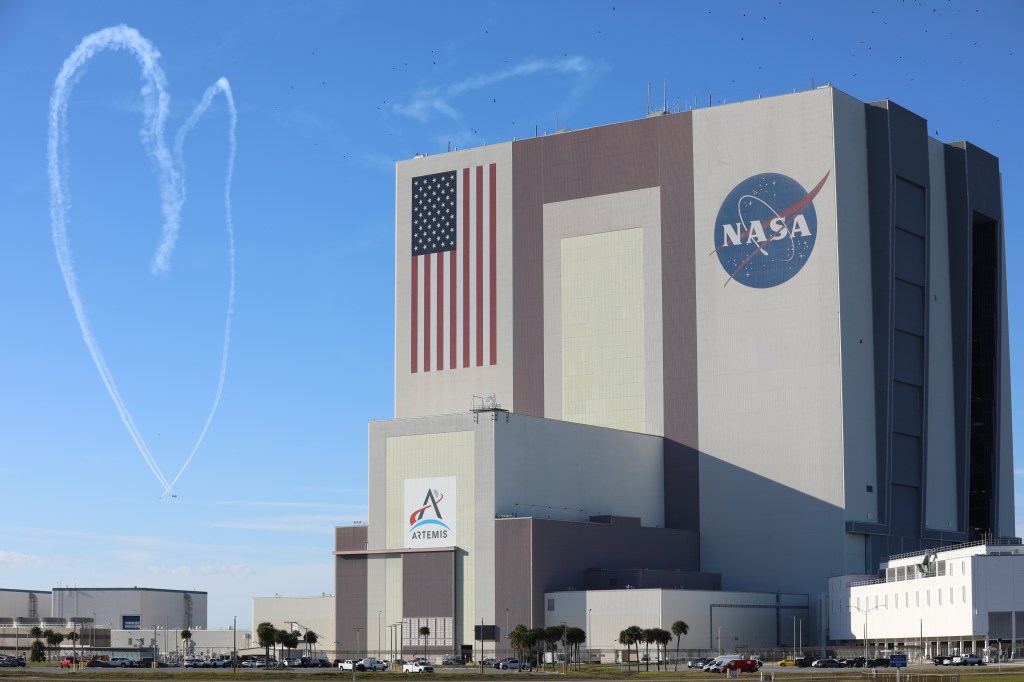
NASA’s first MAX POWER expo turned Kennedy Space Center into a multi-day showcase for aircraft, launch hardware, lunar technology, and the people building the next era of exploration. The agency says thousands attended the Nov. 4–8 event, which mixed public exhibits with industry meetings, astronaut appearances, demonstrations, and an air show led by the U.S. Air Force Thunderbirds.
Now NASA and its partners are planning a larger follow-on: CAPEWEEK, scheduled for March 27 through April 2, 2028, at Kennedy’s Shuttle Landing Facility. The agency says the event is expected to grow to a footprint capable of drawing upward of 500,000 people.
MAX POWER brought the work into view
MAX POWER was designed as both an aerospace festival and a public window into NASA’s programs. Across three park locations, visitors saw aircraft, rovers, autonomous vehicles, and technology demonstrations. NASA and its partners also hosted discussions with astronauts, engineers, scientists, and pilots.
The flight program supplied a memorable visual signature. NASA’s Kennedy image archive captured the Thunderbirds drawing a heart-shaped smoke trail beside the Vehicle Assembly Building on Nov. 8. The photo placed a precision demonstration team against one of the most recognizable landmarks on Florida’s Space Coast.
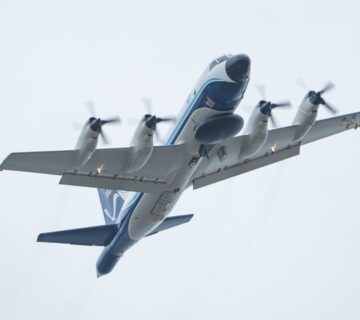
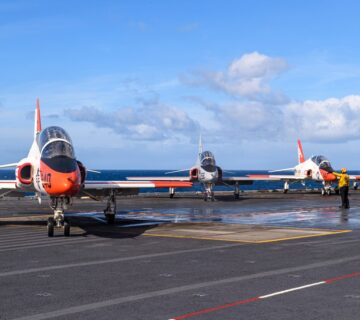
NASA’s recap also points to the range of activity beyond the air show. Aircraft including T-38s, F-5s, and an ER-2 conducted flyovers near the Shuttle Landing Facility, while exhibits presented lunar landers, rovers, and other hardware. The mix gave visitors a look at aerospace as a connected enterprise: flight research, engineering, human spaceflight, and commercial partnerships all appeared in one place.
Announcements tied the expo to future missions
NASA used the event to announce decisions with a longer horizon. The agency selected eight companies for its next phase of Commercial Lunar Payload Services, opened astronaut applications for future Artemis and low Earth orbit missions, and announced a $1 million student competition focused on Moon Base technologies.
NASA also said it would move ahead with PROMISE, a nuclear-powered rover intended to study the Moon’s south polar region. The agency is targeting a late-2028 launch and says the six-wheeled vehicle will investigate surface and subsurface materials, including the potential for resources useful to future exploration.
Those announcements help explain why NASA wants a recurring public event. Aerospace programs unfold over years, and a festival can connect the hardware on display with the people, skills, suppliers, and mission choices behind it. The NASA 250 anniversary theme gave the inaugural expo a historic frame; the next edition is intended to make that gathering larger and more durable.
For aviation fans, CAPEWEEK’s location offers a natural setting. Kennedy’s Shuttle Landing Facility has served as a landing site for space shuttles and remains a major operational asset. NASA has not yet released a full 2028 program, so the scale and participant list will become clearer as planning continues.
MAX POWER showed the appeal of putting flight and space exploration side by side. CAPEWEEK will test whether that combination can become a recurring destination on the aerospace calendar.
Sources: NASA, “MAX POWER: NASA’s Inaugural Aerospace Expo Ignites America’s Future,” Nov. 9, 2026; NASA, “Heart in the Sky at NASA Kennedy,” Nov. 12, 2026. Read NASA’s event recap.

No comment