
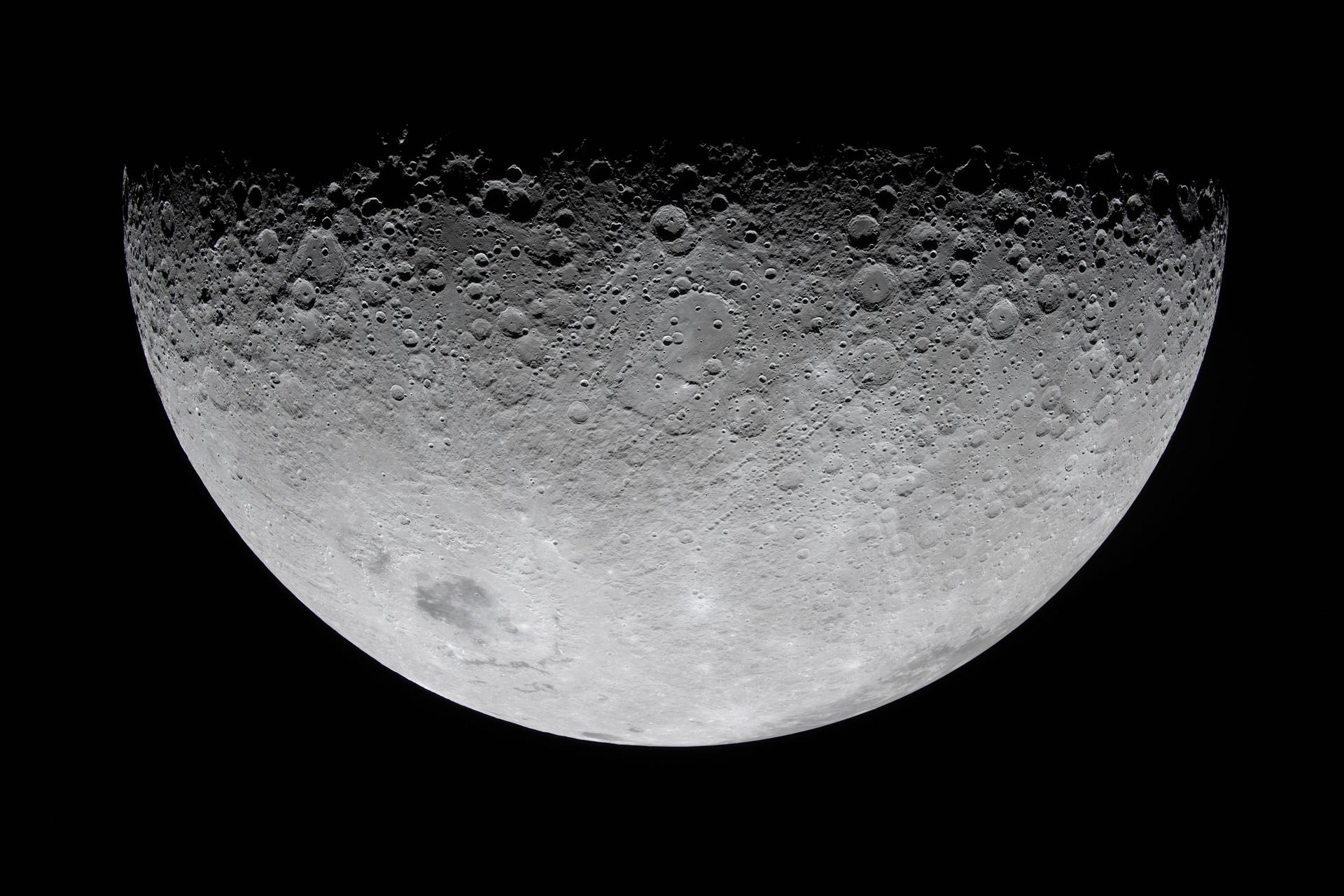
NASA has opened a new lunar science archive built from human observations made during Artemis II’s trip around the Moon. The release includes more than 800 gigabytes of data, with over 11,000 full-resolution lunar images and videos, recorded crew observations, and annotated images from the mission’s flyby.
The archive changes what researchers can study from the mission. Cameras on spacecraft and robotic probes have mapped the Moon for decades, but Artemis II’s crew could decide what to photograph, describe subtle colors and changes in real time, and discuss what they saw as it unfolded. NASA says the collection is the first planetary science dataset captured primarily by humans in more than half a century.
Seven hours at the windows
During the April 6 lunar flyby, the four-person crew took turns observing the surface from Orion’s windows for about seven hours. At closest approach, the spacecraft came within 4,067 miles of the Moon. The astronauts captured images, recorded spoken observations and marked features for the science team on Earth.
Their training covered lunar geography, geology and how to make useful observations. During the flyby, they chose targets and noted variations in color, lighting and surface texture. Those human judgments give researchers another way to interpret images and compare them with decades of spacecraft data.
Five flashes on the Moon
One striking result came during a planned communications blackout as Orion passed behind the Moon. Crew members reported five brief flashes of light on the lunar surface, possibly produced by small rocky fragments striking the Moon. Scientists checked other explanations, including cosmic rays and reflections inside the spacecraft, before confirming the sightings.
The observations mattered because impact flashes are difficult to catch from Earth. From the crew’s distant vantage point, astronauts could report what they saw and annotate the locations directly on an image. The release includes those notes alongside the imagery, audio and technical reports, allowing scientists to revisit the observation and its context.
Learning to read the lunar landscape
The crew also studied the lunar terminator, the moving boundary between day and night. Near that edge, low-angle sunlight throws long shadows that reveal craters, ridges and slopes. NASA says the lighting resembles conditions near the lunar south pole, where the Sun stays low above the horizon. Those views can help mission teams decide what cameras and lighting conditions future crews will need to work with.
During the solar eclipse seen from Orion, the Moon blocked the Sun for about 54 minutes. That extended view let the astronauts observe the solar corona and look for impact flashes, stars and other objects normally overwhelmed by sunlight. NASA has made the imagery, the crew’s 8.5 hours of science audio and three technical publications available through its Planetary Data System.
The archive is a working record, not a finished interpretation. Scientists can compare what the astronauts noticed with instrument readings and robotic observations, then use those results to refine plans for Artemis III and later surface missions. The value of the photographs lies both in what they show and in the decisions and observations recorded alongside them.
Photo: NASA astronauts Christina Koch and Victor Glover at an Orion spacecraft window during the Artemis II lunar flyby. Credit: NASA.
Sources: NASA’s Artemis II lunar science data release and the Artemis II Preliminary Lunar Science Report.






No comment