
Published November 21, 2026
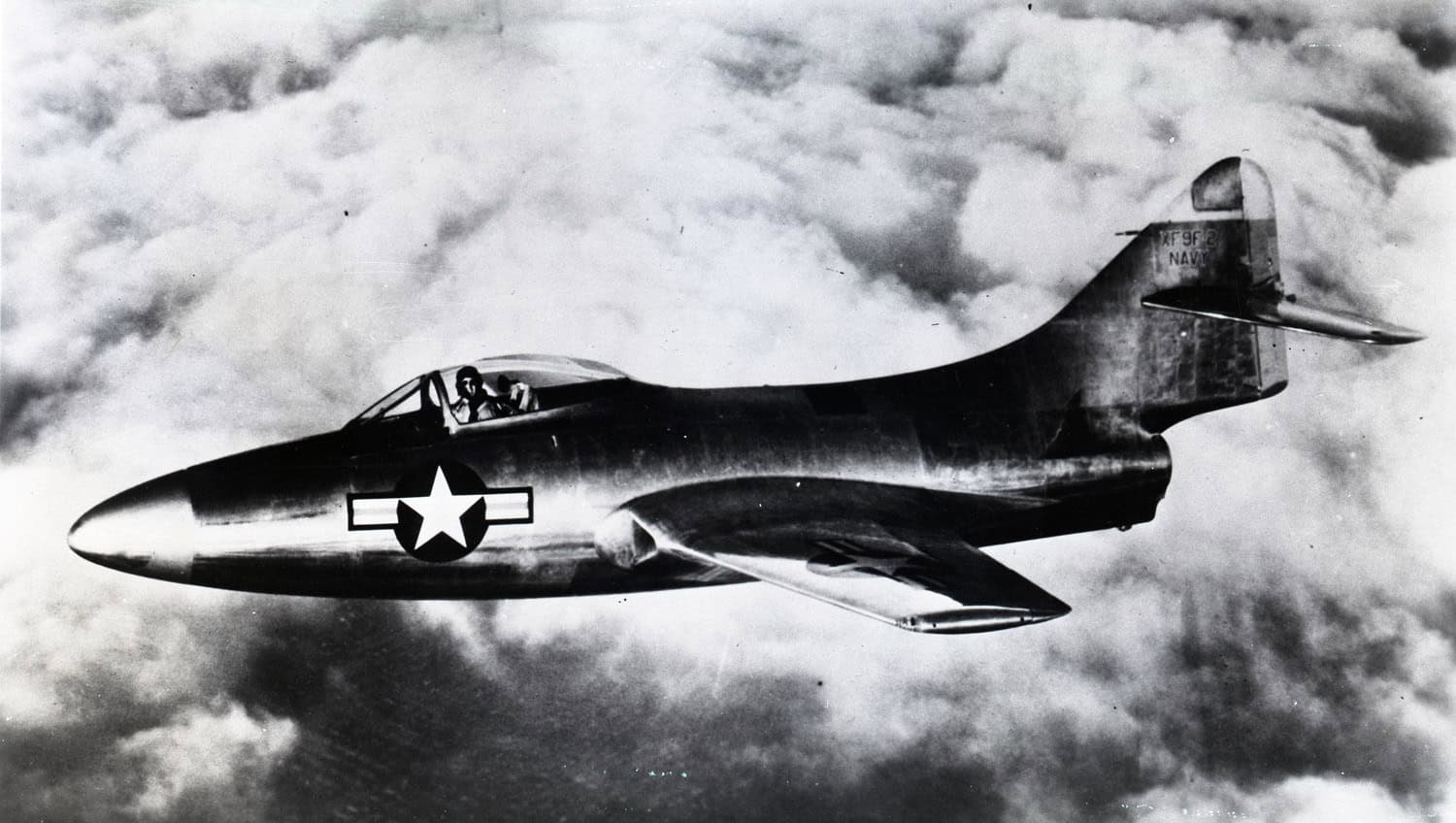
On November 21, 1947, Grumman test pilot Corwin “Corky” Meyer took the first XF9F-2 Panther into the air from Bethpage, Long Island. The prototype, Navy Bureau Number 122475, marked the first flight of the aircraft type that would become Grumman’s first jet fighter. The National Naval Aviation Museum identifies the pilot, aircraft and date in its account of the Panther.
A first flight on Long Island
The aircraft Meyer flew was an engineering prototype. The Navy designation’s X identified its experimental status. The museum traces the program to a proposal for a carrier fighter with four small turbojets. As the design developed, Grumman adopted a single engine, the Rolls-Royce Nene, in the XF9F-2 prototype. The aircraft took to the air less than two years after the end of World War II, at a time when aircraft makers were working out how to turn jet propulsion into a practical tool for carrier aviation.
A prototype’s first flight was the beginning of that work in the air. Flight testing gave Grumman the opportunity to study the aircraft’s handling and refine it before the Navy took delivery of production machines. The museum’s collection record dates the first fleet deliveries to May 1949, when Fighter Squadron 51 received the type. The distinction between November 1947 and May 1949 separates the aircraft’s first flight from its arrival in an operational squadron.
A jet for the carrier fleet
Carrier flying made the transition to jets a question of how the aircraft would operate at sea as well as how fast it could fly. The airplane had to fit the daily work of a carrier air group, including deck handling, launch and recovery, and maintenance. An aircraft that flew successfully from the company airfield still needed to make that transition to fleet service. The Panther went on to serve with both Navy and Marine squadrons, according to the museum.
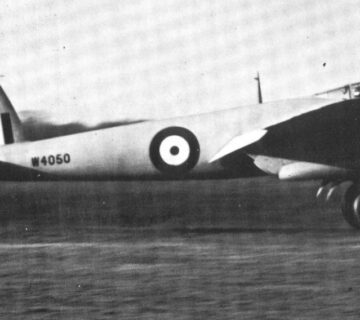
Other elements of the airplane also continued to change. The National Archives photograph used here shows an XF9F-2 prototype in flight around 1948, during the period between the first flight and fleet introduction. It is a record of the early aircraft in the air. The archive assigns the image its own approximate date, distinct from the exact date of Meyer’s flight.
From fleet deliveries to public demonstrations
The Navy also put the Panther in front of the public. The National Naval Aviation Museum records that the Blue Angels received F9F-2s in 1949. The demonstration team brought the new jet before audiences in the same year that production Panthers began arriving in the fleet. For people who had seen the team fly propeller aircraft, the change made the Navy’s transition to jets visible outside a test field or aircraft carrier.
The museum’s record places the Panther in Navy and Marine service during the Korean War, where it supported a range of missions. That later service gives the Bethpage takeoff its significance. On November 21, the aircraft was still a test program represented by one prototype and one pilot. By 1949, it had become a fleet aircraft and a public representative of naval aviation. Those later milestones grew out of an effort that moved from engineering proposals through flight test and into service in a relatively short span.
Sources
National Naval Aviation Museum — first flight, pilot and prototype
Naval History and Heritage Command — F9F-2 collection record
Featured photograph: U.S. Navy photo 127-N-313426, National Archives identifier 176250458 via Wikimedia Commons. Public domain.



No comment