
At a November data-tools summit at Edwards Air Force Base, the 412th Test Wing presented three digital systems intended to address different parts of the flight-test process: bringing telemetry together, organizing test work, and finding information inside restricted technical records. The presentations included a working prototype, a mission-management platform and an artificial-intelligence demonstration. The Air Force account describes them as tools shown to peers at the event; it does not say that all three are fielded across the wing.
The event, held Nov. 3 and covered by the 412th Test Wing on Nov. 12, reflects a longstanding challenge in aerospace testing: a flight can generate data across aircraft, ground ranges, instrumentation networks and engineering teams, while decisions about what the data means must be made under program schedules and safety requirements. At Edwards, the wing’s latest demonstrations focused on reducing friction between those stages.
OMNI aims to combine telemetry from separate test locations
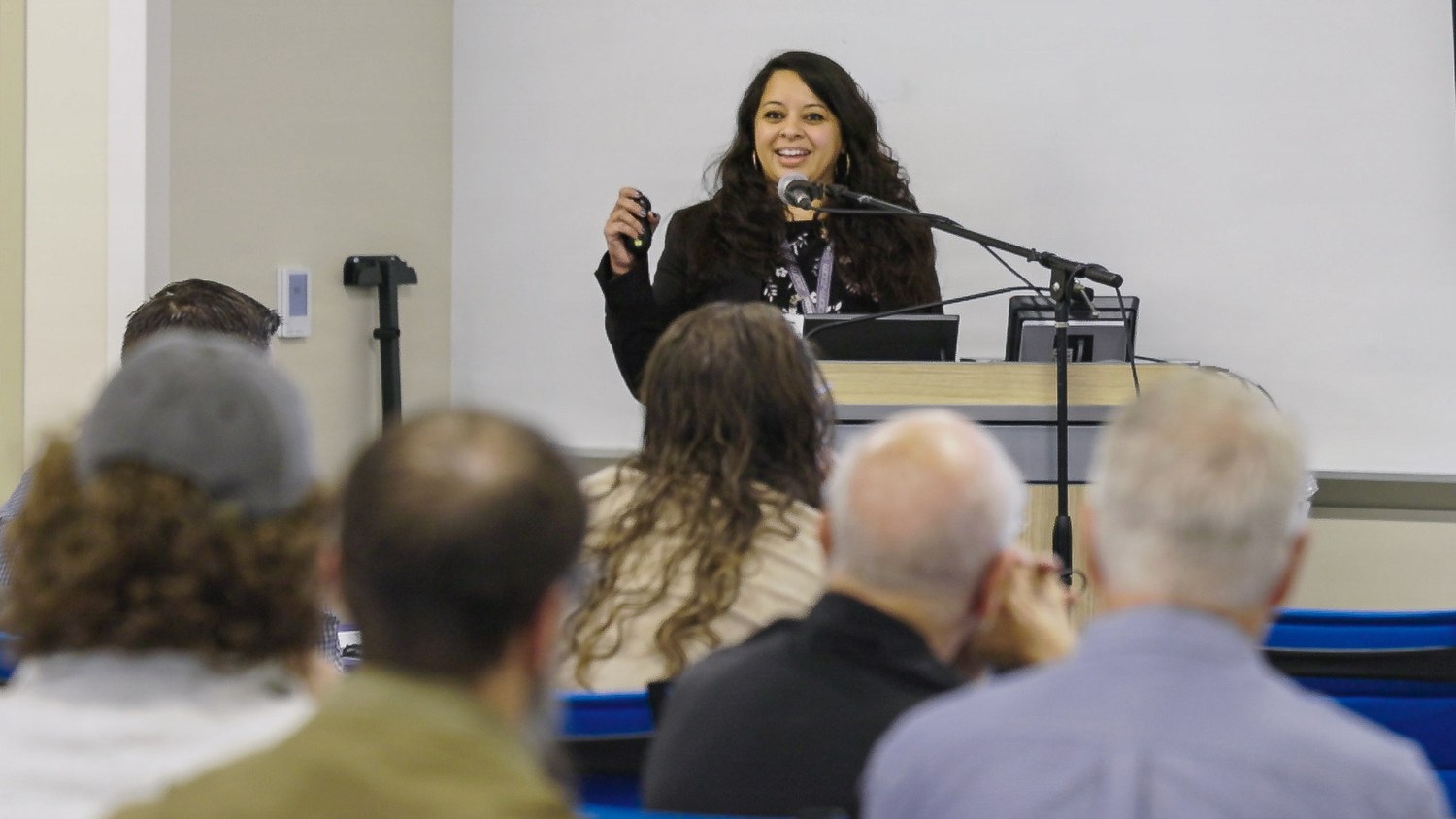
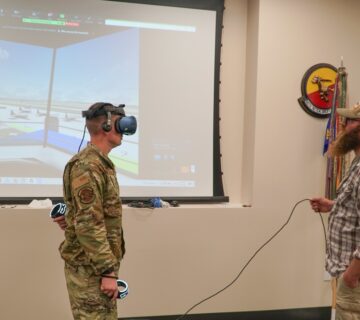
Gauri Bhamidipati of the 412th Test Engineering Group demonstrated One Mission Networked Intelligence, or OMNI. According to the wing’s event report, engineers previously could spend months making data systems at different test sites compatible, followed by additional delays in moving collected data to a central analysis hub. OMNI is designed to route data from multiple locations and test scenarios into one environment for storage, processing and analysis of combined telemetry in real time.
The report says Bhamidipati brought a working prototype to the summit for attendees to try. That distinction matters: a demonstration establishes that a prototype was shown, but it does not establish that the system is already deployed across Edwards or connected to every test range. The Air Force has not published a deployment schedule, performance measurements, supported aircraft list or a description of how OMNI will be integrated with existing networks.
The underlying need is consistent with the wing’s published mission. The 412th Test Wing’s official fact sheet describes its work as planning, conducting, analyzing and reporting Air Force flight and ground tests. Its 2024 capabilities guide says distributed test operations already move data among Edwards and other locations, allowing geographically separated engineers to see and evaluate test information. It also describes real-time data moving between the system under test and mission-control rooms, where engineers make technical and safety calls.
ESPER puts planning and reporting in one workflow
John Poindexter of the 775th Test Squadron presented the Enterprise Solution to Plan-Execute-Report, or ESPER. The system is intended to bring several steps of a test program into a single digital workflow, including program management, test plans, test cards, scheduling and post-flight debriefs. The wing says ESPER can support automated reporting and flag potential system deficiencies.
Test cards and plans are operational documents: they help define what a test will examine, how it will be conducted and what observations must be captured. Bringing the planning and reporting stages into a common workflow could make it easier for teams to keep records aligned and trace results back to the planned test. But the public account does not provide details about ESPER’s software architecture, cybersecurity accreditation, interfaces, users or measured effect on test timelines. It describes a future vision of making the system available through an application programming interface, rather than confirming that capability is already available wing-wide.
The effort also continues a collaboration pattern that the 412th Test Wing has used before. At a 2023 Data Analysis Tool Summit, engineers shared software for synchronizing video from multiple displays or aircraft and converting technical document data into formats usable by analysis tools. That earlier event emphasized surfacing locally developed solutions so other teams could adapt them, a goal echoed in the 2026 summit’s decision to invite developers and users from across the installation.
SPARK demonstrates document search inside restricted networks
A member of the 812th Test Support Squadron demonstrated Secure Plug and Play AI for Restricted Knowledge, known as SPARK. The event report says the tool operates within classified networks and can search, read and extract relevant flight-test information from restricted repositories. It is also described as returning answers with citations to the source documentation.
For a test organization, the proposed value is not simply generating text. Engineers and analysts need to locate the underlying record, confirm its context and judge whether it applies to the question at hand. A system that points users back to exact source documents could help with discovery, but the account does not report accuracy testing, approved user populations, data-handling safeguards or a decision to use SPARK for operational test conclusions. Those details remain important because technical records can include configuration-specific information, and a result that is relevant to one aircraft version or test condition may not transfer to another.
A broader digital effort, with implementation questions still open
The three demonstrations address different bottlenecks. OMNI is about moving and combining telemetry; ESPER is about coordinating test activity and records; SPARK is about finding relevant information in repositories that users cannot simply move to a public cloud service. The summit report frames them as parts of a wider effort to share useful digital tools across the test wing. It does not announce a single integrated platform or say that the systems currently exchange data with one another.
Edwards’ 2025 test-capabilities guide describes a complex environment that includes open-air ranges, instrumentation, data transport, real-time mission-control rooms, distributed operations and post-test processing. It notes that data links Edwards with other Defense test locations and enables real-time analysis and multi-service interoperability. This scale helps explain why tools that work for one squadron may require further integration, security review and validation before they can be adopted more broadly.
In flight testing, faster access to information can be useful only when the information remains trustworthy. Telemetry must retain its relationship to the aircraft configuration, instrumentation and test conditions that produced it. Planning systems have to preserve approvals and record changes. Search tools must return sources that engineers can inspect, especially when the answer could affect safety or a program decision. The public materials do not detail how the three demonstrations address those engineering and governance questions, so their operational readiness cannot yet be assessed from the announcement alone.
For now, the news from Edwards is the presentation of prototypes and digital tools at a cross-wing summit, backed by an established test enterprise that already handles distributed data and analysis. Whether OMNI, ESPER and SPARK become routine capabilities will depend on further development, security and integration work, and evidence that they perform reliably in real test programs. The Air Force has not provided public schedules or evaluation results for those next steps.
Sources
- 412th Test Wing: “Edwards summit pushes to port data systems wing-wide,” Nov. 12, 2026
- DVIDS photo 10090513: image record, caption and public-domain designation
- Air Force Test Center: 412th Test Wing fact sheet
- 412th Test Wing: first Data Analysis Tool Summit, 2023
- 412th Test Wing Test Capabilities Guide, 2024
- 412th Test Wing Test Capabilities Guide, 2025
- DVIDS public-use, privacy and non-endorsement terms
Photo: Gauri Bhamidipati demonstrates OMNI at Edwards Air Force Base, Nov. 3, 2026. U.S. Air Force photo by Ariana Ortega, DVIDS photo 10090513. The image record marks the photograph public domain. The appearance of U.S. Department of War visual information does not imply or constitute DoW endorsement. Original image record · DVIDS image-use terms.


No comment