
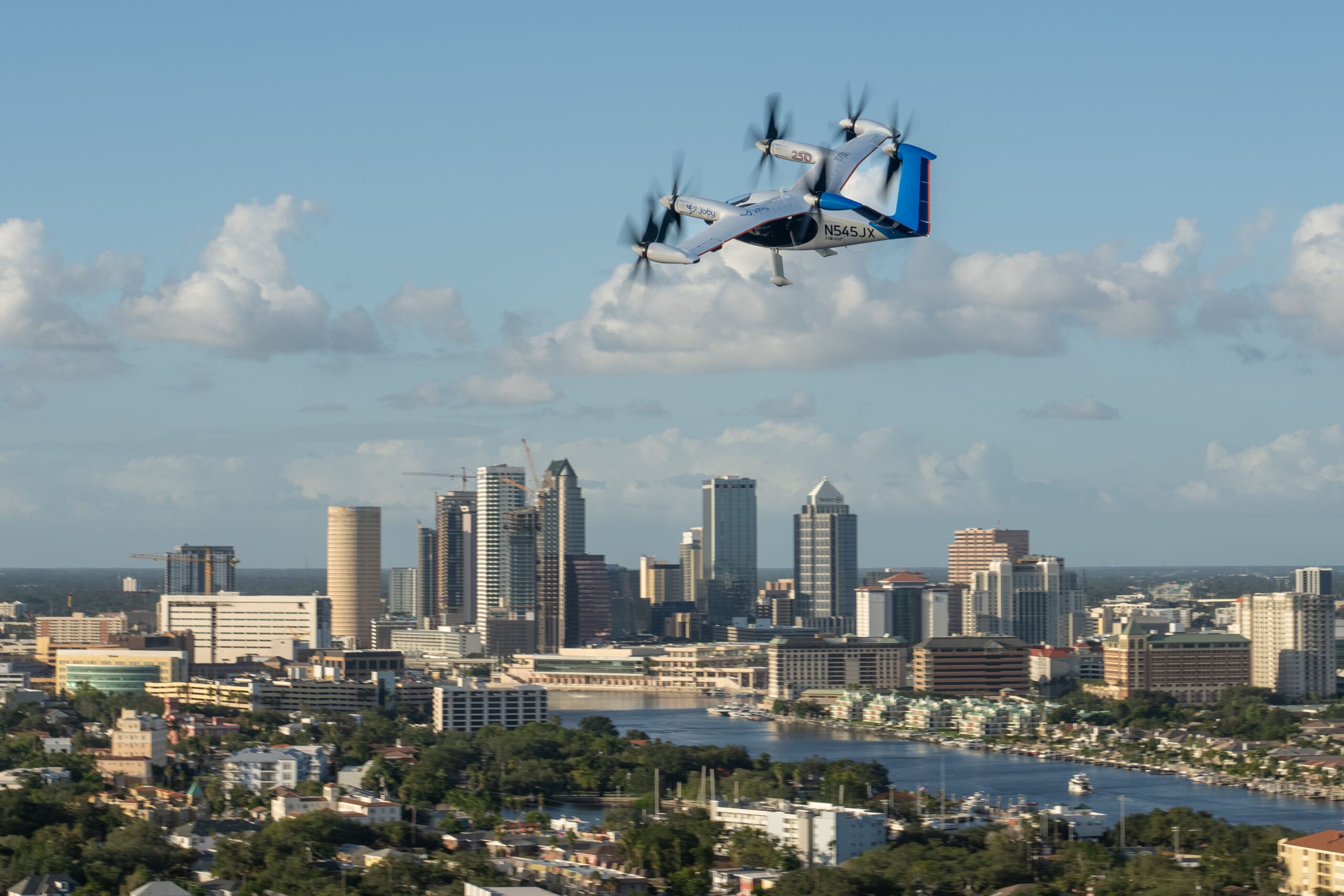
Electric aircraft retraced a route across Tampa Bay that helped launch scheduled airline travel, bringing a 1914 aviation milestone into a modern test program. On Oct. 30, aircraft from Joby Aviation and BETA Technologies flew from Albert Whitted Airport in St. Petersburg toward Tampa as part of Florida’s first demonstrations under the federal Electric Vertical Takeoff and Landing Integration Pilot Program.
The original route carried passengers between St. Petersburg and Tampa on Jan. 1, 1914. Aviation pioneer Tony Jannus flew former St. Petersburg Mayor Abe Pheil across the bay in what the companies and agencies describe as the world’s first scheduled commercial airline flight. More than a century later, the modern demonstration used two very different electric aircraft to explore what routine regional operations could require.
Two aircraft, one historic crossing
Joby’s S4 is an electric vertical takeoff and landing aircraft designed to lift and land vertically. BETA’s Alia CX300 is an electric conventional takeoff and landing aircraft that uses a runway. The FAA said both flew between Albert Whitted and Tampa during Florida’s demonstration, which was led by the state Department of Transportation.
The aircraft types matter because the program is not testing one single blueprint for future travel. Different designs may serve different missions, and their operation can require different airport layouts, routes, charging systems and procedures. The Tampa Bay flights were part of a broader federal pilot program involving electric aircraft, autonomous planes and drones.
Demonstration flights are gathering data
Florida’s program is intended to test operations and collect information that can guide future decisions. The state has identified issues such as noise and airspace integration as areas for study. The FAA says data from pilot projects may help the agency develop standards for safe everyday operations, while agency officials continue to manage the airspace during the flights.
That means the route’s historic symbolism should not be confused with a launch of regular air-taxi service. The flights were demonstrations within a test program. Joby has said it is still moving through the final stages of FAA type certification, and any commercial service depends on the company completing that process and meeting applicable operating requirements.
The route also links two distinct moments in aviation development. Jannus’s 1914 crossing showed that scheduled passenger travel could connect communities over water. Today’s electric-aircraft tests ask a different set of questions: how aircraft can integrate with existing airports and air traffic, what infrastructure may be needed, and how operators can demonstrate safe, repeatable operations.
Florida’s test series is one of several projects selected under the federal eIPP. The FAA’s October announcement described the Tampa Bay flights as the program’s seventh launch location. For the agency, the value of the demonstration lies in the lessons gathered on the ground and in the air, not in the symbolism of a single crossing.
Photo: Joby’s electric aircraft flies over Tampa on Oct. 29, ahead of the Florida demonstration flights. Photo: Joby Aviation.
Sources: Federal Aviation Administration, Florida eVTOL pilot program milestone; Joby Aviation, Florida flight campaign announcement; Florida Department of Transportation, demonstration announcement.




No comment