
By Skylord Magazine
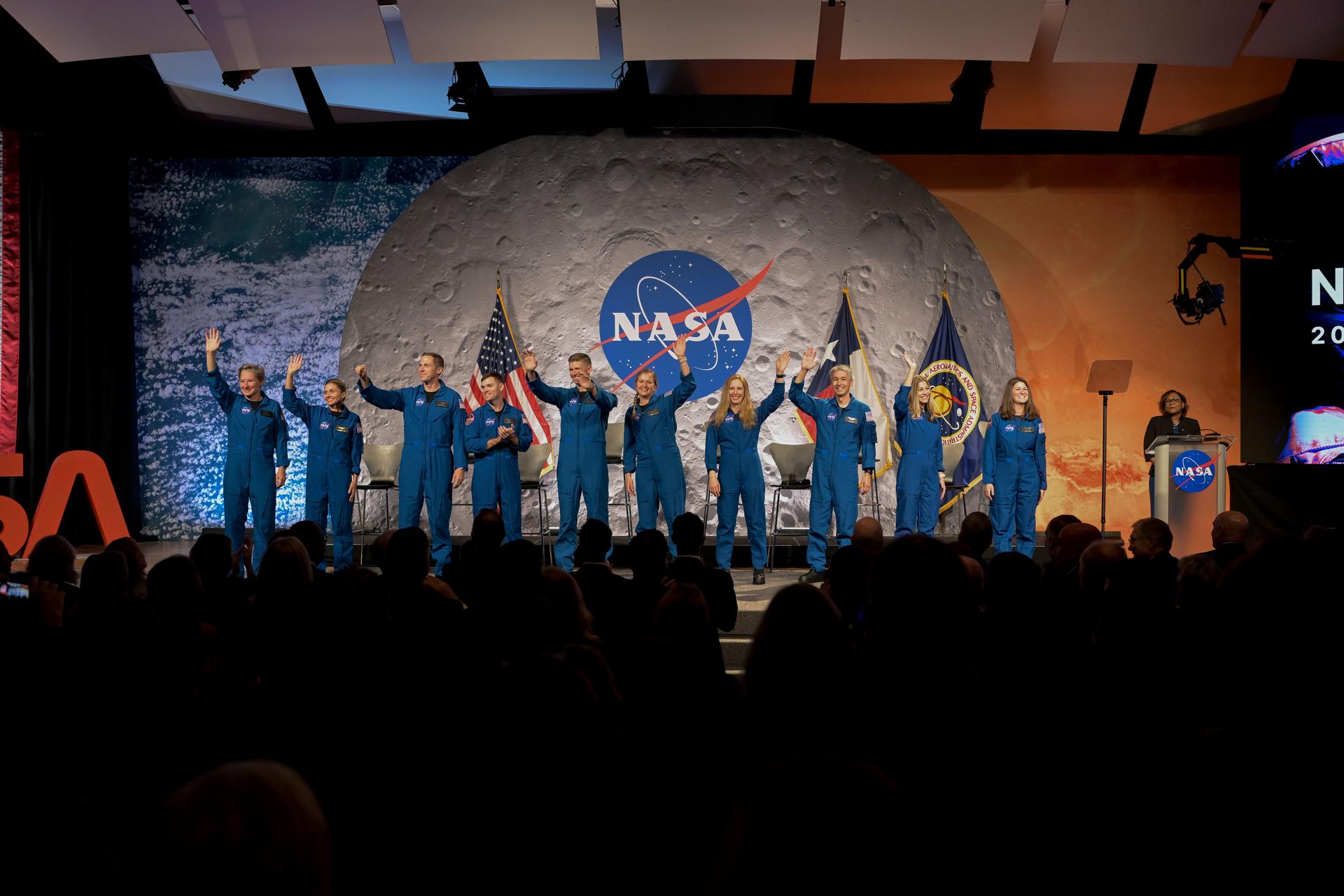
Featured photo: NASA’s 2025 Astronaut Candidate Class at Johnson Space Center, Sept. 22, 2025. Photo: NASA/Helen Arase Vargas
Every pilot remembers the first logbook entry. Few imagine that the same logbook might one day help open the hatch to the Moon. This month, NASA is giving pilots a reason to think about it.
On Nov. 7, 2026, NASA opened applications for its next class of astronauts. U.S. citizens have until 11:59 p.m. EST on Thursday, Dec. 3, to apply, and the agency says the people it selects will train for missions that include returning to the Moon, building the Moon Base, and laying the groundwork for the first crewed missions to Mars. At Skylord, the part that caught our eye is simple: flight time counts.
Where pilots fit in
NASA’s basic requirements start with U.S. citizenship and a master’s degree in a STEM field such as engineering, biological science, physical science, computer science or mathematics, followed by at least three years of related professional experience. But the agency spells out a separate route for pilots to meet that experience requirement through time in the air:
- High-performance jet aircraft: 750 hours of pilot-in-command time.
- Other fixed-wing aircraft: 1,500 total flight hours, including 750 hours as pilot in command.
- Rotary-wing aircraft: 1,000 total flight hours, including 300 hours as pilot in command.
There is also a path for test pilots. According to the release, completion of, or current enrollment in, a nationally recognized Test Pilot School program can satisfy the master’s degree requirement, as long as the program is finished by July 2027. If Test Pilot School is the applicant’s only advanced technical degree, a bachelor’s degree in a STEM field is also required.
Other routes exist as well. At least two years of work toward a relevant doctoral program can stand in for the master’s degree, and so can a range of medical degrees, from Doctor of Medicine to physician assistant and nurse practitioner programs. For medical doctors, residency time can count toward the experience requirement if it is completed by July 2027.
Whatever the route, every candidate must pass NASA’s long-duration astronaut flight physical and show strong leadership, teamwork and communication skills.
What NASA is saying
NASA Administrator Jared Isaacman called it “an extraordinary time to join NASA’s astronaut corps,” saying the people selected “could walk on the Moon, live and work at the Moon Base,” and help pioneer the systems that will eventually carry crews to Mars. Deputy Administrator Matt Anderson put it more briefly: “The window is open. The mission is waiting.”
Scott Tingle, NASA’s chief astronaut and chair of the Astronaut Selection Board at Johnson Space Center in Houston, described the job as “a chance to join a legacy of explorers who have pushed the boundaries of discovery.”
The odds, and the road ahead
It is a competitive field. NASA last opened applications in 2024, and from more than 8,000 applicants it selected 10 astronaut candidates in 2025. That class was introduced on Sept. 22, 2025, at Johnson Space Center and is now working through nearly two years of training.
Since the 1960s, NASA has selected 370 people to train as astronaut candidates. The agency currently has 32 active astronauts, and the next class will join them to study spacewalking, lunar geology, operations of high-performance aircraft and more.
NASA’s “Become an Astronaut” page describes the selection process: a board reviews the applications, then invites a small group of the most highly qualified candidates to Johnson Space Center for interviews. About half of those are invited back for second interviews, and the final candidates are chosen from that group. Basic training then runs about two years and covers skills like spacewalking, operating the space station, controlling a robotic arm and flying T-38 jets.
The official USAJOBS announcement notes that the selection process is expected to take about a year, with a new class anticipated in the fall of 2027. NASA’s release says it expects to make its final selection in late 2027.
Why it matters to the aviation community
Aviation and spaceflight have always shared a cockpit. The astronaut corps still trains in high-performance jets, and NASA’s own requirements recognize that hours earned as pilot in command build the judgment, discipline and crew skills that spaceflight demands. For the flight instructor building time, the military aviator with a full logbook, or the helicopter pilot who has quietly logged thousands of hours, this announcement is worth a careful read.
Not everyone who applies will be selected. Most will not. But each class of astronauts begins the same way: with people who decided to submit an application before the window closed.
Applications and full details are available through NASA’s announcement and the agency’s career page at go.nasa.gov/astro2026.
Share your story on Skylord Radio
Are you a pilot thinking about applying, or someone whose path ran from the flight line toward space? We would love to hear from you. Skylord Radio is looking for aviation and space voices to interview, and story ideas for the show are always welcome. If you host an aviation podcast, tell us about it too.


No comment