
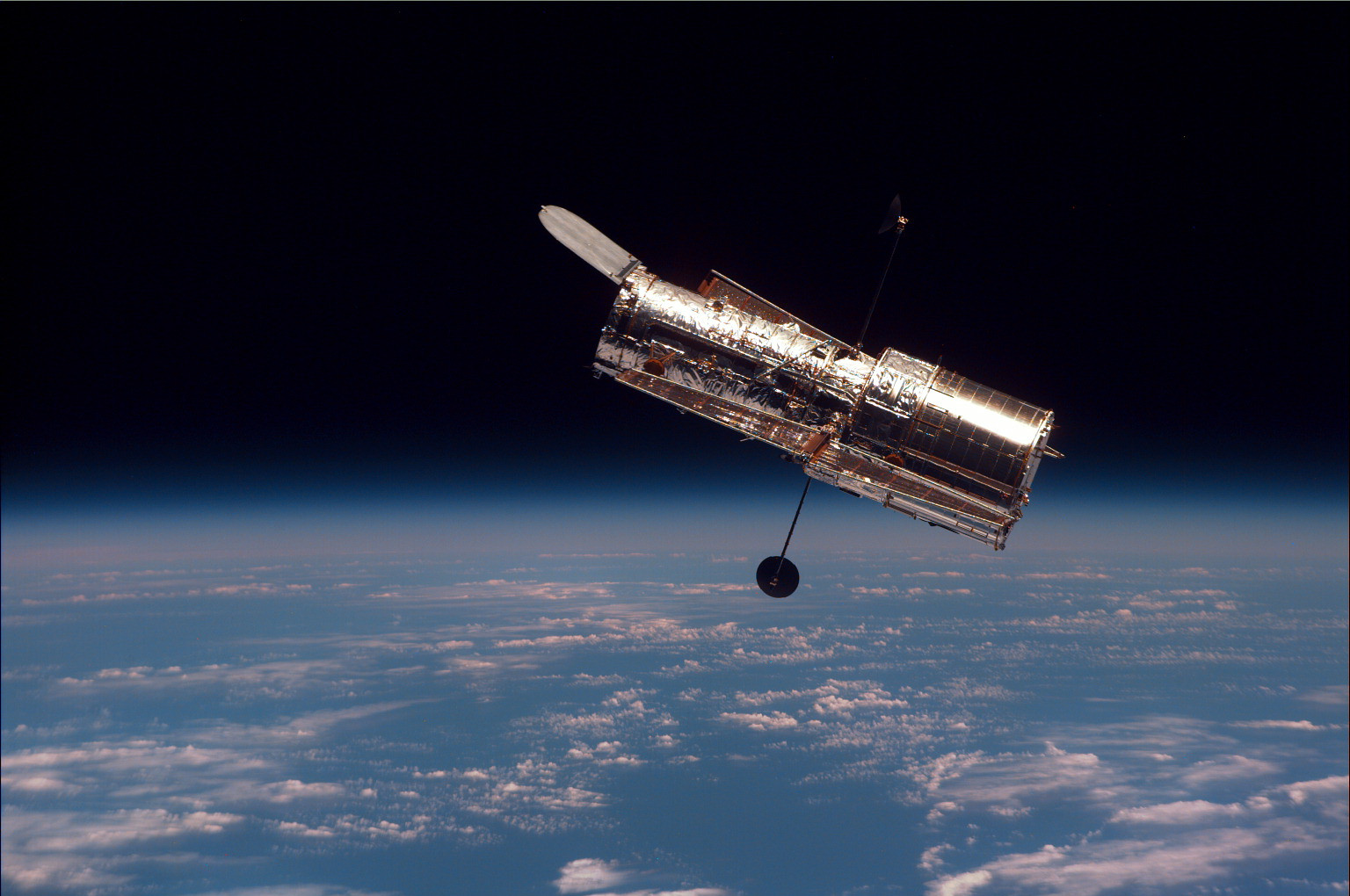
For more than three decades, the Hubble Space Telescope has been one of the most familiar machines ever flown. Now NASA is asking a question that would have sounded like science fiction when Hubble launched: could a private company fly up, take hold of the telescope and give it more time? On Oct. 29, NASA issued a Request for Information to learn what industry can offer in in-space servicing for Hubble, and the answers could shape the final chapter of one of the most important instruments in the history of flight.
What NASA is asking for
According to NASA’s announcement, the request covers three possibilities: a mission to boost Hubble to a higher altitude to extend its science lifetime; servicing the telescope to enhance its capabilities; or carrying out a safe, controlled re-entry into Earth’s atmosphere or an orbital disposal when the mission ends.
A Request for Information is an early step. It is NASA’s way of surveying what is possible, not a contract or a commitment to fly. NASA says responses will be accepted until 3 p.m. EST on Monday, Nov. 30.
NASA Administrator Jared Isaacman framed it simply in the agency’s release: “Hubble still has important science ahead of it, and we should be looking at every reasonable opportunity to keep it delivering for as long as possible.”
Why the clock matters
Hubble flies in low Earth orbit, and like everything there, it is slowly losing altitude to atmospheric drag. The telescope has no propulsion system of its own to push back. NASA says analysis predicts Hubble is likely to re-enter the atmosphere in the 2033 to 2034 timeframe, which is why the agency anticipates any mission would need to take place by 2032.
That gives the problem an unusual shape. Hubble is still doing productive science, but gravity and a thin trace of atmosphere are setting a long-term deadline. Whatever happens next, whether a boost, an upgrade or a careful disposal, someone has to physically reach the telescope.
A telescope built to be visited
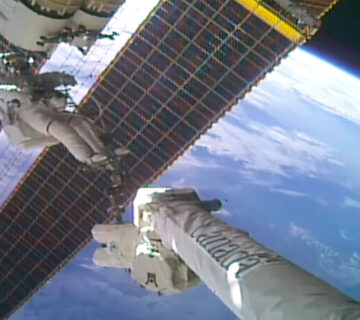
What makes this story especially interesting to aviation and spaceflight people is that Hubble was designed from the start to be serviced by astronauts. NASA calls it the first space-based observatory specifically designed for servicing by astronauts while in orbit. It launched in April 1990 aboard Space Shuttle Discovery, and over the following years shuttle crews returned five times to repair it, swap instruments and replace hardware. The first visit, in December 1993, corrected the optical flaw in Hubble’s primary mirror. The photo at the top of this story shows Hubble heading back out after the second servicing mission in February 1997. The fifth and final servicing mission flew in May 2009.
The shuttle fleet made its final landing in July 2011, and no servicing mission has flown to Hubble since. NASA’s new request essentially asks whether the commercial space industry is now ready to pick up where the shuttle left off.
Why now
Nicky Fox, associate administrator of NASA’s Science Mission Directorate, pointed to how quickly the industry has changed. “Commercial industry has rapidly evolved in recent years to offer new capabilities for in-space satellite capture and servicing,” she said in the release.
That evolution is the real headline for us at Skylord. A generation ago, servicing a satellite meant a space shuttle, a robotic arm and a crew of spacewalkers. NASA is not saying who might respond or how a mission would work. It is asking the market to show what it can do.
Who keeps Hubble flying today
Hubble is a project of international cooperation between NASA and ESA, the European Space Agency. NASA’s Goddard Space Flight Center in Greenbelt, Maryland, manages the telescope and mission operations, with support from Lockheed Martin Space. The Space Telescope Science Institute in Baltimore, operated by the Association of Universities for Research in Astronomy, runs Hubble’s science operations.
The Skylord take
There is something very fitting about this. Hubble began its life as a machine that people would come back to and care for, almost like a classic aircraft kept airworthy by generations of mechanics. Whether the answer turns out to be a boost to a higher orbit, new capabilities or a respectful, controlled ending, it is good to see NASA treating Hubble’s future as a question worth asking openly.
We will keep watching as this develops. You can read NASA’s original announcement here: NASA Explores Potential Commercial Servicing for Hubble Telescope.
Sources
- NASA release, “NASA Explores Potential Commercial Servicing for Hubble Telescope” (Oct. 30, 2026): https://science.nasa.gov/missions/hubble/nasa-explores-potential-commercial-servicing-for-hubble-telescope/
- NASA, Missions to Hubble (servicing missions history): https://science.nasa.gov/mission/hubble/observatory/missions-to-hubble/
- NASA, STS-31 mission page: https://www.nasa.gov/mission/sts-31/
- NASA, The Space Shuttle: https://www.nasa.gov/space-shuttle/
Have an aviation or space story Skylord Magazine should cover, or would you like to be interviewed for one of our articles? Send us your scoops and tips.

No comment