
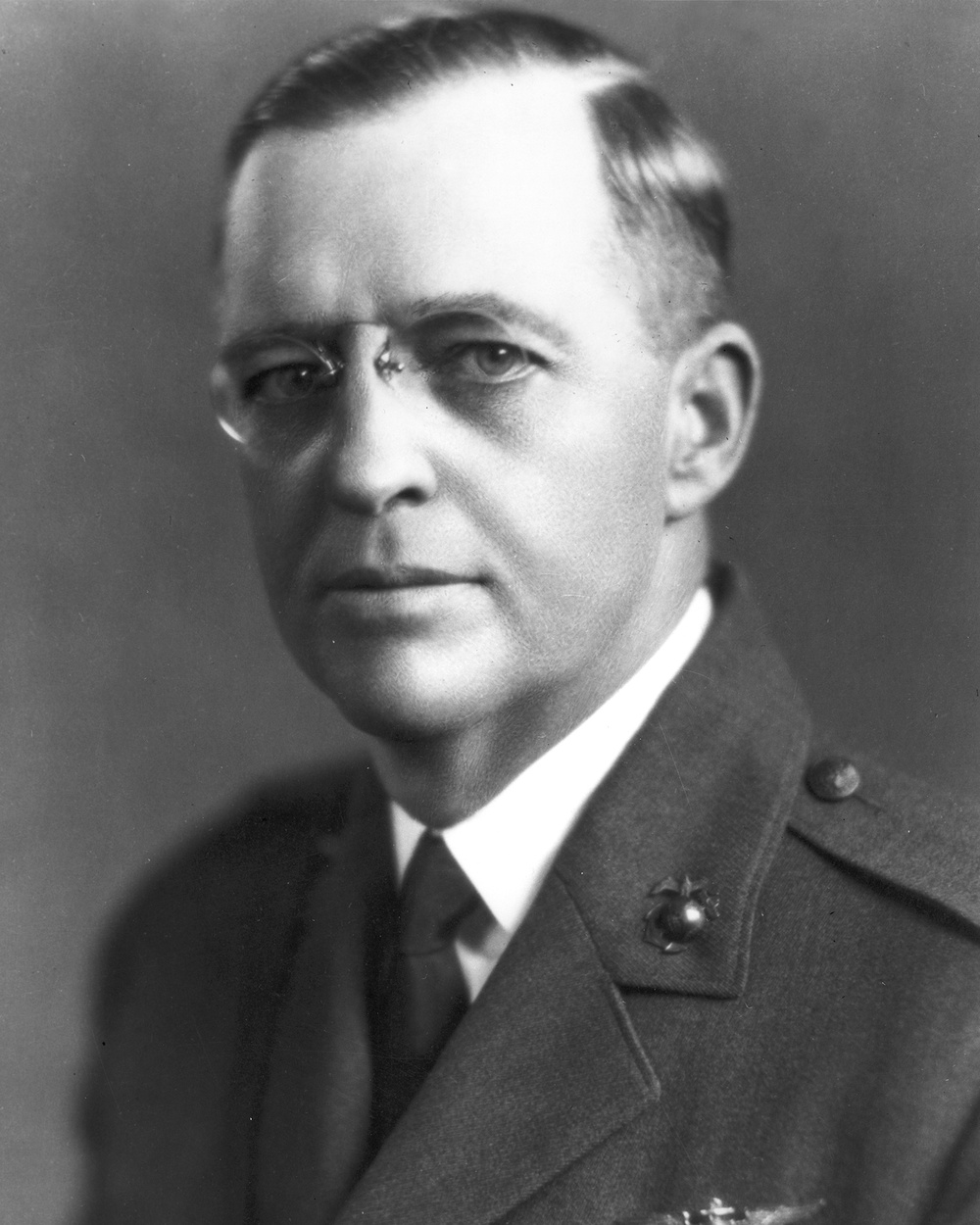
Before Marine aviation had squadrons, bases, or a settled mission, Alfred A. Cunningham was arguing that aircraft could serve the Corps. He became its first aviator in 1912, then helped turn a one-off flight experiment into an organized military capability.
Cunningham received a Marine commission in 1909. While serving in Philadelphia, he pursued his interest in flight and experimented with an airplane he called “Noisy Nan.” The aircraft never flew, but Cunningham continued pressing for aviation training and a role for aircraft in Marine operations.
An Annapolis assignment opened the door
On May 22, 1912, First Lieutenant Cunningham reported to the Naval Academy’s aviation camp at Greenbury Point, across the Severn River from the Academy. The date is recognized as the beginning of Marine Corps aviation. That first step began with one officer joining a small and still-experimental naval aviation program.
Cunningham learned to fly in the period when aircraft were fragile, slow, and limited in range. He soloed later that summer and became Naval Aviator No. 5, the first Marine to qualify as a pilot. A 1914 photograph shows him afloat in a Curtiss hydroaeroplane, an early flying boat suited to operating from water as well as land.
His contribution was not limited to learning the controls. Cunningham kept advocating for aviation as a Marine capability and helped train the people who would follow. The challenge was to show that aircraft could support the Corps’ expeditionary role, not simply serve as an interesting new machine.
From a first pilot to a wartime aviation force
During World War I, Cunningham commanded the 1st Marine Aviation Force when it deployed to France in 1918. The unit became part of the Northern Bombing Group, carrying out bombing and reconnaissance work in support of Allied operations. A Marine Corps account credits the group with 57 raids, eight enemy aircraft shot down, 52,000 pounds of bombs dropped, and 2,600 pounds of food delivered.
For his service organizing and leading Marine aviation, Cunningham received the Navy Cross. After the war he returned to the United States and continued to shape the expanding aviation branch, serving as officer in charge of Marine Corps aviation before later assignments overseas.
He retired in 1936 as a lieutenant colonel and died in 1939. His career bridged the first experiments at Annapolis and the creation of Marine aviation units capable of operating in wartime. The Marine Corps later named an airfield in his honor, preserving the name of the officer who helped make aviation part of the service.
Cunningham’s story is a reminder that early aviation history was shaped not only by record flights, but also by people who recognized a practical role for aircraft and worked to build the teams, training, and institutions needed to use them. At Greenbury Point, that work began with one Marine reporting for flight instruction.
Sources: U.S. Marine Corps, “A. A. Cunningham, the man that paved the way for Marine Corps aviation,” and Naval History and Heritage Command, Marine Corps Aviation Centennial. The featured photograph is a public-domain Marine Corps image of Cunningham in a Curtiss hydroaeroplane, 1914. Read the Marine Corps account.

No comment